
Things to Do in Bogota: Museums, Views, and Food
The best things to do in Bogota are walking the colonial streets of La Candelaria, visiting the Gold Museum and the Botero Museum, riding up Monserrate for the city view, and joining the Sunday Ciclovía. Add a day trip to the Zipaquirá Salt Cathedral and a few good meals, and you have a full trip.
Bogota is a high-altitude city of roughly eight million people, so it helps to group your plans by neighborhood instead of crossing town three times a day. This guide is organized that way, with a rainy day plan and a three-day route near the end.
Know the Altitude and Weather Before You Plan
Bogota sits at about 8,660 feet (2,640 meters) above sea level. Most visitors feel it on the first day as a mild headache, shortness of breath on stairs, or poor sleep. Drink water, go easy on alcohol the first night, and save Monserrate for day two or three.
The weather stays cool all year, usually between the low 50s and high 60s Fahrenheit, and rain can arrive at any hour. Pack a light waterproof jacket and layers. The drier stretches generally fall between December and March and again in July and August.
The Historic Center and La Candelaria
1. Walk La Candelaria and Plaza de Bolívar
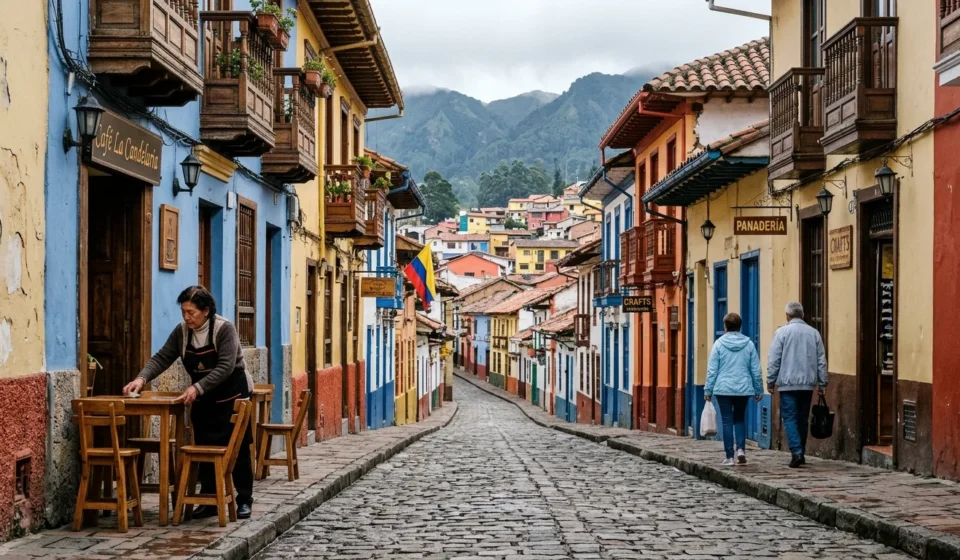
La Candelaria is the oldest part of the city, with cobbled streets, colorful colonial houses, and small cafes. Start at Plaza de Bolívar, where the Capitolio Nacional and the cathedral face the main square. Then walk uphill to Chorro de Quevedo, the small plaza tied to the city’s 1538 founding.
Go in the morning when it is quieter. Weekend afternoons fill with street performers and school groups, which is fun but slower for photos.
2. Museo del Oro, the Gold Museum
The Gold Museum is run by Colombia’s central bank, Banco de la República, and holds around 55,000 pieces of gold and other materials from pre-Hispanic cultures. The Muisca raft, a small gold figure linked to the El Dorado legend, is the piece most people come to see. Plan for about two hours.
Entry is inexpensive and is free on Sundays, and the museum closes on Mondays. Check current hours and prices on its official website before you go.
3. Botero Museum
The Botero Museum is free and sits a few blocks from the Gold Museum. Fernando Botero donated more than 100 of his own paintings and sculptures, plus works by artists such as Picasso, Monet, and Dalí from his private collection. His rounded figures are funnier up close, and the museum is small enough to finish in an hour.
4. National Museum and Quinta de Bolívar
The Museo Nacional de Colombia, founded in 1823, occupies a former prison built on a panopticon design, and walking its old cell corridors is part of the visit. Quinta de Bolívar, the country house where Simón Bolívar lived, is a quiet half-day option with gardens at the foot of Monserrate.
Views and Outdoor Things to Do in Bogota
1. Ride Up Monserrate for the City View
Monserrate rises to 10,341 feet (3,152 meters) above the city, with a white church, the Sanctuary of the Fallen Lord, at the top. Most visitors take the cable car or funicular from the base station near Quinta de Bolívar. Go on a clear morning, because clouds often cover the view by afternoon.
Hiking the trail is possible, but go in daylight, in a group, and after checking the current trail status, since the path has had security problems in the past. At this altitude, the climb is harder than it looks.

2. Join the Sunday Ciclovía
Every Sunday and on public holidays, Bogotá closes more than 100 kilometers of main roads to cars so people can cycle, skate, run, and walk, according to the city’s sports agency, IDRD. The program began in 1974 and is one of the largest of its kind in the world. Rent a bike near La Candelaria or Parque Simón Bolívar and ride for a few hours.
3. Parks and the Botanical Garden
Parque Simón Bolívar covers over 100 hectares and has lakes, running paths, and wide lawns that suit a slow afternoon. The Jardín Botánico José Celestino Mutis has a tropical glasshouse and a páramo section that shows the high Andean landscape outside the city. Both are easy options after a museum-heavy morning.
Food, Coffee, and Markets
1. Taste Tropical Fruit at Paloquemao Market
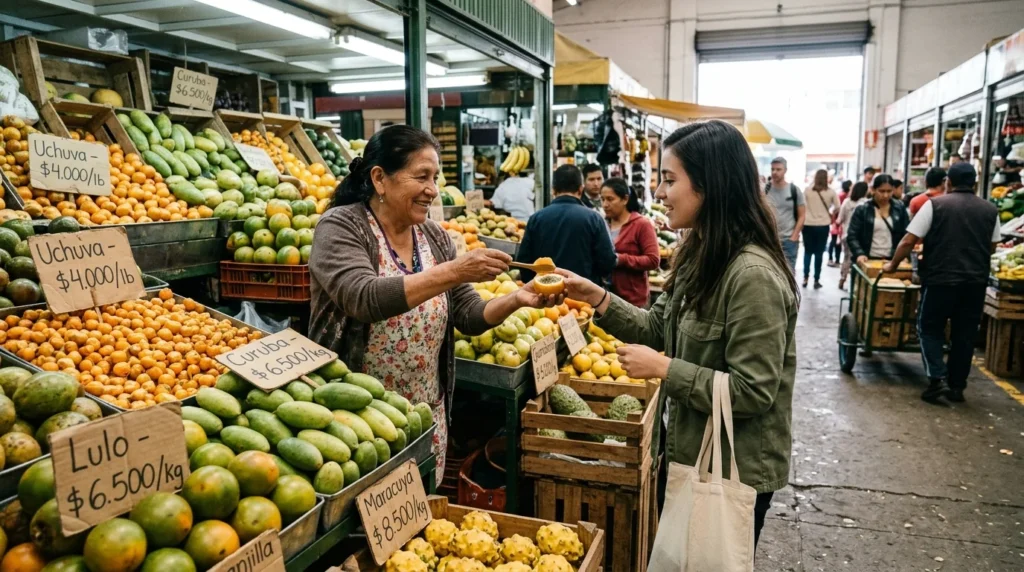
Plaza de Mercado de Paloquemao is the best single stop for tropical fruit you will not find at home, such as lulo, granadilla, curuba, and uchuva. Vendors often let you taste before you buy. Arrive before noon and ask for a fruit plate or a fresh juice, then check the flower hall nearby.
2. Try Ajiaco and Hot Chocolate with Cheese
Ajiaco santafereño is the local soup, made with chicken, three kinds of potato, corn, and guascas, an Andean herb, and served with cream, capers, and avocado on the side. Hot chocolate with a slab of cheese dropped in is a classic afternoon order that is odd at first and easy to like. Both are easy to find in La Candelaria.
3. Specialty Coffee in Chapinero and Zona G
Colombia is a major coffee producer, and Bogotá’s specialty cafes let you taste that range without leaving the city. Chapinero and the Zona G food district have small roasters that serve filter brews and run tastings. Ask for beans from regions such as Huila or Nariño and compare them side by side.
Neighborhoods for Evenings and Weekends
Usaquén feels like a small town inside the city. Its Sunday flea market, set around the old plaza, sells crafts, snacks, and clothing, and nearby restaurants make an easy lunch stop. Zona T and Parque de la 93 are better for dinner and drinks after dark.
For something local, try tejo, Colombia’s national sport. Players throw a metal disc at a clay-filled board lined with small gunpowder packets that pop on impact, usually with a beer on the table. Most bars that offer it will explain the rules in a few minutes.
Street Art and Graffiti Tours
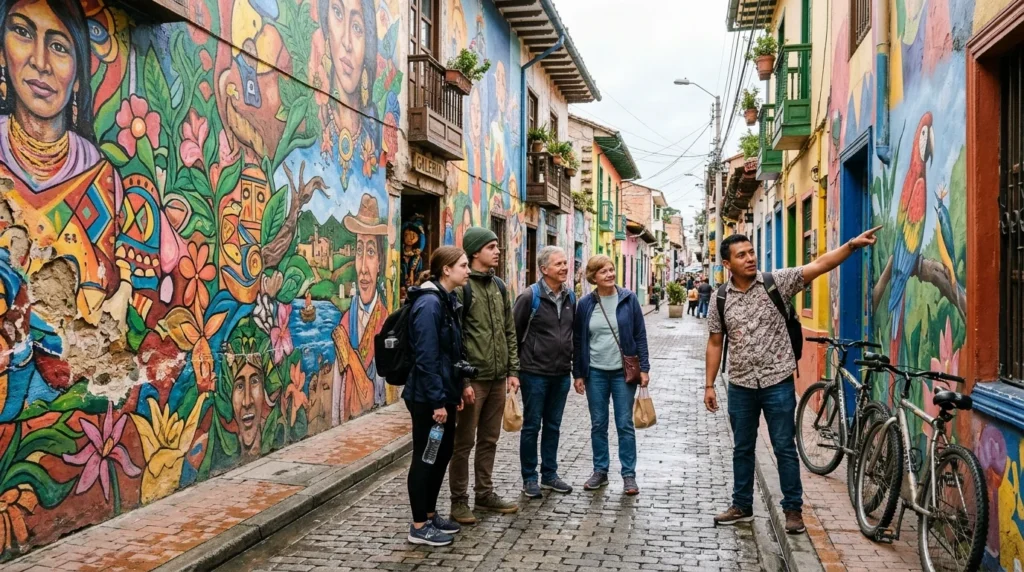
Bogota has an open attitude toward street art, and large murals cover walls across La Candelaria and the Calle 26 area. A guided graffiti tour explains the political and local references that are easy to miss on your own. Most tours run about two hours and go on foot or by bike.
Day Trips from Bogota
Zipaquirá Salt Cathedral
The Salt Cathedral sits inside a working salt mine in Zipaquirá, about 30 miles (roughly 50 kilometers) north of the city. Visitors walk down tunnels marked with the Stations of the Cross into a large underground chamber. Plan a half day to a full day, depending on traffic and whether you add lunch in the old town.
Take TransMilenio to the northern terminal and then a bus, or book a tour for a simpler route. Nemocón, a smaller salt mine town, is a quieter alternative.
Laguna de Guatavita
This crater lake is tied to the El Dorado story, in which a Muisca leader covered in gold dust was said to make offerings. Entry is regulated and usually requires a guided visit, so book ahead and confirm current access rules.
What to Do in Bogota on a Rainy Day
Rain is common, so keep an indoor list ready. The Gold Museum, Botero Museum, and National Museum can fill a full day, and a long ajiaco lunch covers the rest. Mornings are often clearer than afternoons, so schedule outdoor stops first.
A Simple Three-Day Route
- Day 1: La Candelaria, the Gold Museum, the Botero Museum, and an early dinner, which keeps the first day gentle for the altitude.
- Day 2: Paloquemao in the morning, Monserrate if the sky is clear, coffee in Chapinero, and tejo or dinner in Zona T.
- Day 3: Zipaquirá for the Salt Cathedral, or the Ciclovía and Usaquén market if the day falls on a Sunday.
Shift the order so the Ciclovía lands on a S
Budget and Getting Around
Many of the best things to do in Bogota cost little or nothing. The Botero Museum is free, the Gold Museum is inexpensive, and the Ciclovía costs nothing to join. The TransMilenio bus system covers long distances but gets crowded at rush hour, so walk or take a taxi for short hops in La Candelaria. Most visitors do well with three full days in the city plus one extra day for a trip to Zipaquirá.
Safety and Practical Tips
Bogota is a large city, and petty theft is the main risk for most visitors. Keep your phone out of sight on the street, avoid walking alone late at night in quiet areas, and use registered taxis or a ride app instead of hailing cars at random. Ride apps operate in a legal gray area in Colombia, so check current rules before relying on them.
Before you book, read the latest US State Department travel advisory for Colombia, since conditions vary by region and change over time. Carry a copy of your passport and bring some Colombian pesos for markets. Prices, opening hours, and entry rules for museums and Monserrate change often, so confirm them on official sites a few days before you go.