
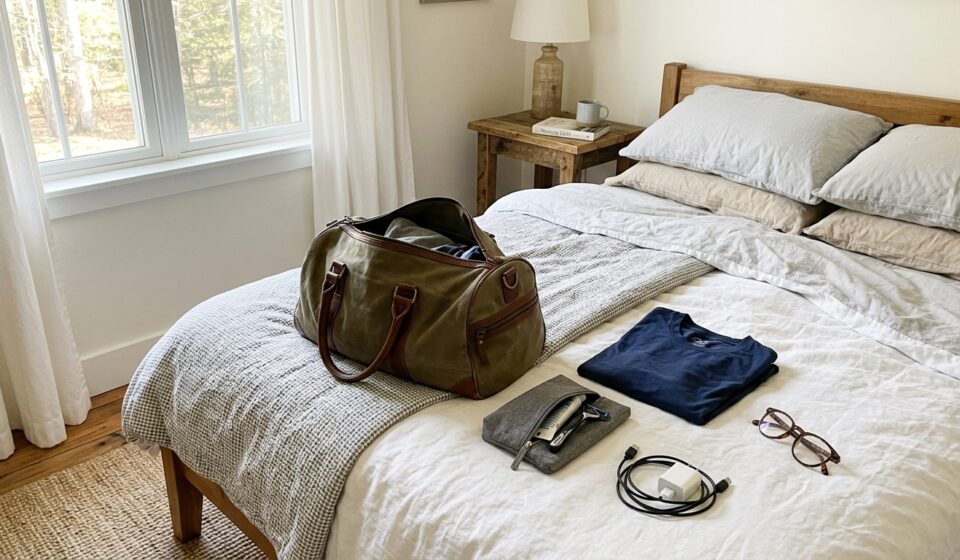
What to Bring When Staying Overnight: Packing List
For one night away, bring your ID, phone and charger, wallet and keys, a change of clothes, sleepwear, a small toiletry kit, and any medication you take. Everything else depends on where you’re sleeping and how much you can borrow from your host or buy nearby.
Most people overpack for a single night, and the fix is a simple test. This guide covers what to bring when staying overnight, how to adjust for different types of stays, and what to leave at home.
The 10 p.m. Test: A Simple Way to Decide What Goes in the Bag
Before you pack anything, ask one question: if I forget this, can I get it at 10 p.m. without much trouble? A phone charger, a toothbrush, or a pair of socks passes the test, because a pharmacy, a convenience store, or a hotel front desk can usually cover it. A prescription, a house key, or your ID fails the test, so those go in first.
Sort every item into three groups. The first group is things you can’t replace tonight. The second is things you can replace but would hate to buy at a markup. The third is things your host or hotel almost certainly has, like towels, shampoo, and a hair dryer.
Pack the first group without debate. Pack the second group only if it fits. Skip the third group unless you have a specific reason, such as a skin reaction to hotel soap or a hair dryer you trust.
The Core Packing List
1. Documents, Money, and Keys
Bring a government ID, a payment card, a small amount of cash, and your keys. If you’re driving, add your license and any parking pass. For hotel stays, keep the booking confirmation on your phone and take a screenshot of it in case the signal drops at the front desk.
Leave spare cards and loyalty cards at home. A lost wallet is easier to recover from when it holds two cards instead of nine.
2. Clothes for One Night
Pack one outfit for the next day, sleepwear, a spare pair of underwear, and a spare pair of socks. A spare top is worth the space if you’ll be eating, traveling, or sweating before you get home. Roll the clothes or fold them flat, and keep them in one pouch so the bag stays tidy when you open it in a dim room.
Check the forecast for the next morning, not just the evening. A light layer such as a thin sweater or packable jacket covers most surprises. Shoes are the item people overpack, so wear the pair you’ll need tomorrow and bring nothing extra unless there’s a specific event, like a wedding or a workout.
3. Toiletries Worth Bringing
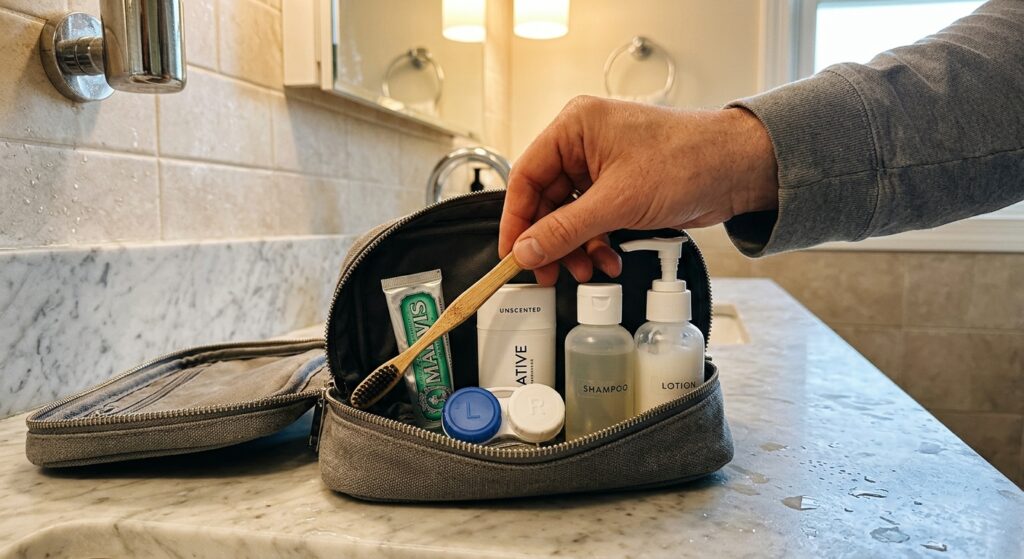
A toothbrush, toothpaste, deodorant, and the skincare you use daily cover most people. Add a hairbrush or comb, plus contact lenses with solution and a case, or your glasses if you wear them. Small bottles of face wash or moisturizer are easy to decant into travel containers you already own.
If you’re flying, liquids in your carry-on need to follow the Transportation Security Administration’s 3-1-1 rule, which allows containers of 3.4 ounces (100 milliliters) or less in one quart-size bag. Check the TSA website before you travel, since screening rules change. Skip full-size bottles and trust your host’s or hotel’s soap and shampoo unless you have a sensitivity.
4. Medication and Personal Health Items
Bring every prescription you’d normally take that day or the next morning, in its original labeled container, plus one extra day’s dose in case your plans shift. Add pain relievers, allergy tablets, or anything else you rely on, and pack period products if there’s any chance you’ll need them. Ask your pharmacist or doctor if you’re unsure how to travel with a particular medication.
Electronics and Comfort Items
Chargers and Gadgets
A phone charger and a cable long enough to reach the bed are the items most often forgotten and most often needed. A small power bank helps if your phone drains quickly or the outlets in the room are far from where you’ll sleep. If you use a smartwatch, earbuds, or an e-reader, bring the charger for each one, and consider a single multi-port USB charger to cut down on cords.
Travel abroad changes this list, because you’ll need a plug adapter that matches the country you’re visiting.
Sleep Comfort
Light sleepers should bring earplugs and an eye mask, since an unfamiliar room is rarely as dark or quiet as your own. A small travel pillow helps if you’re sleeping on a couch or a guest bed with questionable pillows. Slippers or flip-flops keep your feet off cold floors and shared bathroom tiles.
If you fall asleep to a white noise app or an audiobook, download it before you leave so you aren’t depending on someone else’s Wi-Fi.
What to Bring for Different Types of Stays
1. Staying at a Friend or Family Member’s Home
Bring your own toiletries and sleepwear, even if your host offers to lend things. Ask in advance about towels, bedding, and whether shoes come off at the door, then pack indoor socks if they do. A small thank-you gift keeps things friendly, such as a bottle of something they drink, a box of pastries, or flowers. If a meal is planned, offer to bring a dish instead of showing up empty-handed.
2. Staying at a Hotel
Hotels usually provide towels, soap, shampoo, a hair dryer, and an iron, so your list gets shorter. Bring your confirmation, a payment card for the deposit, a phone charger, and your sleepwear. Check the hotel’s website for what’s included, since budget properties sometimes skip items like toothpaste or a hair dryer.
3. Staying at a Short-Term Rental
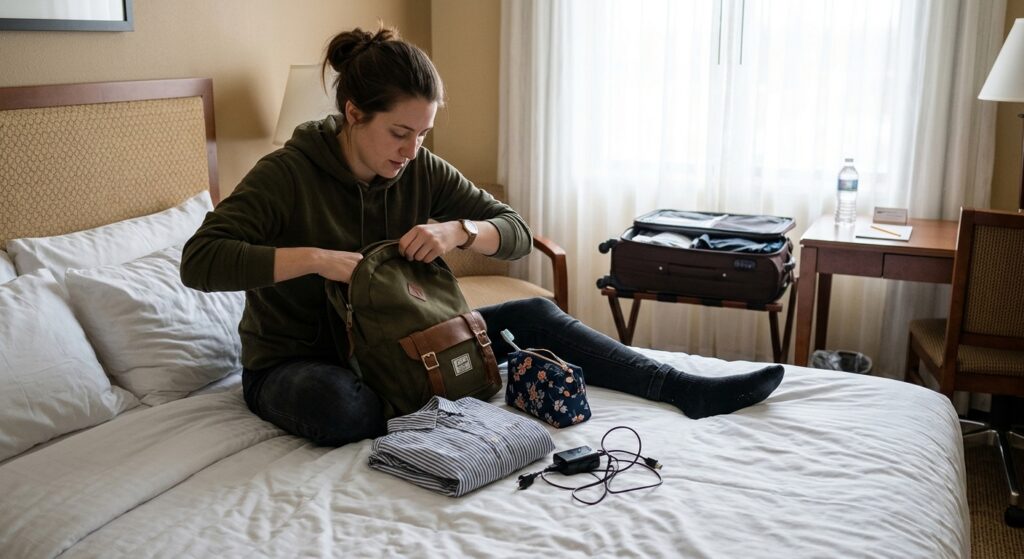
Rentals vary more than hotels. Read the listing for kitchen items, bedding, towels, and laundry detergent, and message the host if the listing is vague. Bring your own toiletries, since many rentals provide none, and pack a snack, tea or coffee, and a bottle of water if you’ll arrive late.
4. Overnight on a Work Trip
Pack the outfit for the meeting first and build the bag around it. Bring a laptop and charger, a notebook, a second shirt, and a plan for wrinkles, such as a travel steamer or hanging the clothes in a steamy bathroom. Keep your documents and laptop in one easy-to-reach pocket so you can get through security and check-in without unpacking.
5. Overnight With Kids
Children turn a one-night bag into a two-bag job. Pack a full change of clothes plus an extra for accidents, their regular sleep comfort item, diapers or wipes if needed, any medicine they take, and a few snacks. A small night light helps if they’re nervous about sleeping somewhere new.
Adjusting for Season and Weather
Winter nights call for a warm layer and thicker socks, since guest rooms and rentals can run cooler than your own home. In summer, bring a lighter sleep outfit and a swimsuit if there’s a pool or lake nearby. A rainy forecast means a compact umbrella or a hooded jacket, which weighs less than a second pair of shoes.
What to Leave Behind
Most overpacking comes from the same six items: extra shoes, full-size toiletries, a second jacket, a hair dryer you’ll never use, a stack of books, and a laptop you don’t need for work. Each one adds weight and takes up space, and none of them will make the night better.
Leave behind valuables you don’t need, such as spare jewelry or extra cash. The fewer things you carry, the fewer things you can lose in someone else’s home or a hotel room.
How to Pack the Bag
A small backpack or duffel is enough for one night. Put heavier items at the bottom, clothes in the middle, and the things you’ll reach for first, like your charger and toothbrush, on top. A pouch for toiletries keeps leaks off your clothes, and a spare plastic bag holds dirty laundry or a wet swimsuit.

Do a last check at the door with three words: phone, wallet, keys. Add a fourth for medication if you take any. Then look at the bag one more time and take out one thing you won’t use.
A Quick Checklist You Can Copy
- ID, wallet, keys, and booking confirmation
- Phone, charger, and a power bank if you need one
- Next-day outfit, sleepwear, spare underwear and socks
- Toothbrush, toothpaste, deodorant, and daily skincare
- Medication in original containers, plus one extra day’s dose
- Glasses or contacts with solution and a case
- Earplugs, eye mask, and slippers
- A small gift for your host if you’re staying in a home
Pack for what you can’t replace tonight; borrow or buy the rest, and a small bag is usually enough for what to bring when staying overnight.