Things to Do in France Beyond the Eiffel Tower
France rewards travelers who resist the urge to cram everything into one Paris itinerary. The country is large enough, and varied enough, that treating it as a single destination undersells it. A week spent only in Paris means missing the chalk cliffs of Normandy, the lavender fields of Provence, the Alpine towns near the Swiss border, and the wine regions that give French food its reputation in the first place.
This guide moves through France region by region, then covers the food, wine, and practical planning that tie a trip together. Use it to decide where your time is best spent, whether you have five days or three weeks.
Paris Still Earns Its Reputation
Paris deserves the days most people give it, but the landmarks alone are only half the experience. The Eiffel Tower is best seen at dusk, when the lights turn on and the crowds thin slightly compared to midday. Book timed entry ahead of time rather than showing up and hoping for a short line.
Beyond the major sights, the neighborhoods carry more of the city’s actual character. Le Marais mixes historic mansions with small boutiques and some of the best falafel in the city. The Latin Quarter has centuries of university history behind its narrow streets and secondhand bookshops. Île Saint-Louis is quieter than almost anywhere else in central Paris, good for an evening walk after dinner.
A Seine river cruise is worth doing once, ideally in the early evening, since it passes the Louvre, Notre Dame, and several other landmarks from a different angle than you get on foot. If museums are a priority, the Louvre needs a plan rather than a wander. Pick two or three collections in advance, because trying to see everything in one visit usually means seeing very little of it well.
The Loire Valley for Châteaux and Wine
The Loire Valley is France’s answer to anyone who wants castles without a plane ticket to a different country. Chateau de Chambord is the most architecturally ambitious of the group, with a double-helix staircase and a roofline that looks more like a small city than a single building. Chateau de Chenonceau, built across a river, is smaller in scale but often considered more elegant.
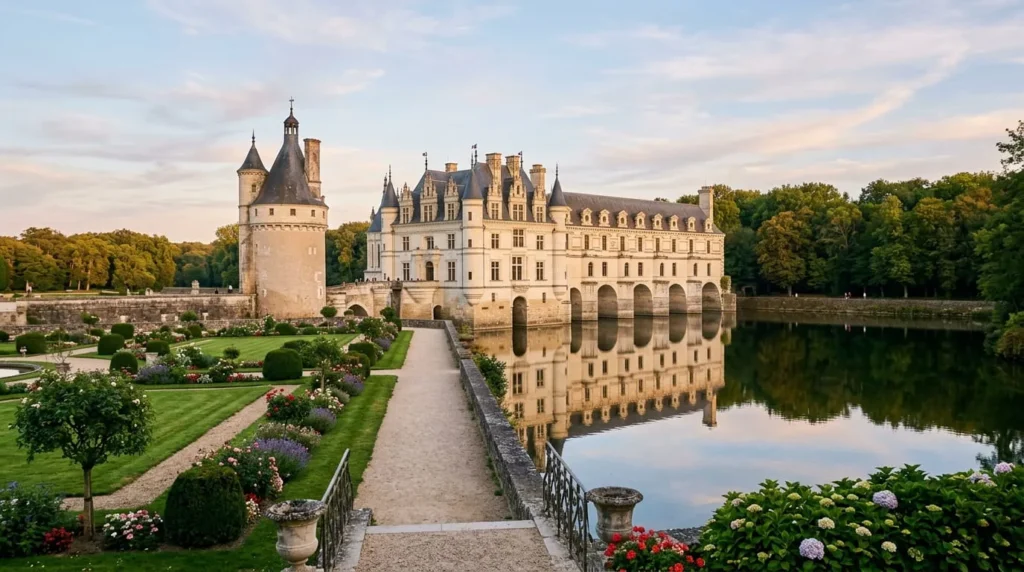
The region is also a serious wine area in its own right, known for crisp whites made from Chenin Blanc and Sauvignon Blanc grapes. Renting a car for two or three days here works better than a single day trip from Paris, since the châteaux are spread out enough that rushing between them defeats the purpose.
The French Riviera and Provence
The French Riviera runs along the Mediterranean coast, with Nice as the natural base for exploring it. From there, Antibes, Cannes, and the hilltop villages inland are all reachable as day trips, each with a different pace than the beach towns get credit for. Menton, right at the Italian border, is smaller and less crowded than Nice or Cannes but has some of the same coastal charm.
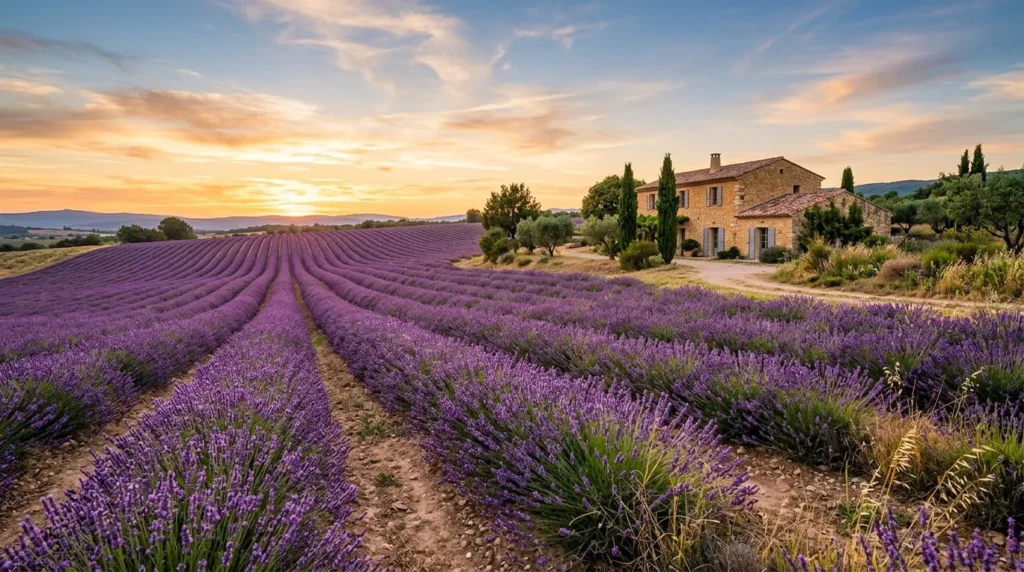
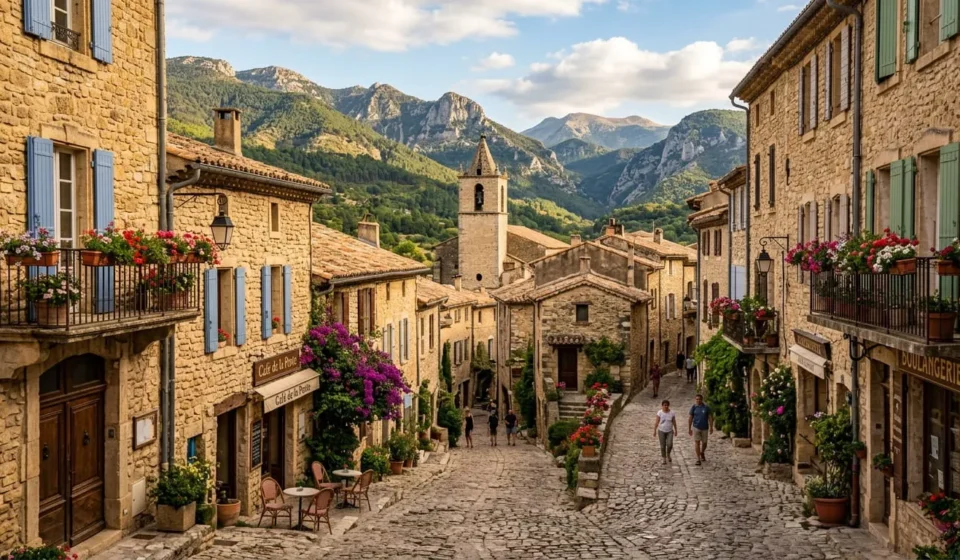
Provence sits just inland and trades the coastline for lavender fields, hilltop towns, and slower afternoons. The lavender blooms in a fairly narrow window during the summer, so if that’s the draw, check bloom timing before locking in dates. Towns like Gordes and Roussillon are built into the hillsides themselves, and wandering their streets on foot is really the whole activity, no itinerary required.
Normandy and the North Coast
Normandy carries some of the most significant history in the country, centered on the D-Day beaches and the American Cemetery at Colleville-sur-Mer. Visiting with at least a basic understanding of the timeline makes the sites land harder, so a guided tour or some reading beforehand is worth the effort.
Mont Saint-Michel, the tidal island abbey connected to the mainland by a causeway, is one of the most photographed sites in France and lives up to it in person. Arrive early or stay overnight nearby to see it without the midday crowds, since day-trip buses tend to arrive in waves.
The north coast beyond the D-Day sites is quieter and often skipped entirely by visitors headed south. Small towns along the coast offer the same boulangerie culture and slower pace as the rest of rural France, without the crowds that come with a more famous name attached.
The French Alps for Mountain Towns
The French Alps, near the Swiss and Italian borders, offer a completely different version of France than the vineyards and coastline further south. Chamonix sits beneath Mont Blanc and works as a base for hiking in summer and skiing in winter, with a cable car up to the Aiguille du Midi that puts you above 12,000 feet without needing any climbing experience.

Annecy, sometimes called the Venice of the Alps for its canals, pairs a walkable old town with a lake clear enough to see the bottom in places. Paragliding over the lake is a genuinely memorable way to see the region, and outfitters in town run tandem flights for people with no prior experience. A road trip connecting Chamonix, Annecy, and the smaller Alpine villages between them makes for one of the more scenic drives in the country.
Alsace and the German Border
Alsace, tucked along the German border in eastern France, feels distinct from the rest of the country in both architecture and food. Strasbourg’s old town mixes half-timbered buildings with canals, and the cathedral’s astronomical clock draws a small crowd every time it chimes. The region’s wine route runs through a string of small towns, each built around the same half-timbered style and each with its own tasting rooms open to walk-in visitors.
Alsatian food leans heavier and more central European than what you’ll find in Paris or Provence, with dishes like choucroute and flammekueche reflecting the region’s German influence. If your trip falls in late November or December, Strasbourg’s Christmas market is one of the oldest and largest in the country, though it also draws the heaviest crowds of the year to a fairly small old town, so plan accordingly.
Outdoor Adventure in the South
The Verdon Gorge, in the Provence-Alpes region, is often described as Europe’s answer to the Grand Canyon, and kayaking through it under cliffs that rise 700 meters is one of the more physically active things to do in France. The water’s turquoise color surprises most first-time visitors, since it doesn’t look like a typical river at all.
Pairing a Verdon Gorge kayak trip with a hike along the gorge’s rim makes for a full day, and the region has enough small towns nearby to base yourself for a few nights rather than rushing through on a day trip from further away.
Food and Wine Worth Planning Around
French food culture rewards slowing down more than almost anything else on this list. A fresh baguette from a local boulangerie, eaten within an hour of coming out of the oven, is genuinely different from the same bread a few hours later, and nearly every town has at least one good bakery worth seeking out.
Wine tastings are best done at small, independent vineyards rather than only the well-known labels. A conversation with the person who actually made the wine tends to teach you more than a tasting room ever will, and many vineyards are open to visitors who reach out ahead of time. Bordeaux is the obvious wine region to build a trip around, but Burgundy and the Loire Valley both offer the same kind of small-vineyard access without the crowds that follow Bordeaux’s bigger names.