
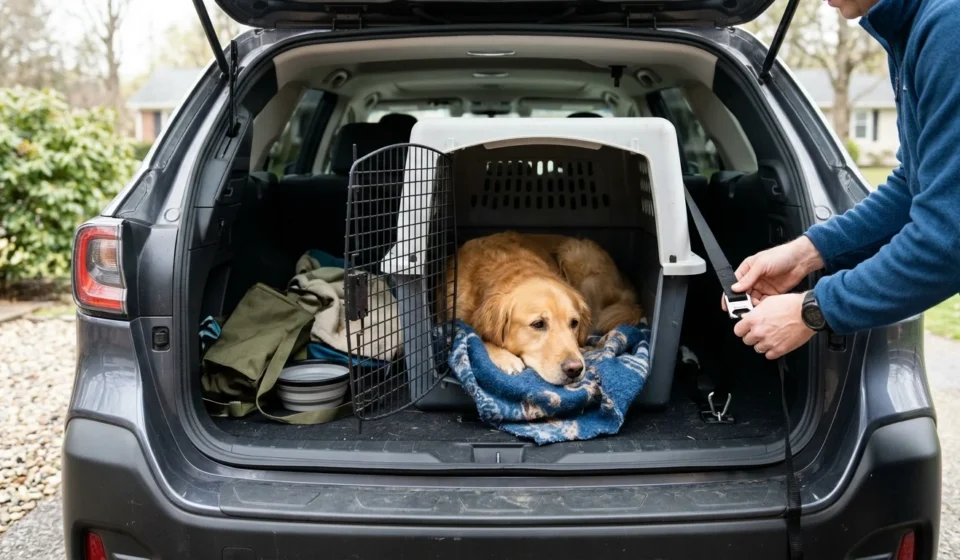
How to Choose a Dog Travel Crate for Car and Air Trips
The right dog travel crate is one your dog can stand up, turn around and lie down in, that stays put in a sudden stop, and that meets your airline’s container rules if you fly. Most people get the size wrong first and the securing method wrong second. This guide covers both, plus the crate types, features and training steps that make travel easier on your dog.
Which Dog Travel Crate Fits Which Trip
There is no single best crate for every journey. The trip decides the style, so start there.
| Trip type | Best crate style | Main reason |
| Daily car rides and road trips | Crash-tested hard-sided or rotomolded crate | Structure holds up better in a collision |
| Air cargo | Rigid plastic crate meeting IATA container rules | Airlines require rigid, ventilated containers |
| In-cabin flights | Airline-approved soft-sided carrier | Fits under the seat |
| Hotel stays and short stops | Collapsible metal or fabric crate | Folds flat and sets up in minutes |
Hard plastic crates are the most common choice because they are light, easy to clean and widely accepted by airlines. Rotomolded and heavy-duty aluminum crates cost more but are built for repeated use and rough handling. Wire and fabric crates are fine for the hotel room, but they offer little protection in a moving vehicle.
How to Size a Dog Travel Crate
Sizing is where most buyers go wrong. A crate that is too big lets your dog slide around during braking, and one that is too small is uncomfortable and often rejected by airlines.
Take Three Measurements
Measure your dog standing, using a soft tape. You need length from the tip of the nose to the base of the tail, height from the floor to the top of the head or the tips of the ears (whichever is taller), and width across the shoulders.
Many crate makers suggest adding a few inches to the length and height measurements so the dog is not touching the walls. Check the sizing chart on the specific model, since a “large” varies between brands. When your dog falls between sizes, take the larger one for air travel and the snugger one for car travel, where a tighter fit limits movement.
The Airline Standard
The International Air Transport Association (IATA) Live Animals Regulations say the animal must be able to stand, turn around and lie down in a natural position. That is a good rule for any dog travel crate, whether you drive or fly. If your dog has to crouch to fit, the crate is too small.
Choosing a Dog Travel Crate for Car Travel
A loose crate in a crash becomes a projectile, and a flimsy crate can fail even when strapped down. The Center for Pet Safety, an independent nonprofit, runs crash-test certification for pet restraints and has published results showing that many crates marketed as “safe” did not hold up. Check its certified product list before you buy, since claims like “crash tested” on a product page are not standardized.
Where to Put the Crate
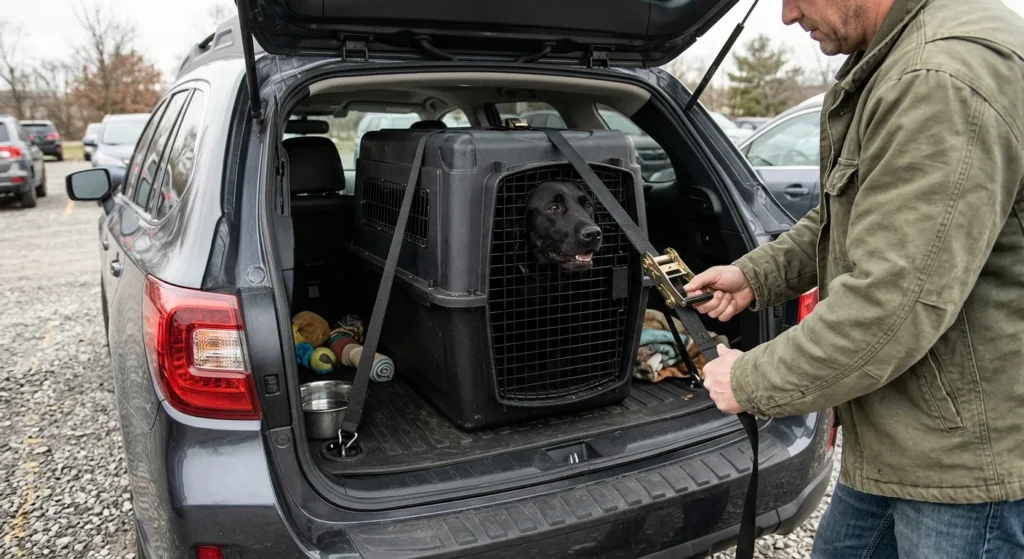
The cargo area of an SUV or wagon, directly behind the rear seats, is the usual choice. Push the crate against the seatback so it cannot build up speed in a stop. Use straps rated for the load and attach them to the vehicle’s anchor points, not to a seat headrest or cargo net.
In a sedan, a crate on the back seat floor or seat works only if it is secured with the seat belt or straps and does not block the driver’s view. Never leave a crate on the front passenger seat, where an airbag can injure the dog.
Heat and Ventilation
The American Veterinary Medical Association warns that the temperature inside a parked car can climb to dangerous levels within minutes, even with the windows cracked. A crate makes this worse because it restricts airflow around the dog. Plan stops where someone can stay with the dog, or take turns going inside.
Flying With a Dog Travel Crate
Airline rules change, and they differ between carriers, so read your airline’s pet policy before you buy anything. The IATA container requirements are the baseline most airlines follow for cargo travel.
Requirements for Cargo Travel
IATA’s standard calls for a rigid, leakproof container with a secure door, ventilation on multiple sides and handles for staff to lift it without touching the animal. Hard crates are expected to be assembled with metal nuts and bolts rather than plastic clips. Food and water dishes should be fillable from outside the crate, and the container should carry “Live Animal” labels with arrows showing the upright position.
Many airlines also restrict or ban snub-nosed breeds in cargo, such as bulldogs and pugs, because of breathing risks. Some limit pet travel during extreme heat or cold at the departure or arrival airport. Ask about both before booking.
In-Cabin Carriers
Small dogs may travel under the seat in an airline-approved soft-sided carrier. Carrier size limits and weight caps vary by airline, and the dog must remain inside the carrier for the entire flight. Measure the under-seat space for your specific aircraft type when the airline publishes it.
Crate Features Worth Paying For
Skip the extras you will not use and focus on the ones that affect safety and comfort. Look at door latches first. A door that pops open when jostled defeats the purpose of the crate.
Good ventilation on at least three sides helps keep the dog cool and is required for air travel. A leakproof floor matters on long trips, because accidents and spilled water happen. Wheels are handy for airport terminals and heavier crates, though they should lock or be removable for car use.
Tie-down points built into the shell make securing the crate simpler. A removable top or side door makes it easier to coax a nervous dog out. Finally, check the weight of the empty crate, because a large heavy-duty model is hard to lift into a vehicle alone.
Crate Training Before the Trip
A dog that has never been in a crate will not settle in one for a ten-hour drive. Start weeks ahead, not the night before.
A Simple Training Sequence
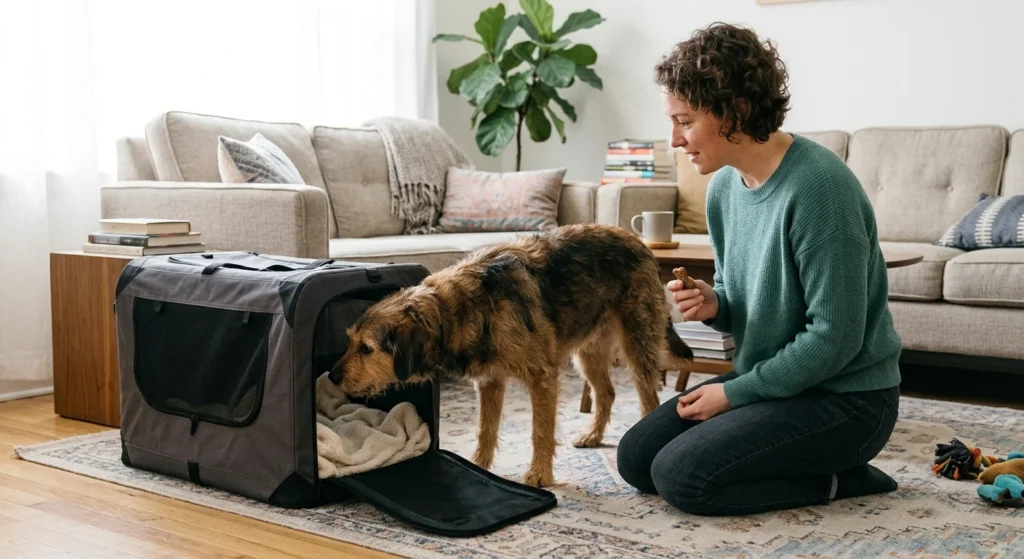
Leave the crate open in a common room with a blanket and a few treats inside so your dog explores it freely. Feed meals near it, then inside it, then with the door closed for short periods. Build up the time gradually, and never use the crate as punishment.
Once your dog is relaxed for 30 minutes or more, add car time. Start with the crate in the parked car, then short drives to somewhere fun, like a park. This teaches the dog that the crate and the car lead to good things.
Handling Anxious Dogs
If your dog panics in a crate, talk to your veterinarian before the trip. The AVMA generally advises against sedating dogs for air travel because sedatives can affect breathing and balance in a confined space. Your vet can recommend a safer approach based on your dog’s age, breed and health history.
Special Cases: Puppies, Seniors and Flat-Faced Breeds
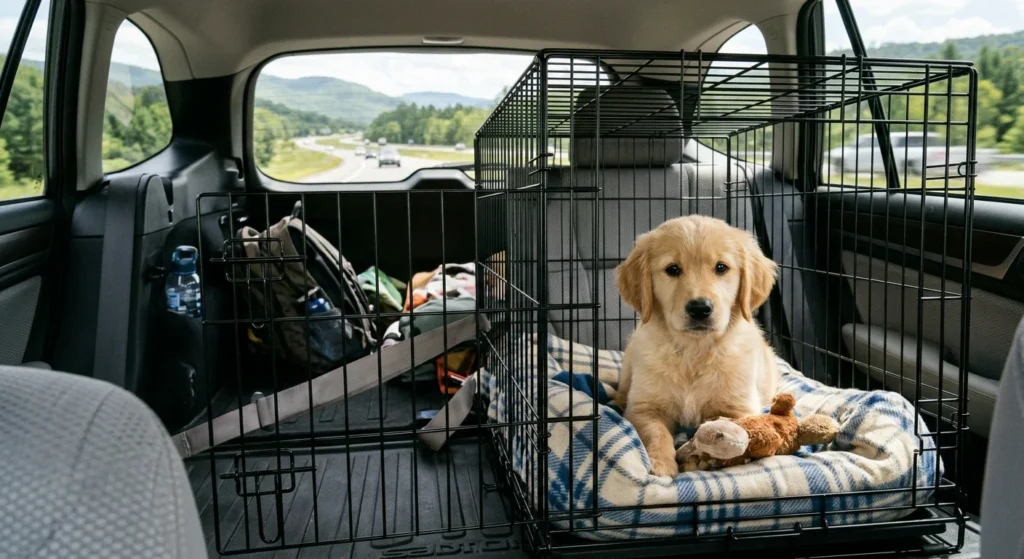
Puppies grow fast, so buy a crate with a divider, or size for the adult dog and block off the extra space during car rides. Young puppies also need frequent bathroom breaks, so plan stops every couple of hours.
Senior dogs and dogs with joint problems do better with a low-entry crate and a thick, non-slip pad. Skip steep ramps and high ledges. For flat-faced breeds, keep the crate well ventilated, avoid flying in hot weather and ask your vet whether air travel is advisable at all.
Common Mistakes to Avoid
The most frequent mistake is buying a crate that is too large for car travel, which lets the dog slide in a hard stop. The second is trusting a “crash tested” label without checking who tested it and how.
Other mistakes include leaving a crate unsecured in the cargo area, using a thin blanket that bunches up, and skipping the practice runs. Some owners also pack a collar with a hanging tag or a loose toy that can pose a choking risk inside the crate. Take off anything the dog could snag.
What to Pack in and Around the Crate
A short checklist helps on departure day:
- A flat, non-slip pad or familiar blanket
- A clip-on water bowl and a small supply of water
- Waste bags and a roll of paper towels
- Copies of vaccination records, plus a health certificate if the airline or destination requires one
- A recent photo of your dog and an ID tag with your phone number on the collar
- A tag or label on the crate with your name, number and destination contact
Keep the first-day plan simple. Feed a light meal a few hours before departure, offer a bathroom break right before loading, and avoid last-minute changes to the crate setup.