
Kyoto Gardens: A Complete Guide to Visiting Japan’s Best
Kyoto gardens rarely look like what most visitors expect. There are few sweeping flower beds and almost no manicured lawns. Instead, the city’s best gardens work with raked gravel, moss, borrowed scenery, and centuries-old pine trees shaped by hand, one branch at a time. Understanding that difference before you go changes how you experience every temple on your list.
Kyoto has more historically significant gardens than any other city in Japan, a byproduct of over a thousand years as the imperial capital and the headquarters of several major Zen schools. Picking which ones to visit matters more than how many you visit. Two well-chosen gardens, seen slowly, beat six rushed stops.
This guide covers the garden styles you’ll actually encounter, the specific temples worth your time, and the seasonal and crowd logistics that most visitors get wrong.
Understanding Kyoto’s Garden Styles
Almost every garden in Kyoto falls into one of three categories, and knowing which one you’re looking at makes the experience far more rewarding.
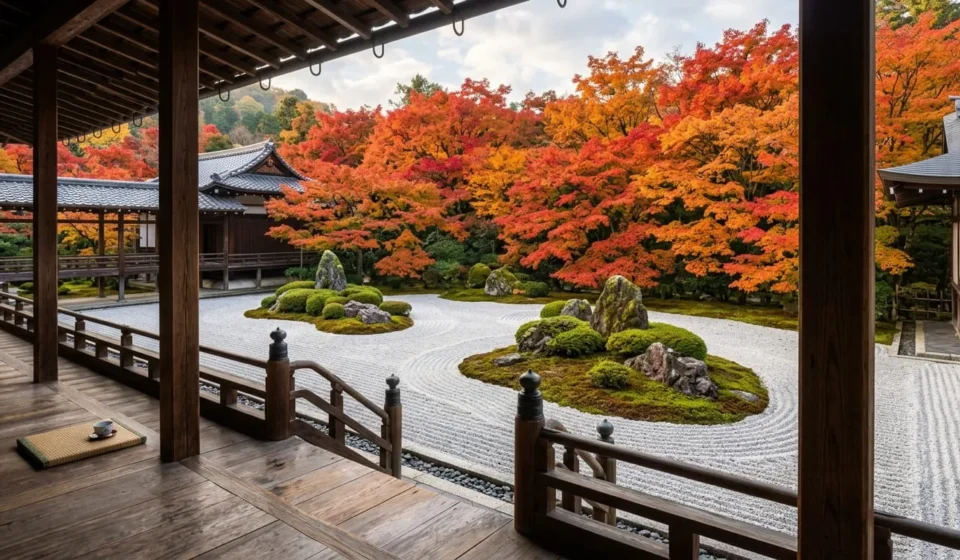
Karesansui, or dry landscape gardens, use rock, gravel, and moss to suggest mountains, islands, and water without using any actual water. Ryoan-ji’s famous rock garden is the clearest example. These gardens are meant to be viewed while sitting still, not walked through, and they reward patience more than any other style in the city.
Kaiyu-shiki, or stroll gardens, are built around a central pond with a circular path. The design shifts with every few steps, revealing a new composition of trees, bridges, and water at each turn. Ginkaku-ji’s grounds and the Heian Jingu gardens both use this approach, and they’re the style closest to what Western visitors usually picture when they hear “Japanese garden.”
Tsuboniwa are small courtyard gardens tucked between buildings, often just a few square meters. They’re common inside temple complexes and traditional machiya townhouses, and they’re easy to miss if you’re not looking for them. Some of Kyoto’s most memorable garden moments happen in these tiny, overlooked spaces rather than the headline attractions.
The Best Gardens in Kyoto to Visit
1: Ryoan-ji Temple
Ryoan-ji’s rock garden is the single most famous karesansui garden in the world, and it earns the reputation. Fifteen stones sit in raked gravel, arranged so that no matter where you sit on the veranda, at least one stone is always hidden from view. Nobody knows the original designer’s intent, and that ambiguity is part of the point. Arrive at opening, because this garden gets loud and crowded by mid-morning, and quiet contemplation is the entire experience here.
2: Ginkaku-ji (Silver Pavilion)
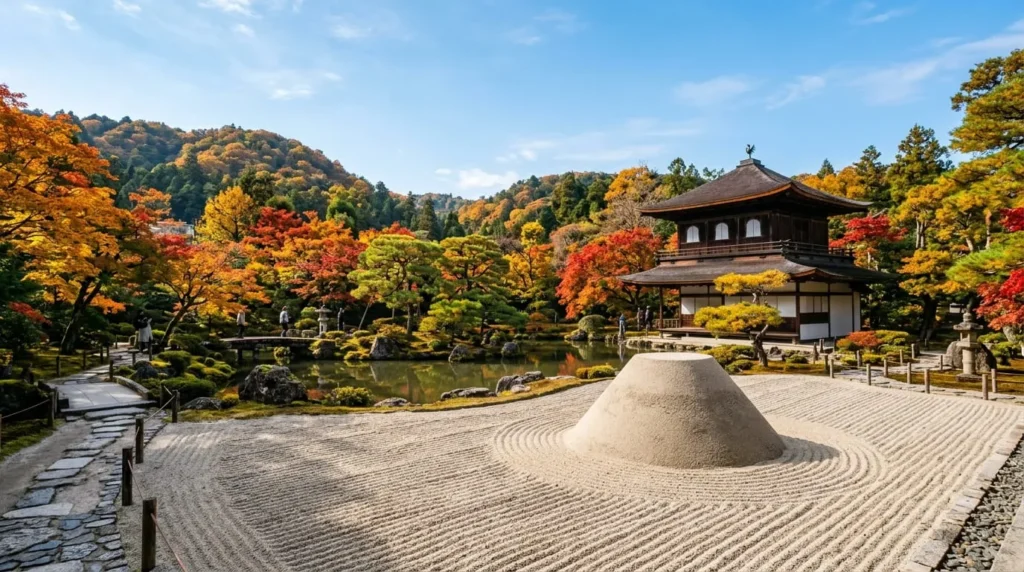
Ginkaku-ji pairs a meticulously raked sand garden, including a cone shaped to evoke Mount Fuji, with a moss garden and pond walk that climbs into the wooded hillside above the temple. The elevated path near the end of the route gives a rare overlook of the entire grounds and the city beyond. Sunset light on the sand garden is the best reason to visit later in the day if your schedule allows it.
3: Tofuku-ji’s Hojo Garden
Tofuku-ji’s Hojo Garden is unusual because it has four distinct gardens on four sides of the same building, each designed in a different style by the same 20th-century designer, Shigemori Mirei. It’s a compact way to see multiple garden philosophies in one visit. The temple’s Tsutenkyo Bridge, overlooking a maple-filled ravine, draws heavy crowds in autumn, but the garden itself stays manageable even during peak foliage season.
4: Daitoku-ji’s Subtemples
Daitoku-ji is a sprawling Zen temple complex with over twenty subtemples, most of which are closed to the public most of the year. Zuihoin, one of the few consistently open, has a rock garden that’s less famous than Ryoan-ji’s but arguably more dynamic in its composition. Because Daitoku-ji sits outside the main tourist circuit, its gardens stay quiet even when the rest of Kyoto is packed.
5: Okochi Sanso Villa
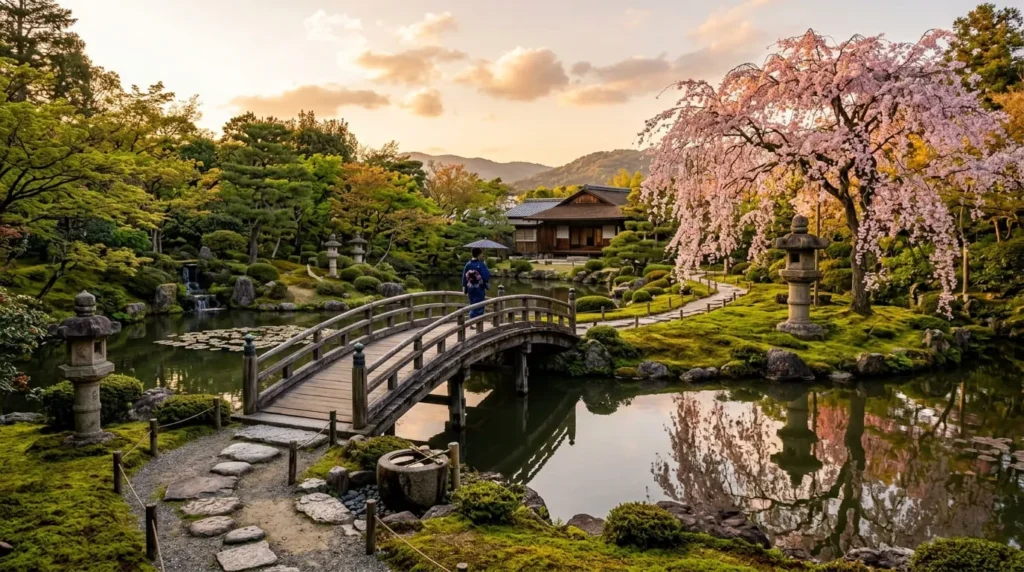
Okochi Sanso was built over three decades by a Japanese silent-film actor as his private residence, and the result is one of the most personal gardens in Kyoto. The grounds climb a hillside in Arashiyama, using the surrounding bamboo forest and distant mountains as borrowed scenery rather than trying to compete with them. Admission includes a bowl of matcha and a sweet, served with a view over the Hozu River valley, which makes this one of the few gardens in the city where sitting down is actively encouraged.
6: Heian Jingu Shrine
The gardens behind Heian Jingu’s main courtyard require a separate paid ticket, and they’re worth it, particularly in cherry blossom season when the weeping sakura along the ponds are among the best in Kyoto. Outside of spring, this garden ranks lower on a must-see list, since the vermilion shrine architecture does more of the visual work than the planting itself.
7: Ninna-ji Temple
Most visitors to Ninna-ji stop at the free grounds and the five-story pagoda, then leave. That skips the better half of the site. The paid Goten building includes a garden viewed from inside a former imperial residence, which is as close as most travelers will get to experiencing a Kyoto palace interior. It’s consistently less crowded than comparable sites because it’s not on most group tour itineraries.
8: Taizo-in Subtemple
Taizo-in sits inside the larger Myoshin-ji temple complex and rarely appears on first-time visitor lists, despite having one of the more distinctive gardens in the city. A weeping cherry tree frames the pond garden in spring, and the overall design feels less rehearsed than gardens that see heavier foot traffic. If you’ve already done Ryoan-ji and Ginkaku-ji, Taizo-in is the next stop worth making.
Best Time to Visit Kyoto’s Gardens
Spring and autumn draw the biggest crowds, for good reason. Cherry blossoms typically peak in late March to early April, and maple foliage peaks in mid to late November, and both transform stroll gardens in particular. If your travel dates are flexible, the week just before peak bloom or peak color usually offers a strong visual payoff with noticeably fewer people.
Summer is underrated for garden visits. The moss gardens at Ginkaku-ji and similar temples are at their most vivid after the rainy season in June, and the deep green of a moss garden in July light is a different experience from the same garden in autumn. Winter, meanwhile, is the best season for the rock gardens specifically. Karesansui gardens were designed to be read as abstract compositions, and without competing foliage, the stone and gravel arrangements are easier to actually see.
How to Avoid the Crowds
Arrive at opening, not mid-morning. Most Kyoto temples open between 8:30 and 9:00 a.m., and the difference between arriving at opening and arriving an hour later is dramatic at popular gardens like Ryoan-ji. Weekday visits help, but less than you’d expect, since domestic tourism keeps Kyoto busy every day of the week during peak seasons.

Prioritize gardens outside the main tour bus circuit. Daitoku-ji, Ninna-ji’s Goten, and Taizo-in all sit far enough from the Golden Pavilion and Kiyomizudera cluster that they see a fraction of the foot traffic, despite comparable garden quality. Late afternoon, an hour or two before closing, is the second-best window after opening, since many day-trip groups have already moved on by then.
Free vs Paid Gardens
Many Kyoto temples separate free outer grounds from paid inner gardens, and it’s an easy mistake to see only the free section and assume you’ve experienced the site. Ninna-ji and Tofuku-ji both work this way, with their best garden material behind a separate ticket. Entry fees for these paid gardens generally run in a modest range per temple, and paying for two or three well-chosen gardens is a better use of a day than trying to see everything for free.
A handful of gardens, including Heian Jingu’s grounds and Okochi Sanso, charge for the entire experience rather than splitting free and paid sections. Budget for these separately when planning a multi-temple day.
Planning Your Garden Visit
Two to three gardens per day is realistic if you want time to actually sit and look, rather than photograph and move on. Group gardens by neighborhood rather than by reputation. Ryoan-ji, Ninna-ji, and Taizo-in all sit within the same Northwest Kyoto district, walkable or a short bus ride apart, while Ginkaku-ji and the Path of Philosophers cluster on the opposite side of the city near Nanzenji.
Comfortable shoes matter more here than almost anywhere else in Japan. Temple visits involve removing your shoes repeatedly to walk on wooden verandas, and stroll gardens often include uneven stone paths and stairs. A light layer helps too, since many of the best interior garden views come from unheated wooden buildings, even in summer.