Free Walking Tour Bologna: A First-Timer’s Guide
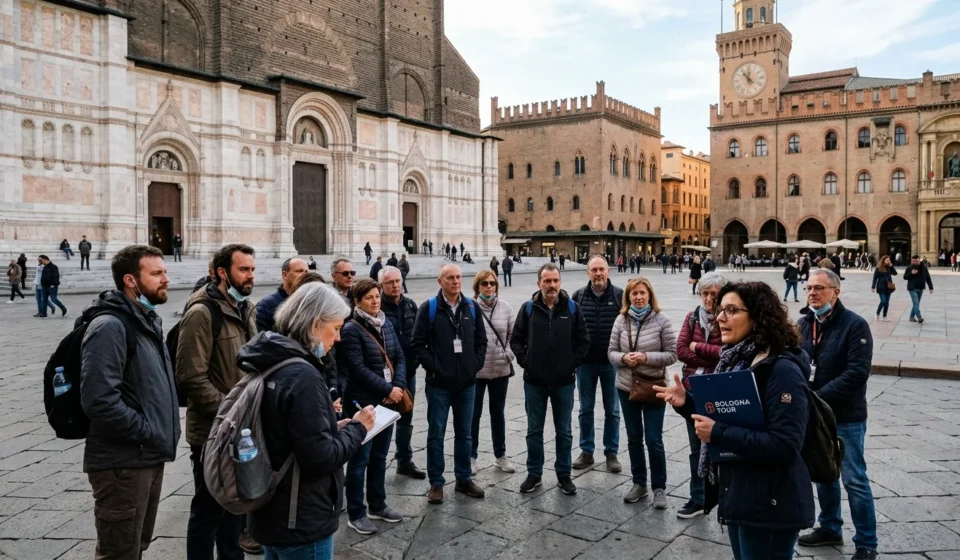
A free walking tour in Bologna is a tip-based, two-hour route through the historic center, usually starting at Piazza Maggiore and covering the Two Towers, the university quarter, and the covered porticoes the city is known for. No ticket is required. You show up, join the group, and pay the guide what you think the tour was worth at the end.
How the “Free” Tour Actually Works
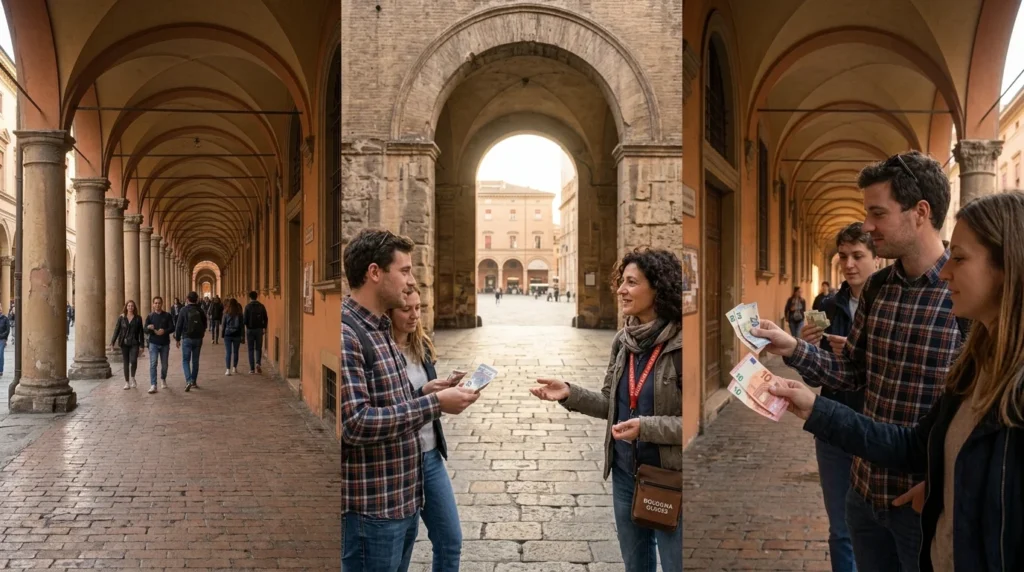
These tours run on a tip model, not a fixed fee. The guide works for tips only, so the walk itself costs nothing to book, but you’re expected to pay at the end based on what the experience was worth to you. Most people from the US budget somewhere between 10 and 20 euros per person, though there’s no set rate and no one checks what you give.
Companies like Free Tour Bologna and New Bologna Free Tour run daily departures, typically once in the morning and once in the afternoon. You reserve a spot online through their site or through GetYourGuide, show up five to ten minutes early, and look for the guide holding a colored umbrella or a sign with the company logo.
Cancellation is simple because there’s nothing to cancel. If plans change, you just don’t show up. That flexibility is one of the real advantages over a prepaid ticketed tour, where a missed slot usually means a lost payment.
Most departures run in English, and the bigger companies also offer a Spanish or Italian-language slot at least once a day. If English isn’t the only option you need, it’s worth checking the specific time slot before booking rather than assuming every departure covers your language.
Group sizes swing depending on the season and the day of the week. A Tuesday morning in February might pull five or six people, while a Saturday in July can stretch past thirty. If a smaller, quieter group matters more to you than saving money, an early weekday slot in the shoulder season is the better bet.
Where the Route Goes
The standard route sticks to a compact loop through the medieval core, walkable in under two miles total. It starts at Piazza Maggiore, the main square, where the guide usually spends ten to fifteen minutes on Bologna’s political history and the unfinished marble facade of the Basilica of San Petronio.
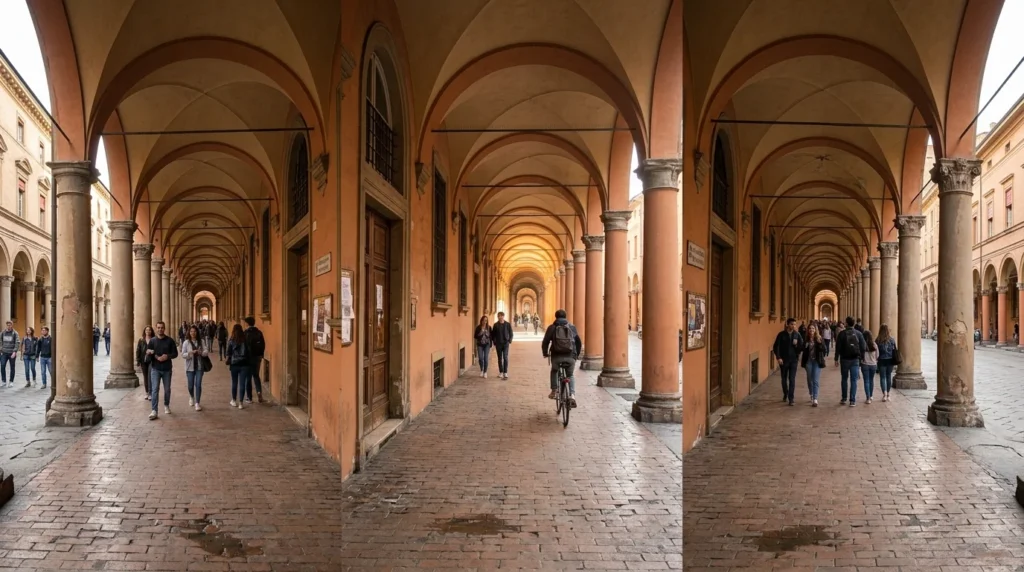
From there, the group moves through Piazza del Nettuno to see the Fountain of Neptune, then heads into the porticoed streets toward the university district. Bologna has more than 24 miles of covered porticoes across the city, and the guides usually point out why: they were built as a way to expand living space above street level while keeping the sidewalks dry, and the city has kept building them the same way for centuries.
1. The Two Towers Stop
The tour’s photo stop is almost always the Two Towers, Asinelli and Garisenda, standing at an odd tilt a few blocks from the main square. Asinelli leans slightly and climbs nearly 320 feet, while the shorter Garisenda leans more sharply and has been closed to visitors for years over structural concerns.

Guides usually explain that Bologna once had well over a hundred family towers built as status symbols in the 12th and 13th centuries, and most were torn down or collapsed over the following centuries. Only around twenty remain today, and the two at the city center are the tallest survivors.
Garisenda’s closure has been in place since 2023 after engineers found the lean had worsened, and it’s still shut as of this writing. Guides will mention the restoration work if scaffolding is up, since it changes what the photo stop actually looks like depending on when you visit.
Asinelli reopened to climbers after a period of restricted access, though tickets for the climb are separate from the walking tour and need to be booked in advance through the city’s own site, especially in peak months when daily slots run out early.
2. University Quarter and Portico Life
The last stretch usually runs through Via Zamboni, home to the University of Bologna, generally recognized as the oldest university in the Western world, founded in 1088. Guides point out student housing, old lecture halls, and the graffiti-covered walls near the arts buildings, a contrast to the polished squares earlier in the route.
This part of the walk tends to feel less like a monument checklist and more like a normal weekday in a college town, which is usually the section US travelers mention afterward as their favorite.
Some guides work in a short stop at Piazza Verdi, the informal student hangout near the theater of the same name, where the crowd shifts from tourists to local students within a single block. It’s not on every company’s fixed route, so it depends partly on which guide you get and how much time is left on the clock.
Bologna is nicknamed “la dotta,” the learned one, largely because of the university’s age and influence, and guides tend to lean on that history to explain why the city has such a strong student population relative to its size, somewhere around 100,000 students in a city of roughly 390,000 residents.
What the Tour Doesn’t Cover
A two-hour free tour is an orientation, not a deep dive. It won’t take you inside museums, and it generally skips the food market at Quadrilatero beyond pointing you toward it. If a trattoria recommendation or a proper food tour matters to your trip, that’s worth booking separately, since guides on the free route are focused on history and architecture rather than restaurant advice.
It also won’t get you into paid sites like the Asinelli Tower climb or San Petronio’s rooftop, both of which run on their own ticketing and timed entry.
Accessibility is another gap worth flagging. The cobblestone streets and occasional steps make the standard route difficult for wheelchair users or anyone with limited mobility, and the free tour companies generally don’t offer an adapted version.
There’s also no restroom stop built in. Cafes around Piazza Maggiore will usually let you use a bathroom if you buy something small.
Tipping, Timing, and Practical Notes for US Travelers
Cash is the standard way to tip, and euros are expected rather than dollars, so it helps to stop at an ATM before the tour rather than relying on cards. Guides won’t refuse a tip through an app in a pinch, but cash keeps things simple for everyone.
Morning departures tend to run smaller and quieter, especially outside the June through August stretch when Bologna gets its heaviest US tourist traffic. Afternoon slots fill up faster in summer since they overlap with day-trippers coming from Florence and Venice.
Comfortable shoes matter more than they sound like they would. The route covers uneven cobblestone for most of its two miles, and the porticoes mean you’re rarely in direct sun, which is useful in July and August when Bologna regularly hits the high 80s Fahrenheit.
Winter tours run the same route at a faster pace, since guides keep the group moving when temperatures drop into the 30s and 40s Fahrenheit between December and February. Layered clothing works better than one heavy coat, since the porticoes block wind but the open piazzas don’t.
Flights from the US into Bologna’s Guglielmo Marconi Airport are limited, so most American travelers connect through Rome, Milan, or a European hub first. From the airport, a shuttle bus called the Marconi Express runs directly to the main train station in about seven minutes, putting you within a fifteen-minute walk of Piazza Maggiore and the tour’s starting point.
Free Tour vs. a Paid Tour
A paid, small-group tour usually runs 25 to 45 euros per person and includes access to at least one ticketed site, a smaller group size, and a guide who’s often a licensed local historian rather than a tour company employee. The free version trades that depth for zero upfront cost and a larger group, often 20 to 30 people depending on the season.
For a first visit to Bologna, the free tour is a reasonable way to get oriented before deciding what’s worth paying for later, whether that’s the tower climb, a food tour through the Quadrilatero, or a return trip to San Petronio for the astronomical sundial inside.
Booking two to three days ahead is enough during most of the year, though during university graduation season in July, when Bologna’s streets fill with families celebrating graduates in laurel wreaths, slots can fill up faster than usual.
Is a Free Walking Tour Worth It in Bologna
For a city this walkable, spending two hours with someone who already knows the streets is a fast way to build a mental map before exploring on your own. It also tends to answer the small questions a guidebook skips, like why so many buildings share the same terracotta color, or why locals call the city “la rossa,” the red one, a nickname tied to both the rooftops and its political history.
The tradeoff is pace. A private or small-group paid tour lets you ask more questions and linger longer at any single stop, while the free tour moves on a fixed schedule to stay fair to the whole group. For a first afternoon in Bologna, most travelers find the free version gives enough context to decide where they want to come back on their own later in the trip. If you’re planning a longer European city trip, what to do in Budapest is another useful guide for building a walkable itinerary around major sights.