
What to Do in Budapest: A Local-Style Guide
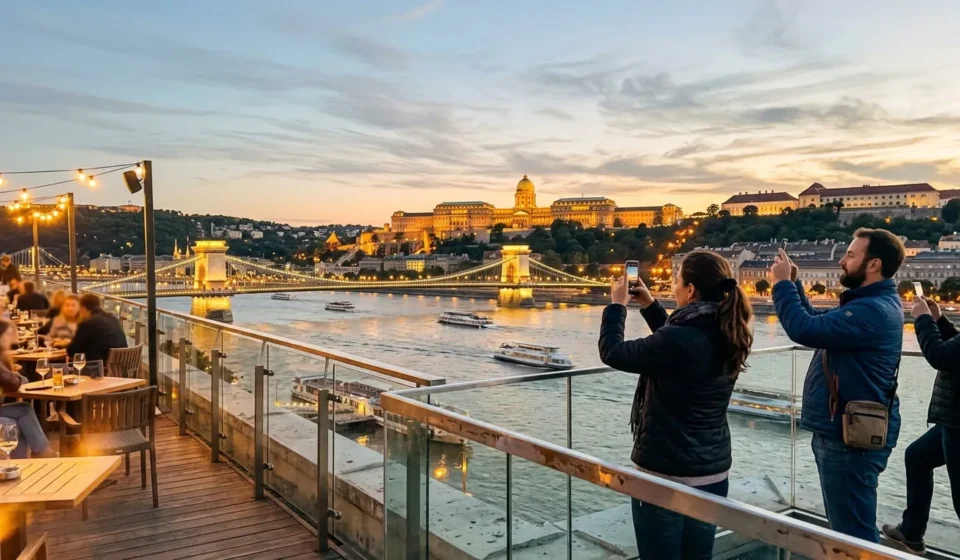
Budapest splits into two personalities across the Danube: hilly, castle-topped Buda and flat, buzzing Pest. Between the two banks you get thermal baths, ruin bars, Gothic spires, and some of the best paprika-heavy food in Europe. If you are mapping out what to do in Budapest, the short version is to pair one big sight with something slower each day: a soak, a market stroll, a bridge walk at sunset. This guide breaks the city into blocks you can plan around, plus the practical details that make a first visit easier.
Start on Castle Hill
Buda Castle sits above the river on Castle Hill, and it works as the natural starting point for a first day in the city. The complex holds the Hungarian National Gallery and the Budapest History Museum, so you can pair the view with an hour or two of art if that interests you. From the castle, walk over to Fisherman’s Bastion, a set of white turrets built in 1902 that look out over Pest and the river. The lower terraces are free; the upper towers charge a small fee, and mornings before the tour buses arrive tend to be the calmest time to visit.
Matthias Church sits right next to the Bastion, with a roof of colored tiles that photographs well in almost any light. From there, walk down to the Chain Bridge, cross into Pest on foot, and turn around for one of the better views in the city: the castle lit against the hill with the river running in front of it. This whole stretch is consistently ranked among the top places to visit in Budapest, and it is easy to see why once you have walked it yourself. Budget half a day if you want to go inside the buildings rather than just look at them from outside.
If your legs are tired from the walk up, the Buda Castle Funicular runs from Clark Ádám Square near the bridge and drops you right at the castle gates. It gets a long line by midday, so ride it early or save it for the way down. This cluster of sights near the river is where most people start listing things to see in Budapest.
Soak in a Thermal Bath
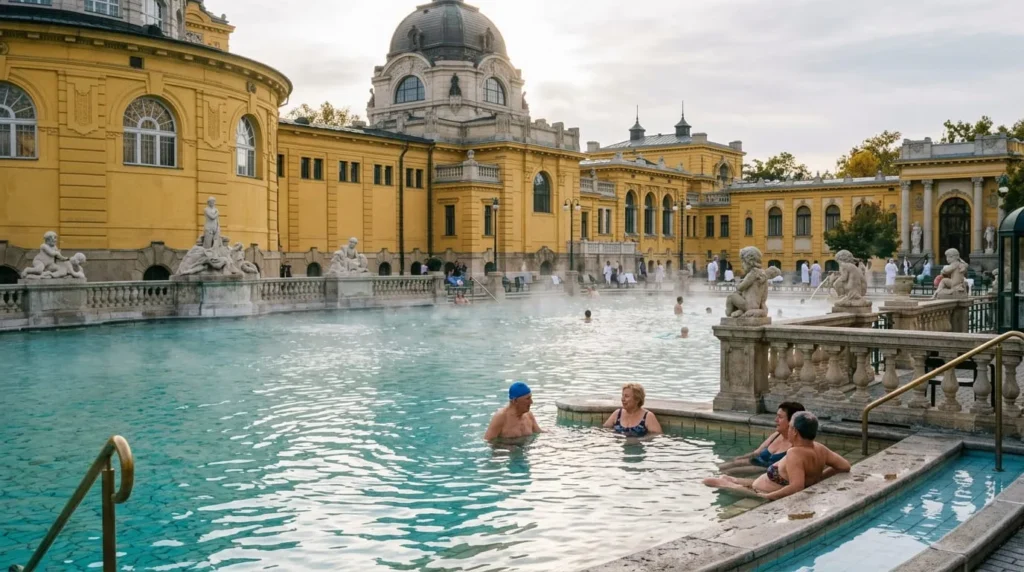
Budapest sits on top of a network of thermal springs, and the bath culture built around them is one of the more distinct things to do in Budapest that a first-time visitor might not expect. Széchenyi Baths, inside City Park, is the largest bath complex in Europe and the one most people picture: yellow buildings, outdoor pools, and locals playing chess in the water. Gellért Baths, across the river, leans more Art Nouveau, with mosaic tiles and a smaller, quieter outdoor pool.
Rudas Baths keeps its Ottoman-era domed pool and draws more of a local crowd, especially on weekend nights when it stays open late with music and a rooftop hot tub. Bring your own towel and flip-flops, since rentals cost extra and the line for them can run long. Entry typically falls between 15 and 25 dollars depending on the bath and time of day, and a locker is usually included. If you only have time for one, Széchenyi gives the most complete experience in a single visit.
For a cheaper, less touristy option, Lukács Baths on the Buda side draws mostly local regulars and costs noticeably less than Széchenyi or Gellért. It lacks the grand architecture of the other two, but the smaller crowd makes it easier to actually relax. Plan to spend at least two hours at whichever bath you pick, since rushing through one tends to defeat the point of going.
Wander the Jewish Quarter and Ruin Bars
District VII, the old Jewish Quarter, is where Budapest’s nightlife reputation actually comes from. Szimpla Kert opened inside an abandoned building in 2002 and started the ruin bar trend: mismatched furniture, plants growing out of old cars, and a courtyard that fills up fast after 8 p.m. On Sunday mornings, the same courtyard turns into a small farmers market, a good way to see the space without the evening crowd.
A few blocks over, the Dohány Street Synagogue is the largest in Europe and includes a memorial garden for Hungarian Jews killed in the Holocaust. Give it at least an hour, more if the museum inside interests you. Gozsdu Udvar, a connected row of courtyards nearby, strings together bars and small restaurants and works well if you want to bar-hop without much walking in between. Between the synagogue, the courtyards, and the bars, this district alone can fill an entire evening on its own.
If bar-hopping alone feels like a lot to plan, a guided ruin bar crawl covers three or four spots in one night and takes the guesswork out of picking where to go. During the day, the same streets are worth a slower walk for the street art and small vintage shops between the bars, most of which stay quiet until evening
Eat at the Great Market Hall and Beyond
The Great Market Hall, close to the Liberty Bridge, is the easiest place to eat and shop your way through Hungarian food in one stop. Downstairs sells produce, paprika, and cured meat; upstairs is a food hall where you can get lángos (fried dough topped with sour cream and cheese), a bowl of goulash, or stuffed cabbage. Arrive before noon for a table without a wait, since the upstairs stalls fill fast once tour groups show up.
Outside the market, look for chimney cake, known locally as kürtőskalács, from a street stand, ideally one that fills it fresh with ice cream or a chocolate spread. Ruszwurm, a small pastry shop near Castle Hill open since 1827, is worth the stop for coffee and something sweet after the castle walk. For a sit-down meal, ruin bars in the Jewish Quarter double as decent kitchens after dark, so you do not always need a separate restaurant stop.
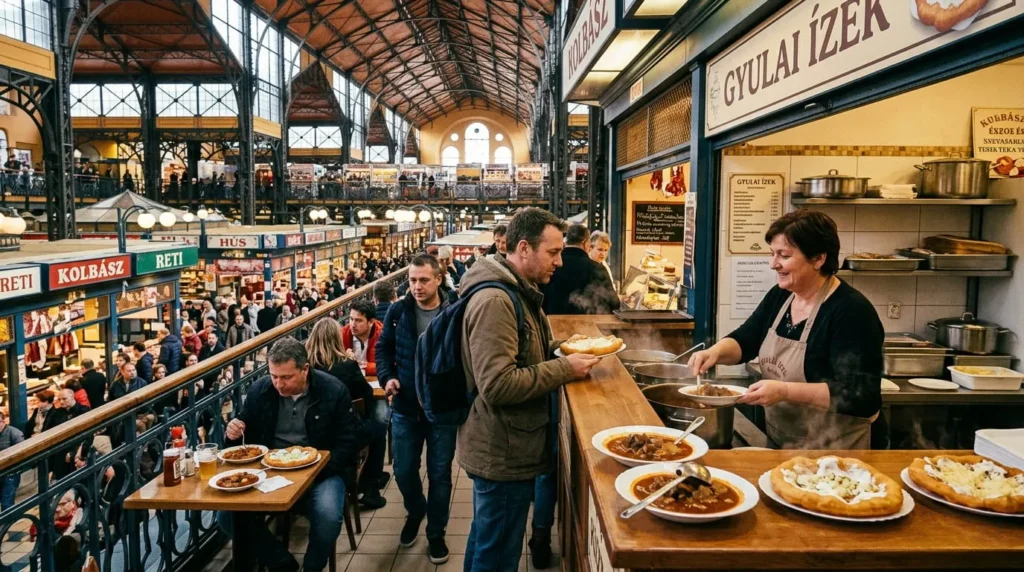
A sit-down lunch at a mid-range restaurant usually runs $10 to $20 per person, while a market stall meal costs closer to $6 to $10. For one splurge, the New York Café, a 19th-century coffeehouse with gold leaf ceilings and marble columns, is worth a slow breakfast even at tourist prices, mainly for the room itself. Reservations help there on weekends.
See the Parliament Building and Heroes’ Square
The Hungarian Parliament Building, on the Pest side of the river, is the third-largest parliament building in the world and the most photographed structure in the city. You can walk the grounds and riverbank for free at any hour, and the building is lit gold after dark. Guided interior tours run most days and are worth booking ahead, since the ticket includes the domed hall and the crown jewels.
From there, head northeast to Heroes’ Square, a large plaza with statues of Hungary’s early tribal leaders arranged around a central column. City Park sits right behind it, with the Museum of Fine Arts on one side and Vajdahunyad Castle, a smaller castle built for an exhibition in 1896, on the other. In winter, the park’s lake turns into an outdoor ice rink; in summer, it works as a shaded spot to sit after a morning of sightseeing. If you are still deciding what to see in Budapest beyond the obvious landmarks, this pocket of the city covers architecture, history, and a park in one walkable loop.
The Museum of Fine Arts holds a solid collection of European painting, including a decent run of Spanish and Dutch works, and rarely feels crowded compared to the bridges and bath complexes. Vajdahunyad Castle looks centuries old but was actually built for an 1896 exhibition, and most visitors skip the museum inside in favor of just photographing the exterior.
Take a Day Trip to Szentendre or Wine Country
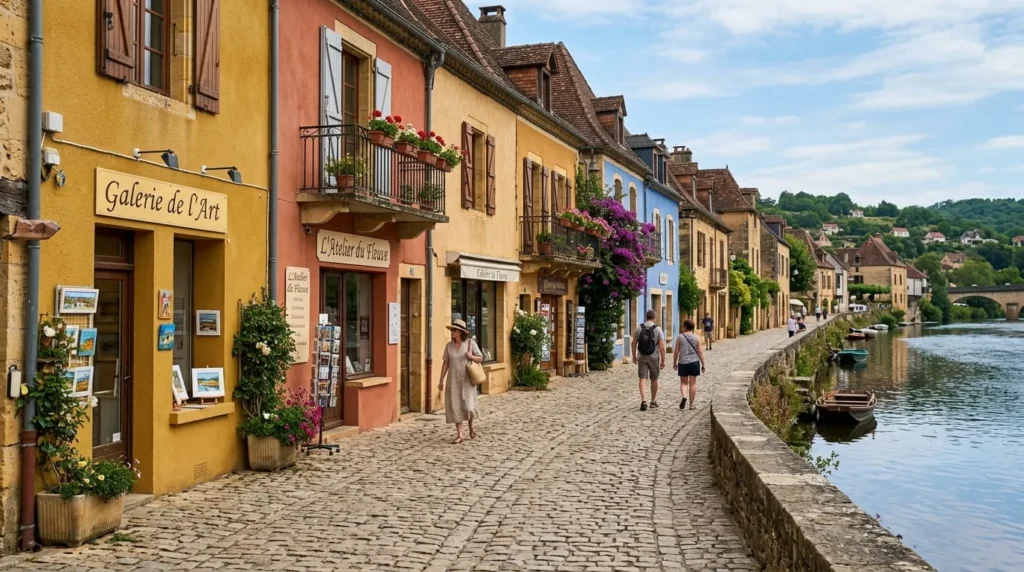
Szentendre, about 30 minutes north by the HÉV suburban train, is a small riverside village with cobblestone streets, art galleries, and Serbian Orthodox churches left over from centuries of merchant settlement. It gets busy on weekends, so a weekday visit is quieter and leaves more room to browse the craft shops without a crowd around you.
For something further out, the Eger wine region is about two hours away by train and centers on a valley nicknamed the Valley of the Beautiful Women, lined with small cellars pouring tastings by the glass. Closer to the city, half-day paprika or wine tastings leave directly from central Budapest, usually with a small group and a local host who knows the region well. Either option is a good way to see the countryside without giving up a full day of city sightseeing.
Visegrád, further up the Danube Bend, is another half-day option if you want ruined castle walls and river views without the wine tasting, and it pairs well with Szentendre as one long day on an early train. None of these day trips require a rental car, since regular trains and organized tours cover all three from central Budapest.
Plan the Logistics Before You Go
Hungary uses the forint (HUF), not the euro, and cards are accepted almost everywhere in the city center, so there is little need to carry much cash. A three-day public transit pass covers the metro, trams, and buses, and it usually costs less than buying single tickets if you are covering more than two or three sights a day.
Budapest is flat and walkable on the Pest side, while Buda’s hills are easier handled with the funicular or a tram. Tipping around 10 percent at sit-down restaurants is standard, and it is rarely added to the bill automatically, so check before you double up. Late spring and early fall bring milder weather and smaller crowds than peak summer, a comfortable window for a first visit built around walking.
A local prepaid SIM card or an eSIM set up before you land covers the city with steady data, which helps for pulling up transit maps or a translation app when a sign is only in Hungarian. Tap water is safe to drink across the city, so a refillable bottle saves a few dollars a day. Four or five days is enough to cover the highlights above without feeling rushed.
However you split up your days, most of these places to visit in Budapest sit close enough together that five or six stops, done at an unhurried pace, will tell you more about the city than rushing through a longer list. For travelers comparing European city costs before booking, is Stockholm expensive breaks down what a trip there realistically costs.