
Day of the Dead Mexico City Cleanup: What Happens After
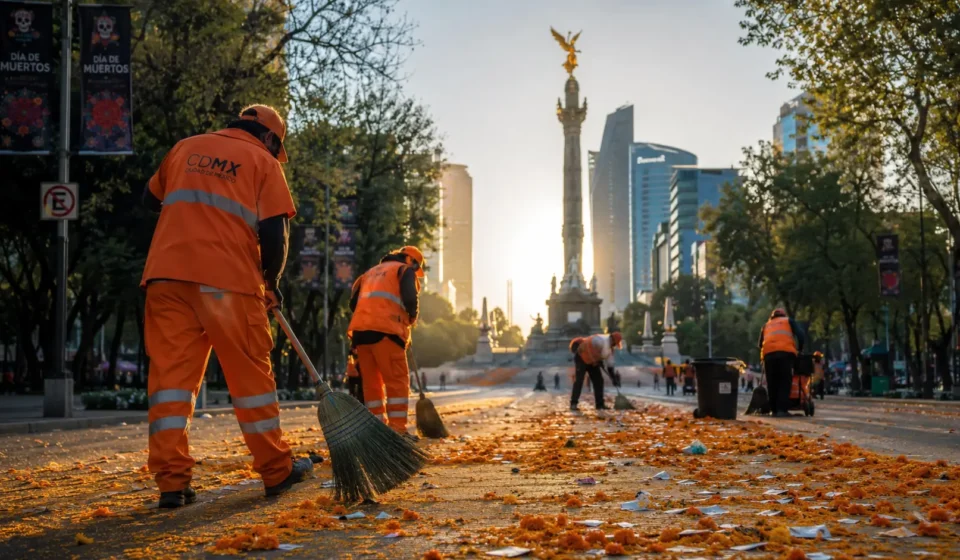
Most people who search for information on Day of the Dead in Mexico City picture the parade, the face paint, and the marigolds. Few think about what happens once the crowds go home. The Day of the Dead Mexico City cleanup is a massive, coordinated operation that most tourists never see, but it shapes how quickly the city returns to normal and how the celebration is remembered.
If you attended the festival, are planning to attend next year, or are simply curious about the logistics behind one of the largest public events in North America, this guide covers exactly what happens after the final float passes and the marigold petals settle.
How Big Day of the Dead Actually Gets in Mexico City
The modern Día de los Muertos parade in Mexico City did not exist in its current form until 2016, inspired partly by the opening scene of the James Bond film Spectre. Since then, it has grown into one of the city’s signature annual events, drawing crowds that regularly top a million people along the parade route alone.
Beyond the parade, the celebration includes altars in public plazas, flower installations at Chapultepec and the Zócalo, cemetery visits across the city, and smaller neighborhood processions that run for days before and after the main event. Each of these locations needs its own cleanup plan, not just the central parade route.
This scale is exactly why the cleanup effort matters. A festival this size generates an enormous amount of organic and inorganic waste in a short window, and Mexico City’s sanitation department has had to build a specific playbook for it.
Who Is Responsible for Cleaning Up After the Celebration
The bulk of the work falls to Mexico City’s public sanitation agency, known locally as Sistema de Aguas y Servicios Públicos, in coordination with the borough-level cleaning departments, since different stretches of the parade route and altar sites fall under different alcaldías, or boroughs.
1. City Sanitation Crews
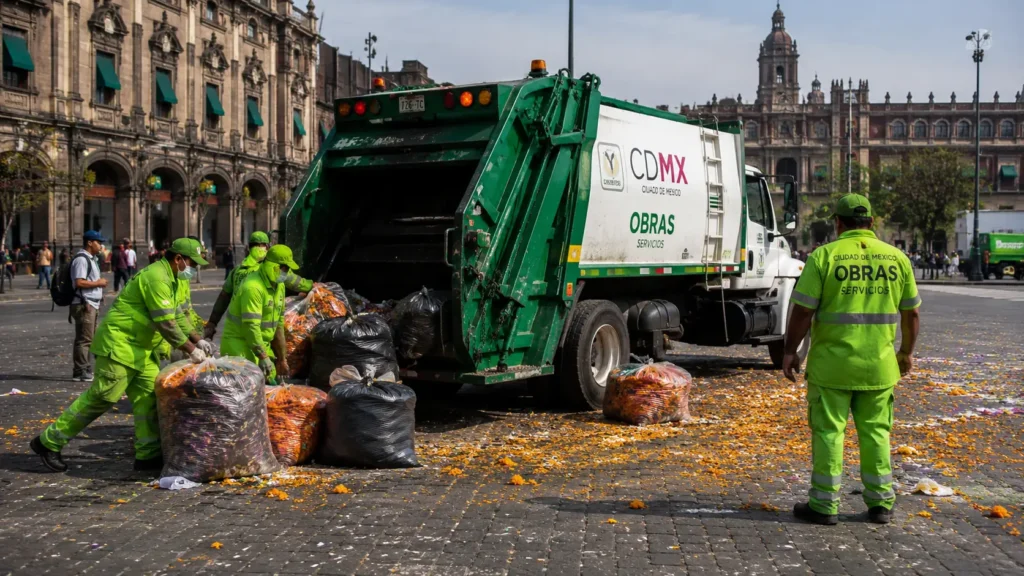
Uniformed crews begin work almost immediately after the parade ends, often working through the night. Street sweepers, garbage trucks, and pressure-washing units move through the route in stages, starting with the sections that reopen to traffic first. Reforma, one of the city’s busiest avenues, is typically prioritized because of how much commuter and tourist traffic depends on it.
2. Volunteer and Community Groups
Alongside official crews, local environmental groups and neighborhood associations often organize volunteer cleanup shifts, particularly around Chapultepec Park and smaller community altars that do not fall under the main parade budget. These groups tend to focus on separating recyclables and collecting flower waste for composting rather than general trash collection.
3. Vendors and Event Organizers
Many of the temporary stalls, stages, and decorative installations are managed by private contractors hired for the event. Under their permits, these vendors are typically responsible for breaking down their own setups and clearing their immediate footprint before city crews do a final pass.
What Actually Gets Cleaned Up
The waste generated during Day of the Dead falls into a few distinct categories, and each one is handled a little differently.
Marigold petals and stems make up a large share of the organic debris. Cempasúchil, the bright orange marigold associated with the holiday, is used by the ton to decorate floats, altars, and street displays. Once wilted, this material is collected separately in many boroughs so it can be composted rather than sent to a landfill.
Confetti and paper decorations are harder to manage because they scatter easily and settle into storm drains, cracks in the pavement, and green spaces. Crews use a mix of manual sweeping and mechanical street sweepers to catch as much as possible before rain or wind spreads it further.
Costume and makeup waste, including single-use face paint containers, wipes, and disposable props, adds a steady stream of general trash along the route. Public trash bins are supplemented with temporary collection points during the event, but overflow is common in the busiest sections.
Ofrenda materials from public altars, including candles, paper picado, sugar skulls, and photographs left as offerings, are treated with more care than general trash. City workers and volunteers typically wait a set period, often several days, before dismantling public altars out of respect for the tradition, then sort through items that families may want to reclaim.
How Long the Full Cleanup Takes
Most of the parade route reopens to normal traffic within 24 to 48 hours, since keeping a major avenue closed longer than that creates significant disruption for the rest of the city. However, full cleanup of secondary streets, parks, and smaller altar sites can take anywhere from three days to a full week.
Chapultepec Park, which hosts large flower installations and food vendor areas during the holiday, tends to take the longest to fully restore because of the volume of organic material and the size of the space involved. Some sections are closed to the public temporarily while crews finish clearing debris and checking for damage to landscaping.
Cemetery cleanup runs on a separate and slower timeline. Families often leave flowers, candles, and food offerings at gravesites, and cemetery staff generally allow these to remain for an extended period rather than removing them immediately, since the offerings themselves are considered part of the observance rather than trash.
Environmental Impact and Sustainability Efforts
A festival of this size inevitably raises questions about waste and environmental impact, and Mexico City has made visible efforts in recent years to address this.
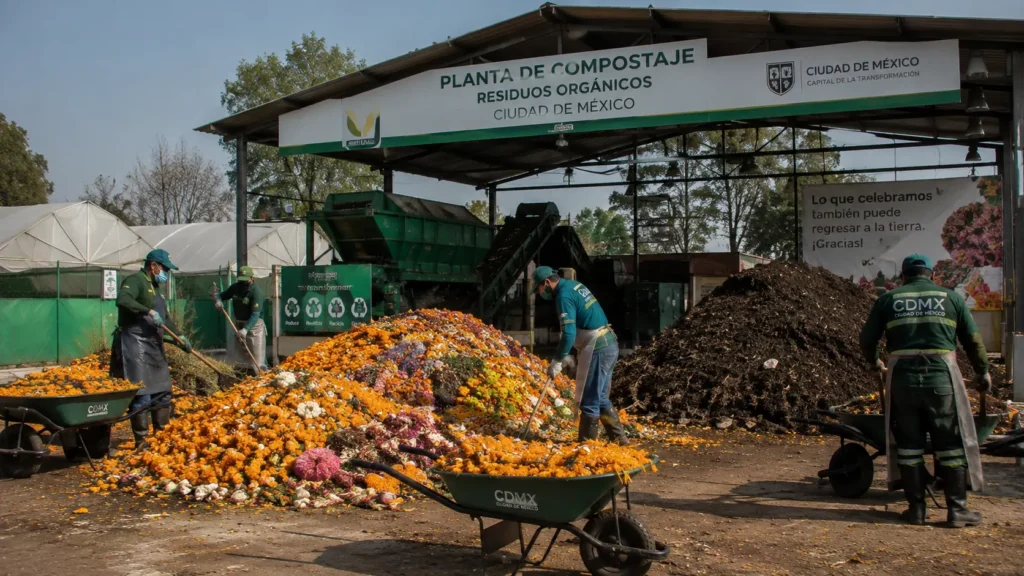
Composting programs for marigold waste have expanded, with some boroughs partnering with local farms and community gardens to turn flower debris into usable compost rather than landfill waste. This has become one of the more successful sustainability initiatives tied to the celebration.
Some organizers have also pushed vendors and float builders toward biodegradable confetti and reduced use of single-use plastics, though enforcement varies by borough and by year. Environmental groups continue to advocate for stricter rules, particularly around plastic decorations and disposable props used by parade participants.
Water usage during cleanup is another consideration, since pressure washing major avenues requires significant volumes of water in a city that already manages tight water resources. Crews have shifted toward more targeted washing in high-traffic areas rather than blanket washing of the entire route.
What Visitors Should Know Before and After the Celebration
If you are traveling from the US to experience Day of the Dead in Mexico City, understanding the cleanup timeline can actually help you plan a better trip.
Arriving a day or two after the main parade still gives you access to many altars, flower displays, and neighborhood events, often with smaller crowds and shorter lines, since the biggest single-day surge has already passed. Some installations at Chapultepec and the Zócalo remain up for over a week after the parade itself.
If you want to see the city at its most decorated, plan your visit for the day of or the day before the parade. If you prefer a calmer experience with most of the same visual impact, arriving two or three days after works well, though be aware that some smaller street displays will already be gone.
Visitors can also help reduce the cleanup burden simply by using designated trash and recycling bins along the route, avoiding single-use plastics where possible, and not removing items from public altars, since these are treated as offerings rather than souvenirs.
Environmental Impact and Sustainability Efforts
A frequent misconception among first-time visitors is assuming the entire city stays decorated for the full week surrounding November 1st and 2nd. In reality, the main parade route is largely cleared within two days, while smaller neighborhood events follow their own separate schedules.
Another common issue is visitors expecting cemeteries to look like tourist attractions immediately after the holiday. Many cemetery altars remain in place and undisturbed for days afterward out of respect for the families who created them, so visiting too early or too late can mean missing the display entirely or arriving after it has naturally faded.
Finally, some tourists assume public transportation and street access return to normal immediately after the parade ends. In practice, several blocks around the main route can remain restricted for cleanup equipment through the following morning, so building in extra travel time is worth planning for.