

Road Trips in the USA: Best Routes, Tips & Planning
A road trip in the USA is less about the destination and more about the miles in between. The country’s scale makes it one of the few places where you can drive for eight hours and land in a completely different climate, accent, and cuisine. Whether you are chasing desert canyons, coastal cliffs, or small towns that only exist along a two lane highway, planning matters as much as the drive itself. This guide walks through the routes worth taking, how to budget realistically, what to pack, and the mistakes that turn a dream trip into a stressful one.
Why Road Trips in the USA Work So Well
Few countries offer this combination of infrastructure, distance, and variety. Interstate highways are well maintained, gas stations are frequent even in remote areas, and cell coverage now reaches most major routes. This means you can plan loosely and still trust that help, food, and fuel are never too far away. The variety is the real draw. A single two week loop can take you from redwood forests to red rock deserts without ever leaving the country.
The tradeoff is distance itself. Many first time visitors underestimate how far apart things actually are. Los Angeles to Las Vegas looks close on a map but takes about four hours. Understanding real drive times, not straight line distance, is the first skill any road tripper needs.
Best Time of Year to Drive Across the USA
Timing changes everything about a route. Summer opens up mountain passes in Colorado and Wyoming that stay snowed in from October through May, but it also brings triple digit heat to Arizona and Nevada deserts. Fall, particularly late September through October, is ideal for New England and the Blue Ridge Parkway because of foliage color, though it means colder nights the further north you go.
Winter road trips work well in the Southwest and along the Gulf Coast, where daytime temperatures stay mild, but mountain routes should be avoided unless the vehicle has snow tires and chains. Spring is the sweet spot for the Southwest national parks, since summer crowds and heat have not yet arrived.
Top Road Trip Routes Across the USA
1. Pacific Coast Highway, California to Oregon
Highway 1 running along the California coast is consistently ranked among the best drives in the world, and it earns that reputation. Expect cliffside turns, fog that rolls in fast near Big Sur, and small towns like Cambria worth an overnight stop. Budget at least four full days if starting near Los Angeles and ending near Portland, since the scenery demands slow driving and frequent stops.
2. Route 66, Chicago to Santa Monica
Route 66 is more about nostalgia than scenery. Much of the original road has been replaced by interstates, but preserved sections still run through Oklahoma, Texas, New Mexico, and Arizona. Diners, motels, and roadside attractions from the 1950s remain intact in places like Tucumcari and Seligman. This route rewards travelers who enjoy Americana over dramatic landscapes. For travelers who want to finish a longer drive near the Atlantic coast, things to do in Myrtle Beach can help with planning time at the destination.
3. Blue Ridge Parkway and the Great Smoky Mountains
This 469 mile parkway connecting Virginia to North Carolina is free of commercial traffic and billboards, which keeps the mountain views uninterrupted. Fall is the peak season here, but spring wildflowers and summer green are underrated alternatives with far fewer crowds.
4. The Southwest National Park Loop
Grand Canyon, Zion, Bryce Canyon, and Monument Valley can be linked into a single loop starting from Las Vegas. Distances between parks range from two to five hours, so this route needs at least seven days to avoid rushing through parks that deserve full days each.
5. New England Fall Foliage Route
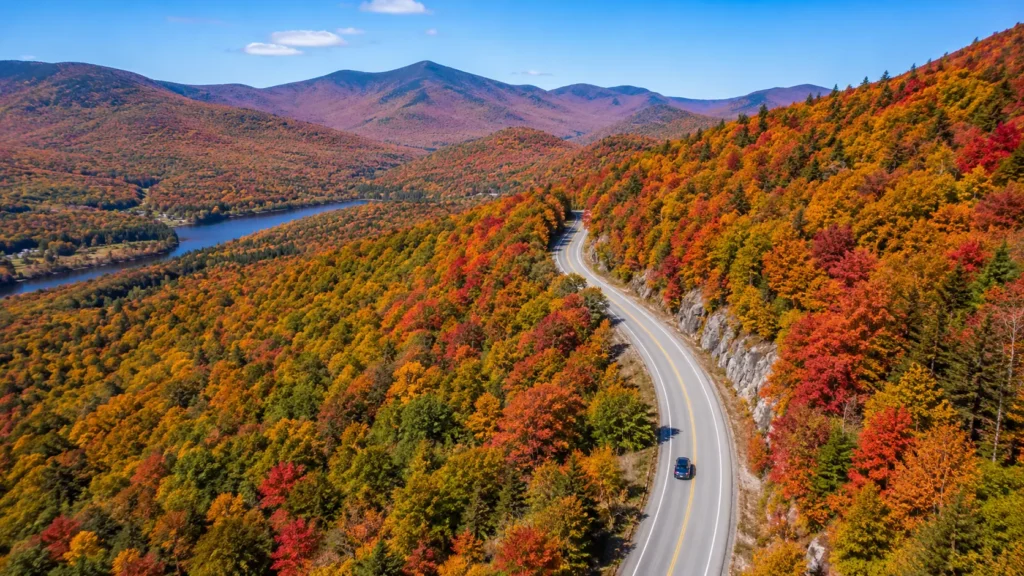
Vermont, New Hampshire, and Maine offer a compact loop, often under 500 miles total, that peaks in color from late September into mid October depending on latitude and elevation. This is one of the few US road trips where a shorter, slower pace beats covering more ground.
How to Plan a USA Road Trip Step by Step
Start with the number of days available, then work backward. A common mistake is choosing a route first and fitting days to it, which almost always leads to over packed itineraries. As a rough rule, plan no more than five to six hours of actual driving per day if you also want time to stop, eat, and explore.
Book accommodation in advance for national park gateway towns and coastal hotspots during peak season, since rooms in places like Moab or Big Sur sell out weeks ahead in summer and fall. For less popular stretches, booking a day or two ahead is usually fine and keeps the schedule flexible.
Map out fuel stops in advance if the route passes through genuinely remote areas, such as parts of Nevada, Utah, or West Texas, where gas stations can be 80 to 100 miles apart.
Budgeting for a Road Trip in the USA
Costs vary widely by region, but a realistic daily budget for two people, including a mid range hotel, meals, gas, and one paid attraction, generally lands between 200 and 350 dollars per day depending on the state. Gas costs less in the South and Midwest and more on the West Coast. National park entrance fees run around 30 to 35 dollars per vehicle for a week long pass, or 80 dollars for an annual pass covering all parks, which pays for itself after two or three park visits.
Camping cuts costs significantly, with public campgrounds often priced between 20 and 40 dollars a night compared to 150 dollars or more for a hotel in a tourist town. Cooking some meals rather than eating out for every stop is the single biggest lever for keeping a road trip budget under control.
Renting a Car vs Driving Your Own Vehicle
Visitors flying in will need a rental, and choosing the right one matters more than it seems. A standard sedan is fine for coastal and interstate routes, but anything heading into national parks with dirt access roads, or mountain passes in winter, benefits from an SUV with higher clearance. Unlimited mileage is worth confirming before booking, since many road trip itineraries easily cross 1,500 to 2,000 miles.
For those using their own car, a pre trip inspection covering tires, brakes, fluids, and battery health is worth the hour it takes, especially before desert or mountain driving where a breakdown means a long wait for help.
What to Pack for a Long Distance Drive
Beyond clothing, a few items make a real difference on long American road trips. A physical paper map or offline navigation download matters because cell service disappears for stretches in the Southwest and Rocky Mountain regions. A phone mount, a portable charger, and an inverter or car adapter keep devices usable through long driving days.
A basic emergency kit including jumper cables, a flashlight, extra water, and a first aid kit is worth the trunk space, particularly for desert routes where help can be far away. Reusable water bottles and a small cooler reduce both cost and the number of stops needed for food and drinks.
Safety Tips for Long Distance Driving
Fatigue causes more issues on long American highways than most drivers expect, largely because straight interstate stretches through states like Kansas or Nebraska can lull drivers into losing focus. Switching drivers every two to three hours, or stopping for fifteen minutes at that mark, reduces this risk significantly.

Weather changes fast in mountain and desert regions. Checking a route specific forecast the morning of departure, not just the night before, catches sudden storm warnings or road closures that overnight forecasts miss. In remote desert areas, carrying more water than seems necessary is a real safety measure, not just a comfort item, since a breakdown in extreme heat can become dangerous within hours.
Mistakes First Time Road Trippers Make
The most common mistake is overplanning mileage and underplanning time at each stop, which leads to arriving everywhere just to leave again. A second common issue is ignoring time zone changes on routes that cross several, which can quietly cost a planned hour of daylight without drivers noticing until sunset arrives earlier than expected.
Skipping travel insurance is another frequent oversight, especially for renters unfamiliar with US rental car insurance rules, which differ from country to country and can leave a gap in coverage if not checked in advance. Finally, many travelers assume Wi-Fi and cell service will be available everywhere, then find themselves stranded without directions in a canyon or forested stretch with no signal at all.
Choosing Between an East Coast, West Coast, or Cross Country Trip
Deciding on a region first makes route planning far easier. The West Coast rewards travelers who want dramatic elevation changes within a single day, moving from ocean cliffs to alpine forest to desert basin in a few hours of driving. The East Coast tends to favor history and small town charm over raw scenery, with shorter drives between stops and denser clusters of things to see.
A true cross country trip, from coast to coast, is a different kind of trip altogether. It rewards travelers who enjoy the drive itself as much as the stops, since large stretches of the Midwest and Great Plains are about open sky and steady highway rather than constant sightseeing. Two to three weeks is realistic for a coast to coast trip that avoids rushing, while anything shorter usually means treating it as a delivery run rather than a vacation.
Road Trip Apps and Tools Worth Downloading
A handful of tools consistently make American road trips smoother. Offline map downloads through Google Maps or a dedicated navigation app matter most in the Mountain West and parts of the Southwest, where signal gaps are common along scenic routes. Gas price comparison apps can save meaningful money over a long trip, since prices can shift by a dollar or more per gallon between neighboring towns.
A national park pass app or the official NPS app helps track entry requirements, timed entry reservations, and closures, which have become more common at popular parks like Zion and Arches during peak season. Weather apps with hourly forecasts, rather than daily summaries, are worth checking each morning when driving through mountain or desert terrain where conditions shift quickly.
Making the Most of the Drive
A great American road trip comes down to pacing, not distance covered. Choosing two or three regions to explore properly beats trying to see the entire country in two weeks. Build in slack days for weather, detours, or a town that turns out to be worth an extra night. The best stories from these trips rarely come from the planned highlights, they come from the unplanned stop at a diner or overlook that was not on the original list.