Things to Do in Taipei: A Complete Guide
Taipei rewards visitors who slow down. The city packs night markets, mountain trails, century-old temples, and a 101-story skyscraper into a compact, easy-to-navigate footprint. Figuring out what to do in Taipei is less about finding attractions, since they are everywhere, and more about deciding which version of the city you want to experience first. This guide breaks the city into its distinct sides: the landmarks, the food culture, the neighborhoods, and the nature that sits just outside the MRT lines.
Taipei’s Iconic Landmarks and Viewpoints
Start with the landmarks that give the city its shape. They are easy to reach by MRT and set the context for everything else you will see.
Taipei 101 and the Observation Deck
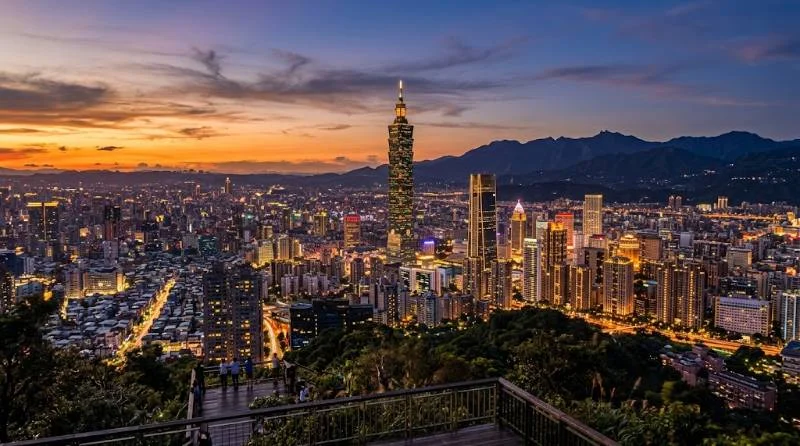
Taipei 101 held the title of world’s tallest building from 2004 to 2010, and it still anchors the skyline. The elevator to the observation deck on the 89th floor covers the climb in under 40 seconds, which is fast enough to feel in your ears. Once up top, the main draw besides the view is the tuned mass damper, a 660-ton steel sphere that keeps the tower stable during typhoons and earthquakes. Buy tickets online ahead of time on a weekend evening, since the line at the counter can stretch past an hour.
Elephant Mountain for the Skyline View
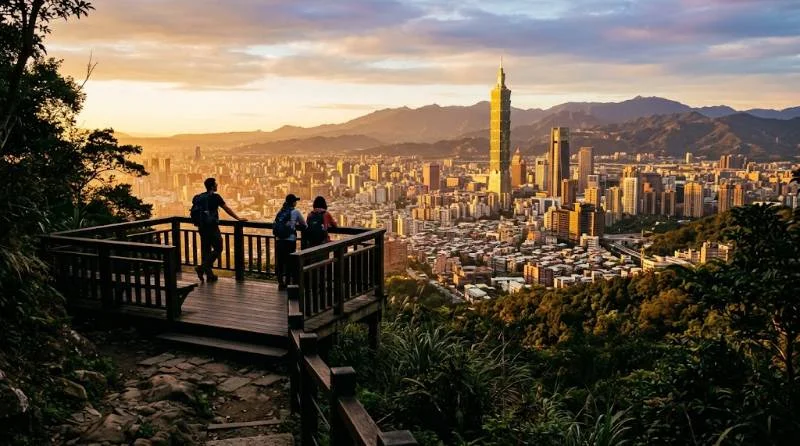
If you would rather earn the view than pay for it, hike Elephant Mountain instead. The trail starts a short walk from Xiangshan MRT station and takes about 20 minutes to reach the main lookout points. The reward is the classic Taipei postcard shot, with Taipei 101 rising above the city and the surrounding hills. Go about an hour before sunset on a clear day, and expect company since the spot is popular with photographers.
Chiang Kai-shek Memorial Hall
This white marble monument and its surrounding plaza give a different read on Taipei’s history. The changing of the guard ceremony happens on the hour and draws a steady crowd. The plaza connects to the National Theater and National Concert Hall, two blue-roofed buildings that are worth a look even if you are not attending a performance.
Best Night Markets in Taipei
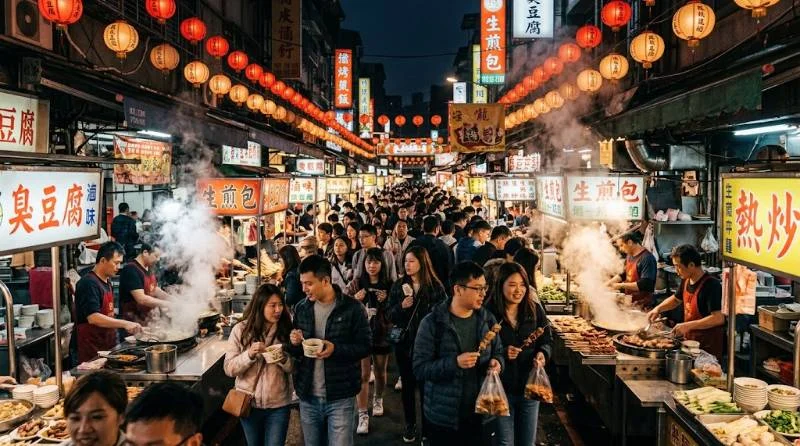
Night markets are where Taipei’s food culture actually lives. Each one has its own personality, so picking more than one is worth the effort.
1:Shilin Night Market
Shilin is the largest and most famous, with close to 400 food stalls once it gets going after sunset. Come hungry and plan to share plates, since portions add up fast. Large fried chicken cutlets, oyster omelets, and stinky tofu are the dishes locals point to first, though the underground food court has calmer seating if the crowds outside feel like too much.
2: Raohe Street Night Market
Raohe runs in a single straight line, which makes it far easier to navigate than Shilin’s sprawl. Pepper buns baked in a clay oven near the entrance are the market’s signature item, and the line for them rarely shrinks. A walking tour with local commentary can be worth booking here if you want context on the dishes rather than just a list of stalls to try.
3: Smaller Neighborhood Markets Worth a Detour
Ningxia and Huaxi Street markets get a fraction of the tourist traffic that Shilin does, which means shorter lines and, often, better food per stall. Ningxia in particular is known among locals for its concentration of old-school Taiwanese dishes rather than trendy snacks.
Temples and Traditional Culture
Taipei’s temples are still active places of worship, not museum pieces, and visiting one gives a grounded counterpoint to the modern skyline.
Longshan Temple
Built in 1738, Longshan Temple is Taipei’s most visited place of worship and one of its oldest buildings still standing. The layered rooflines and carved dragon pillars are worth studying up close, and the incense smoke drifting through the courtyard makes for one of the more atmospheric scenes in the city. Evening visits tend to be quieter than midday.
Dihua Street and Dadaocheng
Dihua Street sits in the Dadaocheng district and has functioned as a trading street for dried goods, herbs, and fabric since the 1850s. Many of the original shopfronts, with their baroque facades, are still standing above modern storefronts. The street extends roughly 800 meters to a kilometer and is a good place to buy tea, dried mushrooms, or traditional pastries to bring home.
Trendy Neighborhoods to Explore
Between the temples and the landmarks, Taipei has neighborhoods built for wandering without a fixed itinerary.
Ximending for Youth Culture and Shopping
Ximending is Taipei’s answer to Tokyo’s Harajuku or Seoul’s Myeongdong: a pedestrian-only shopping district full of neon signage, streetwear stores, and bubble tea shops on nearly every corner. It gets busier and more market-like after dark, and the area is a reliable spot for people-watching if you want to sit and take in the energy rather than shop.
Zhongshan and Songshan Cultural Park
Zhongshan has quieter, design-forward streets lined with independent cafes and boutiques, a contrast to Ximending’s density. Songshan Cultural Park, a converted tobacco factory nearby, hosts design exhibitions and markets on weekends inside its original industrial buildings.
Nature and Day Trips from Taipei
Taipei is ringed by mountains, hot springs, and coastal towns, all reachable without an overnight stay.
1: Maokong Gondola and Tea Plantations
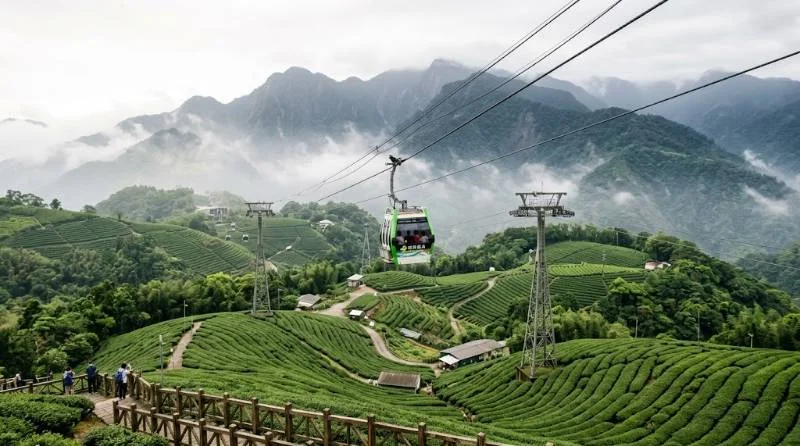
The Maokong Gondola carries you above the hills south of the city to a district known for its tea plantations. Several teahouses let you brew and drink tea grown on the surrounding slopes while looking out over the terraced hillsides. Pair the trip with Taipei Zoo, which sits at the gondola’s base station.
2: Yangmingshan National Park
Yangmingshan combines volcanic terrain, hot springs, and hiking trails within Taipei’s city limits. Seven Stars Peak, the park’s highest point, is a popular hike for the panoramic views at the summit. In spring, the park’s cherry blossoms and calla lilies draw crowds of their own.
3: Day Trips to Jiufen and Tamsui
Jiufen, a former gold mining town built into a hillside, is known for its lantern-lit teahouses and narrow stepped alleys. Tamsui, on Taipei’s northern edge, has a riverside promenade and old street that make for an easy half-day trip, particularly around sunset. Both are reachable by train or bus in under an hour.
Museums and Indoor Activities for Rainy Days
Taipei gets its share of rain, so it helps to have indoor options mapped out in advance.
National Palace Museum
The National Palace Museum holds one of the world’s largest collections of Chinese imperial artifacts, with roughly 700,000 pieces in its full collection. Only a fraction is on display at any time, but the jadeite cabbage carving and the intricately carved olive-pit boat are the two pieces most visitors seek out first.
Addiction Aquatic Development
Part seafood market and part food hall, Addiction Aquatic Development is built around a central room lined with tanks holding king crab and other live seafood. Standing sushi bars, a hot pot restaurant, and takeaway sushi sets make it a practical lunch stop as much as a sightseeing detour.
How to Get Around Taipei
Taipei’s MRT system is clean, frequent, and simple to navigate even without Mandarin. An EasyCard, sold at every station, covers the MRT, city buses, and even entry to some attractions, and it removes the need to buy individual paper tickets.
A few practical notes worth knowing before your first ride:
- The MRT stops running around midnight, so plan late-night transport around taxis or the city’s YouBike share bike system.
- Multi-day MRT passes exist, but they generally do not cover the airport line from Taoyuan.
- Google Maps handles MRT and bus routing accurately, including real-time delays.
How Many Days Do You Need in Taipei?
Three full days covers the landmarks, one night market, and a single day trip without feeling rushed. Five to seven days lets you add a second day trip, one of the hiking areas, and time to simply wander a neighborhood without a checklist. Travelers using Taipei as a base for the rest of Taiwan often find that even a short stay works, since day trips to New Taipei City require no more than a few hours each way.