What to Do in Croatia: Top Things & Places
Croatia packs walled medieval cities, waterfalls that turn a dozen shades of blue and green, and over a thousand islands into a country roughly the size of West Virginia. Most first-time visitors land in Dubrovnik or Split and build a route north or south from there, mixing old towns with beach days and at least one national park.
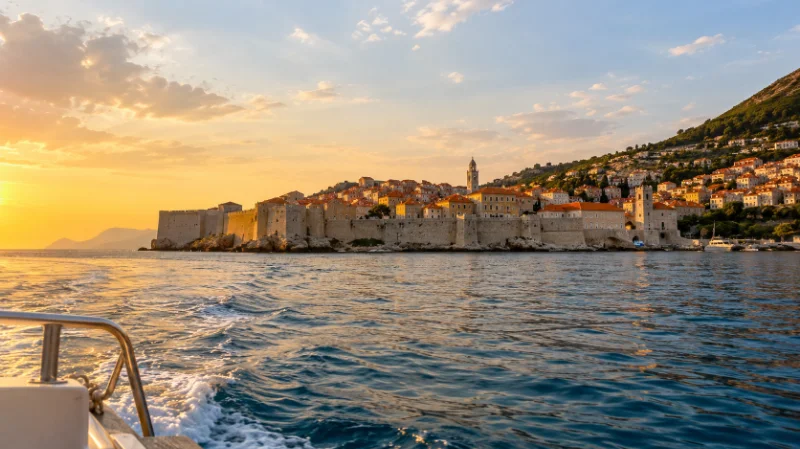
Walk the Dubrovnik City Walls
The walls circling Dubrovnik’s Old Town run about 1.2 miles and take most people 90 minutes to two hours to walk at an easy pace with stops for photos. Go right when the walls open, before 9 a.m. in summer, since the stone holds heat fast and the crowds thicken by mid-morning.
Tickets are sold at three entry points: near Pile Gate, near Ploče Gate, and by St. Luke’s Tower. Buy online in advance during July and August, when same-day tickets can sell out or mean a long line in direct sun. Bring water. There’s no shade on most of the route and few places to refill a bottle once you’re up there.
Game of Thrones fans will recognize several corners of the walls and the Old Town below, since King’s Landing scenes were filmed throughout the city between 2011 and 2018.
Explore Diocletian’s Palace in Split
Split’s city center isn’t built near a Roman palace; it’s built inside one. Emperor Diocletian had the palace constructed around 305 AD as his retirement residence, and the city grew up within and around its original walls over the following 1,700 years. Restaurants, apartments, and shops now operate out of spaces that were once imperial chambers and storage vaults.
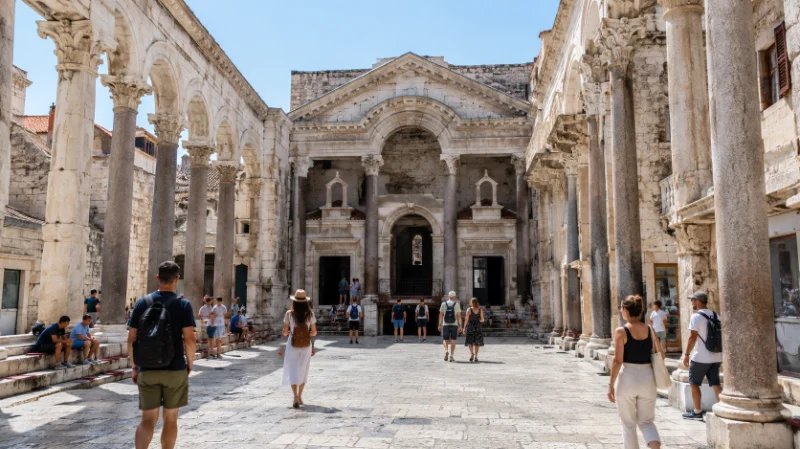
Start at the Peristyle, the palace’s old central courtyard, then head down into the basement halls, which stayed largely intact because they were used for storage and later filled with debris, which ended up preserving the original Roman architecture above. Climb the bell tower of St. Domnius Cathedral for a rooftop view over the terracotta rooftops if you don’t mind a narrow, steep staircase.
See the Waterfalls at Plitvice Lakes National Park
Plitvice is a two-hour drive from Zagreb or about three hours from Split, and it’s the single most visited natural attraction in the country for a reason. Sixteen terraced lakes connect through waterfalls and travertine barriers, with wooden boardwalks running right over and alongside the water so you’re walking within a few feet of it most of the way.
Plan for at least four to five hours to cover one of the longer marked routes (Route C or Route K), which combine the Upper and Lower Lakes with a boat crossing included in the ticket price. The park limits daily visitor numbers and sells timed-entry tickets, so book a specific time slot ahead of your visit, especially between June and September.
Pack shoes with real grip. The boardwalks get slick from spray, and there are a few sections with stairs and uneven wooden planks.
Go Island Hopping from Split or Hvar
Central Dalmatia gives you three islands within easy reach of Split by ferry or catamaran: Hvar, Brač, and Vis.
Hvar Town draws the biggest crowds and the liveliest restaurant and bar scene, backed by a 13th-century fortress you can hike up to for a sunset view over the harbor. Brač is home to Zlatni Rat, a pebble beach that extends into the sea in a shifting point shape and changes direction slightly depending on the wind and current. Vis sits farther out and stayed closed to foreign visitors until 1989 because it held a Yugoslav military base, so it’s kept a quieter, slower feel than the more developed islands closer to the mainland.
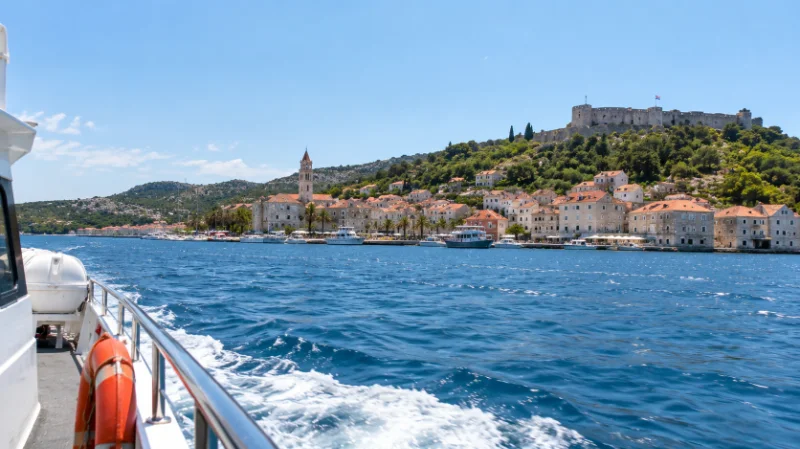
A one-day catamaran run to Hvar from Split takes under an hour each way, which makes it realistic as a day trip if your base is in Split. Vis takes longer to reach and rewards an overnight stay more than a rushed day trip.
Drive the Istrian Peninsula for Hill Towns and Truffles
Istria, in the country’s northwest corner, feels closer in style to nearby Italy than to the Dalmatian coast further south. Hill towns like Motovun and Grožnjan sit above vineyard and olive grove valleys, and the region is known across the country for white and black truffles harvested in the forests around the Mirna River.
Rovinj is Istria’s most photographed coastal town, with a bell tower modeled on the one in Venice and pastel buildings packed tightly along the harbor. Pula, at the peninsula’s southern tip, has a first-century Roman amphitheater that’s still used for concerts and film screenings in summer, and it’s one of the best-preserved Roman arenas anywhere in Europe.
Renting a car is close to essential in Istria. Bus connections between the hill towns are limited, and a lot of the region’s appeal is stopping at small family-run wineries and konoba restaurants that aren’t on a fixed transit route.
Eat Where the Locals Eat
Croatian coastal food leans heavily on grilled fish, olive oil, and simple preparation rather than heavy sauces. Look for a konoba, a small, family-run tavern, over restaurants with laminated multilingual menus and photos of the food out front, which is usually a sign a place caters mainly to tour groups.
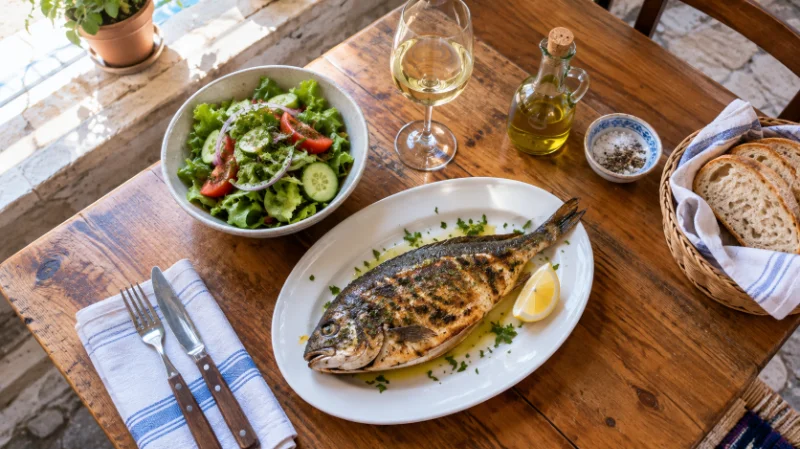
Peka is worth planning around rather than ordering on a whim. It’s meat or octopus slow-cooked under a metal dome covered in hot coals, and most restaurants need several hours of advance notice to prepare it properly. Black risotto, made with cuttlefish or squid ink, and Dalmatian pršut, an air-dried ham similar to prosciutto, both show up on menus across the coast. Inland, especially around Zagreb and Slavonia, expect heartier fare like štrukli, a baked or boiled cheese pastry, and kulen, a spiced paprika sausage.
Spend a Day in Zagreb
Zagreb rarely makes the highlight reel next to the coast, but it’s worth a day or two, especially if you’re flying in or out of the capital anyway. The Upper Town, Gornji Grad, holds St. Mark’s Church with its tiled roof showing the coats of arms of Croatia and Zagreb, plus a funicular that’s one of the shortest public transit rides in the world at under a minute.
Dolac Market, just above the main square, runs every morning and is where a lot of the city’s restaurants still buy produce, cheese, and flowers directly from regional sellers. The Museum of Broken Relationships, a small museum built entirely from donated objects and short stories tied to failed relationships, has become one of the city’s more talked-about stops for visitors who want something outside the usual church-and-square circuit.
Visit Krka National Park for a Swim
Krka gets compared to Plitvice constantly, but the two parks offer a different day out. Krka, closer to Zadar and Šibenik, allows swimming below its main waterfall, Skradinski Buk, at a designated area, which Plitvice does not permit anywhere in the park. The swimming zone closes in some years depending on water levels and conservation decisions, so it’s worth checking current rules before counting on a swim.
Most visitors reach the falls by a short boat ride from Skradin or by walking the boardwalk trail from the Lozovac entrance. The walk down is a manageable 20 to 30 minutes, though the return trip involves more of a climb. Visnjica Island, home to the Visovac Monastery, sits within the park and is reachable by a short boat tour that’s usually included with certain ticket types.
Early morning arrival matters here too. The boardwalks near the main falls narrow in places, and midday in peak season means slow-moving foot traffic in both directions.
Watch the Sunset from Zadar’s Sea Organ
Zadar sits between Split and Plitvice geographically, which makes it an easy stop to fold into a coastal itinerary rather than a dedicated destination on its own. The city’s Sea Organ, built into stone steps along the waterfront in 2005, uses the motion of waves pushing air through underwater pipes to produce a low, shifting musical tone, audible as you sit on the steps above it.
Next to the Sea Organ is the Monument to the Sun, a circular installation of solar panels set into the pavement that lights up after dark in a changing pattern powered by the energy collected during the day. Alfred Hitchcock reportedly called Zadar’s sunset the most beautiful in the world during a visit in the 1960s, and the combination of the open horizon and the Sea Organ’s sound makes the harbor a popular spot to sit for the last hour of daylight.
Zadar’s Old Town also holds the Church of St. Donatus, a ninth-century Byzantine-style rotunda that’s one of the oldest structures on the Dalmatian coast, along with Roman forum ruins right beside it.
Plan Around the Right Season
June and September give the closest balance of warm water, manageable crowds, and lower accommodation prices compared to the peak of July and August, when the coast, and Dubrovnik in particular, gets genuinely crowded with cruise passengers and tour groups midday. Shoulder season also makes it easier to get a same-day table at smaller konobas without a reservation made days in advance.
Winter travel works better for Zagreb and inland Croatia than for the coast, since a lot of island ferries reduce their schedules and some coastal restaurants close for the season entirely between November and March. If a national park visit is the priority, Plitvice and Krka both stay open year-round, and Plitvice in particular looks different in winter with partially frozen waterfalls, though some trails close after heavy snow.
Kayak or Sail the Adriatic Coastline
The coastline’s mix of clear water and hundreds of small islands makes it a natural fit for time on the water beyond a standard beach day. Half-day sea kayaking trips around Dubrovnik’s Old Town walls and the nearby island of Lokrum are common and don’t require prior kayaking experience.
For a longer trip, multi-day sailing routes through the Dalmatian islands, often starting in Split or Trogir, let you cover several islands without repacking a hotel bag each night. Charter options range from a skippered boat, where someone else handles the sailing, to a bareboat charter for travelers with an actual sailing license. Even a single afternoon on a smaller boat out to a quiet cove away from the main harbor gives a different view of the coast than what you get from the shore.
Water temperatures are comfortable for swimming from roughly June through September, with July and August the warmest but also the most crowded months on the water.