Best Time to Visit Uzbekistan: A Season-by-Season Guide
The best time to visit Uzbekistan is during the two shoulder seasons: April to early June, and September through October. Outside these windows, the climate swings hard in both directions. Summer heat in July and August makes midday sightseeing genuinely uncomfortable. Winter cold in January can keep smaller guesthouses shuttered for the season. But “best” depends on what you actually want from the trip. A photographer chasing empty courtyards at the Registan wants different weather than a family timing a visit around a festival. This guide breaks down each season month by month, then matches timing to travel priorities.
The Quick Verdict: Early Autumn Edges Out Spring
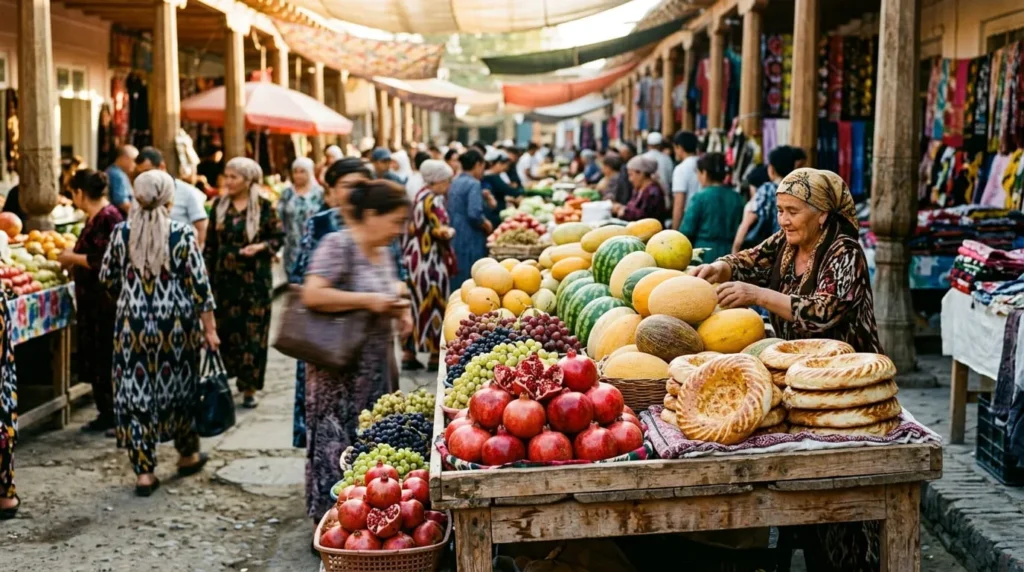
If I could book only one week in Uzbekistan, I would pick late September through mid-October. I would choose it over any single week in spring. Spring gets more attention because of the Navruz festival and the desert wildflower bloom. But autumn’s light is softer, and the heat has genuinely broken rather than just started to build. The harvest also fills every bazaar with melons, pomegranates, and fresh bread, instead of picked-over stock. Spring is less predictable, too. Late frosts and rain can push into April some years. The wildflower window itself lasts only a few weeks and shifts from year to year. Autumn’s stability makes it easier to plan a tight, multi-city itinerary without a weather buffer built in.
Why Uzbekistan’s Climate Makes Timing So Important
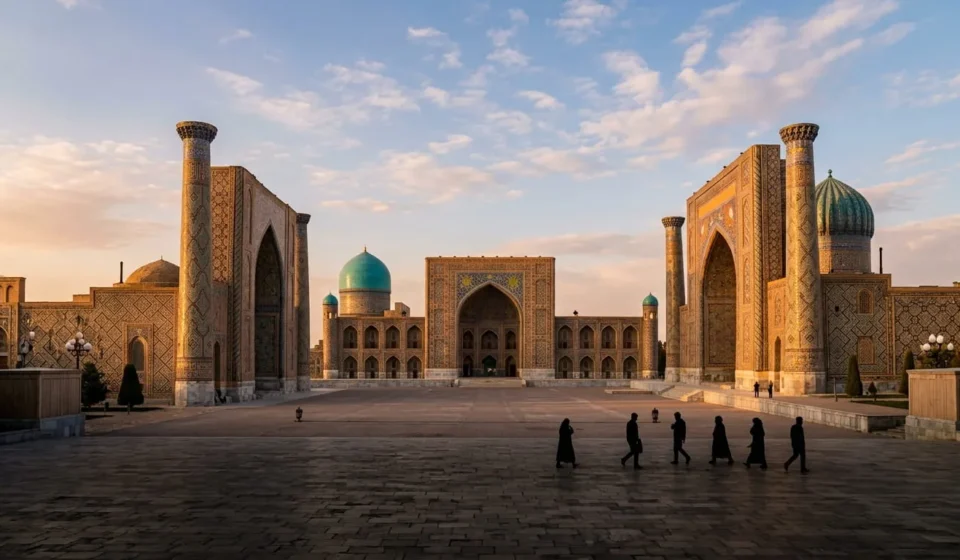
Uzbekistan sits deep inland, one of only two doubly landlocked countries on Earth. There is no ocean nearby to soften temperature swings. The result is a sharp continental climate. Summer highs top 40°C in the south around Termez and Bukhara. Winter lows drop well below freezing in the north around Nukus and the Aral Sea basin. Humidity stays low year round, which makes the heat more bearable than the numbers suggest. It also means little cloud cover to trap warmth after dark. Most of the country’s landmark sites sit outdoors: the Registan, Khiva’s old town, the Shah-i-Zinda necropolis. Seeing them means hours on foot over stone and tile. Comfort during those hours matters more here than in milder destinations.
Spring in Uzbekistan (March to May)
March: Navruz and the First Green
March opens cool and often wet. Highs climb from the low teens into the low twenties Celsius by month’s end. The defining event is Navruz on March 21, the Persian new year and spring equinox celebration. Streets fill with music, communal cooking, and family visits nationwide. It’s a genuine window into Uzbek hospitality. Book transport and hotels well ahead, since domestic travel spikes around the holiday. Wildflowers, including poppies and tulips, start appearing toward the end of the month. Look for them in the Tien Shan foothills and along the edges of the Kyzylkum Desert.
April: The Comfort Peak
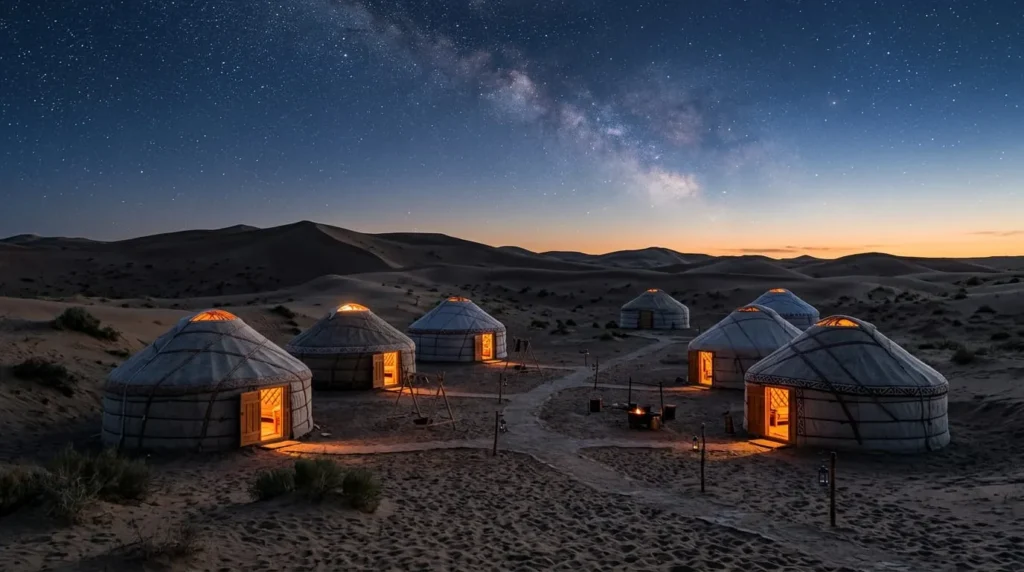
April is when peak season genuinely begins. Daytime highs settle into the high teens and low twenties. Rain becomes less frequent, and the desert bloom often peaks in the first half of the month. This is also the last reliable window for multi-day desert travel before summer heat closes it until autumn. The trade-off is crowding. Samarkand and Bukhara’s major sites fill with tour groups, and hotel rates climb accordingly.
May: Warm, Busy, and Worth Booking Early
May pushes highs into the high twenties, sometimes the low thirties in the south. It stays comfortable for sightseeing if you plan around the midday heat. May also hosts Bukhara’s Silk and Spices Festival at the very end of the month. It’s a genuinely good reason to time a trip around that specific week. This is peak season for hotel and guide availability. Lock in accommodation two to three months out if your dates are fixed.

Summer in Uzbekistan (June to August)
Summer is the season most guides tell you to skip, and for good reason. July and August regularly reach the mid to high 30s Celsius. Bukhara and Termez push past 40°C on the hottest days. Long overland transfers between cities become genuinely draining. Midday sightseeing at exposed sites like the Registan turns uncomfortable rather than pleasant. That said, summer isn’t dead time. Low humidity keeps the heat more tolerable than the numbers suggest. Mornings before nine and evenings after six remain workable for sightseeing, and hotel rates drop noticeably. Summer also makes sense if you’re combining Uzbekistan with Kyrgyzstan or Tajikistan’s mountains. June is when high-altitude yurt camps and passes reopen after winter, while Uzbekistan’s lowland cities stay fully accessible regardless of the heat.
Autumn in Uzbekistan (September to November)
1: September: Harvest Season and Independence Day
September opens hot but cools steadily through the month. Highs drop from the low thirties to the mid twenties Celsius by the final week. Independence Day on September 1 brings fireworks and public celebrations, most visibly in Tashkent’s parks. This is also harvest season. Market stalls in every city fill with melons, grapes, and fresh bread, a genuinely different scene from the same markets in April.
2: October: The Sweet Spot
October is, in my view, the single best month to visit Uzbekistan. Daytime highs settle into the low twenties, and mornings and evenings call for a light jacket. Rainfall stays minimal. Crowds thin compared to peak spring, and hotel rates ease slightly from the September high. The desert trekking window that closed in May reopens for one last stretch before winter. Late-afternoon light turns the tilework on Samarkand’s mausoleums a deep gold, a detail photographers specifically plan trips around.
3: November: The Quiet Close
Early November still brings mild days in the south. Nights turn properly cold, though, and Khiva in particular starts to empty out. Restaurants and small guesthouses wind down for the season. November suits travelers who want shoulder-season light without shoulder-season crowds, provided you pack layers and don’t mind a quieter Khiva.
Winter in Uzbekistan (December to February)
Winter is Uzbekistan’s off season, and it shows in both prices and crowds. December brings the first heavy rain and snow to the north. January and February hold as the coldest months. Overnight temperatures drop below freezing in Tashkent, Samarkand, and especially the Khorezm region around Khiva. Some smaller family-run guesthouses in Bukhara and Khiva close entirely for the season and reopen in March. Confirm availability before building an itinerary around boutique stays. What winter does offer is a real trade. Skies stay clear and bright, which suits photography well. Monuments sit empty of other tour groups, and hotel rates drop noticeably. Termez in the far south has a milder microclimate than the rest of the country. It stays a reasonable winter option, and it’s home to the region’s only Buddhist cave monastery at Kara-Tepe. An hour from Tashkent, the Chimgan Mountains and Amirsoy resort offer genuine skiing. It’s a good way to pair Silk Road cities with a few days on snow.
Best Time to Visit Uzbekistan by What You Want From the Trip
For the Fewest Crowds and Lowest Prices
Aim for January, February, or the first half of November. You’ll trade warmth for empty courtyards at the Registan and noticeably cheaper hotel rates.
For Desert Trekking
Stick to March through May, or September through October, specifically. Multi-day desert routes are only realistically doable in these windows. Summer heat and winter cold both make overland desert travel impractical.
For Photography
October and November give the clearest light and the least haze. January and February add crisp air and near-empty sites. Both are good, just for different moods.
For Festivals and Local Culture
Time a trip around Navruz on March 21. Or aim for the Silk and Spices Festival in Bukhara, held at the very end of May.
For Combining with Kyrgyzstan or Tajikistan
Choose June. Uzbekistan will be hot, but this is when high-altitude camps and mountain passes further east reopen after winter.
For First-Time Visitors
If this is your only trip to Uzbekistan, pick the first half of October. It pairs comfortable temperatures with manageable crowds and strong photographic light. You won’t need to build your dates around one specific festival to make it worthwhile.
When to Avoid, and How to Book Around Peak Season
Avoid mid-July through August if heat sensitivity is a concern. This matters especially around Bukhara and Termez, where highs regularly clear 40°C. Avoid late December through February if warm-weather sightseeing is your priority. That said, the trade-offs above make winter worth considering for the right traveler. If your trip overlaps with Ramadan, note that the Islamic calendar shifts roughly eleven days earlier each year. Check the current year’s dates before booking. Uzbekistan is a secular, Muslim-majority country, and its major sites stay open throughout. Some restaurants do adjust their hours during the fasting month, though. Whichever season you choose, book hotels early. The same goes for high-speed Afrosiyob train tickets between Tashkent, Samarkand, and Bukhara. Reserve both at least a month ahead during April, May, September, and October, when accommodation and rail seats sell out fastest.