

Do You Need a Passport to Go to Puerto Rico?
Do you need a passport to go to Puerto Rico? Not if you are a US citizen. The island is a US territory, so a flight from Miami, New York, or Dallas counts as a domestic trip with no border check. You do need a government-issued photo ID that TSA accepts, and since May 7, 2025, that means a REAL ID-compliant license or another approved document such as a passport.
Visitors who are not US citizens follow the same rules as anyone entering the United States. That means a valid passport and, depending on nationality, a visa or an ESTA. The rest of this guide covers each type of traveler, plus the cruise, hurricane season, and side-trip situations where a passport earns its place in your bag.
Why US Citizens Skip the Passport
Congress extended US citizenship to Puerto Ricans in 1917, and the island has been under US sovereignty since Spain ceded it in 1898. Because of that history, travel between the mainland and Puerto Rico is handled like travel between two states.
There is no immigration line and no customs form on arrival. You pay in US dollars, and the airline treats your ticket as a domestic booking.
Residents of Puerto Rico follow the same rules when flying to the mainland. They are US citizens, so they need a REAL ID-compliant license or another accepted ID, and no passport.
The exception comes when your route leaves US territory, which later sections cover. A direct flight from the mainland to San Juan or Aguadilla never does.
Do Other US Territories Work the Same Way?
Mostly, yes. A US citizen does not need a passport for the US Virgin Islands, Guam, or the Northern Mariana Islands either. Each has its own local quirks, such as customs checks when leaving the Virgin Islands, so check the rules for your exact route.
What ID You Need to Fly to Puerto Rico
A passport is optional, but photo ID is not. TSA requires every traveler 18 and older to show an accepted ID at the checkpoint, and the REAL ID rules have been fully enforced since May 7, 2025.
1. Accepted Documents at the TSA Checkpoint
Most travelers use a REAL ID-compliant driver’s license or state ID, which carries a star in the upper corner. A US passport book or passport card works too, as do a military ID, a permanent resident card, and a Global Entry card.
People often assume a passport card is useful only at land and sea borders. TSA accepts it for domestic flights, and it costs less than a passport book.
A birth certificate alone does not get an adult through TSA. It is a citizenship document, not photo ID, so it only helps on cruises when paired with a photo ID.
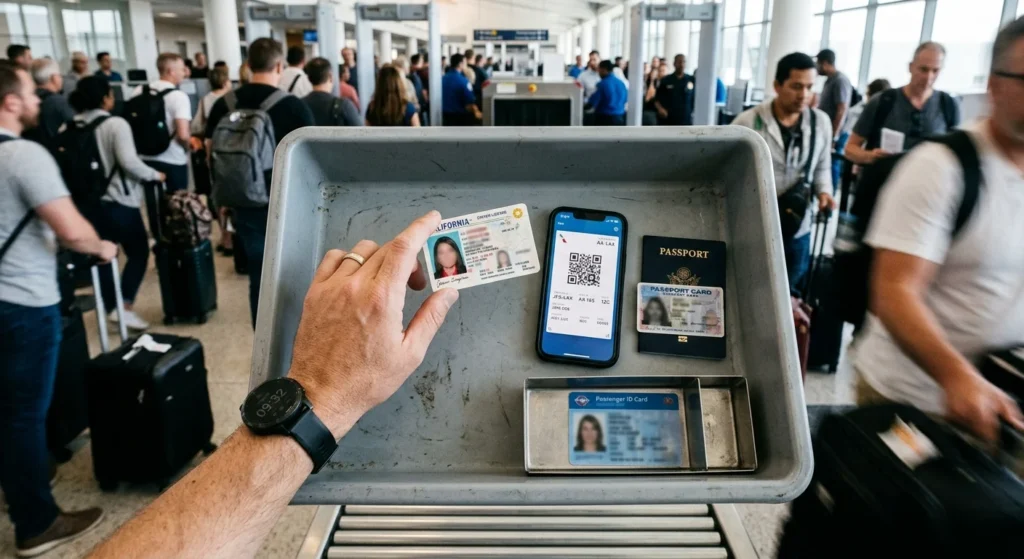
2. What Happens If Your License Is Not REAL ID Compliant
Since February 1, 2026, a traveler without compliant ID must verify their identity through TSA ConfirmID, which carries a $45 fee, according to JetBlue’s published ID guidance.
A passport in your carry-on avoids that fee and the extra screening time. Check the star on your license before you book, not at the airport.
3. Digital IDs and Mobile Licenses
TSA accepts mobile driver’s licenses from some states at some checkpoints, but support varies by airport and by device. Carry the physical card as well, because a dead phone battery is a poor reason to miss a flight.
4. Children and Teens
TSA does not require ID from travelers under 18 on domestic flights, and that includes trips to Puerto Rico. Airlines can set their own policies, so confirm with your carrier. A birth certificate is a sensible thing to have on hand for a child anyway.
5. Expired Passports
TSA accepts a US passport that expired within the past 12 months as identification at the checkpoint. It makes a useful backup ID, though it will not work for international travel.
Rule Changes Worth Knowing in 2026
Three details have changed recently, and older blog posts often miss them. REAL ID enforcement began on May 7, 2025. TSA ConfirmID, the $45 option for travelers without compliant ID, began on February 1, 2026. The ESTA fee for Visa Waiver travelers rose to $40 in the fall of 2025.
Fees and rules like these change, so confirm them on tsa.gov and cbp.gov before you travel. If an older guide says a regular license is fine for domestic flights, it predates the May 2025 deadline.
Entry Rules for Visitors Who Are Not US Citizens
Puerto Rico is part of the United States for immigration purposes. A foreign national arriving from abroad clears US Customs and Border Protection on arrival, just as in Miami or Chicago.
Airlines also check the passport on flights between Puerto Rico and the mainland, so foreign nationals should keep it within reach for the whole trip.
1. Visa Waiver Program Travelers
Citizens of Visa Waiver Program countries, including the United Kingdom, Japan, and most of Europe, need a valid e-passport and an approved ESTA before boarding. ESTA is an online application run by CBP, and the fee was $40 at the time of writing. Use the official CBP website only, because look-alike sites charge more.
2. Canadian Citizens
Canadians do not need a visa or an ESTA for tourist visits, but they do need a valid passport. The admission rules are the same as at any other US port of entry.
3. Green Card Holders and Visa Holders
A lawful permanent resident can show a green card, which TSA also accepts as identification on a domestic flight. Visa holders should carry the passport that contains the visa, plus the paperwork that supports their status, such as an I-20 or an approved petition notice.
What Arrival Looks Like at San Juan Airport
A US citizen arriving from the mainland walks off the plane, collects bags, and leaves. No officer asks for a passport, and there is no customs form.
A foreign visitor arriving on an international flight goes to CBP primary inspection first. An officer asks about the purpose and length of the stay and takes fingerprints and a photo.
Keep the return ticket, a hotel booking, and the passport in your carry-on, not a checked bag.
Do You Need a Passport for a Puerto Rico Cruise?
Usually not, if the cruise is closed-loop, meaning it begins and ends at the same US port. The State Department lets US citizens on closed-loop sailings travel with a government-issued photo ID and an original or certified birth certificate. San Juan is a common homeport for these round trips.
Children under 16 on a closed-loop cruise can use an original or certified birth certificate alone. Teens 16 and older need a photo ID as well.
A passport is still the better choice. If a medical emergency or a missed ship forces you to leave the cruise in a foreign port, you need a passport to fly home, and getting an emergency document abroad takes time.
Many cruise lines require passports on itineraries with foreign ports, and some require them on every sailing, so read your booking terms. Most Caribbean routes from San Juan include at least one foreign stop, which is where the passport matters.
Non-US citizens on any cruise should bring a passport and any visa their nationality requires, since closed-loop rules apply to US citizens only.

Hurricane season runs from June 1 to November 30, according to NOAA, and cruise lines change itineraries when storms form. A rerouted ship can add a foreign port you did not plan for.
Side Trips That Change the Answer
The no-passport rule applies on US soil. The moment a trip crosses into another country, the answer changes.
The US Virgin Islands are US territory, so a US citizen needs no passport to fly there from San Juan. Travelers may still pass a CBP customs check, because the islands sit outside the US customs territory.
The British Virgin Islands, the Dominican Republic, and Saint Martin are foreign destinations, so US citizens need a passport. A day trip from St. Thomas to Tortola involves passport checks at both ends.
Vieques and Culebra are part of Puerto Rico, so the ferry or a short flight there needs no passport.
If a route connects through a foreign airport on the way to San Juan, a passport becomes necessary even for a US citizen. Read the full itinerary before you book.
Quick Reference by Traveler Type
This table summarizes the rules above for the most common situations.
| Traveler | Passport Needed | What to Carry |
| US adult, flying from the mainland | No | REAL ID license, passport, or passport card |
| US child under 18, domestic flight | No | No TSA ID requirement |
| US citizen, closed-loop cruise | Usually no | Photo ID and birth certificate, passport recommended |
| Green card holder | No | Green card |
| Visa Waiver traveler | Yes | E-passport and approved ESTA |
| Canadian citizen | Yes | Valid passport |
| Other nationalities | Yes | Passport and US visa |
| Anyone visiting a foreign island | Yes | Passport |
Mistakes That Cause Trouble at the Airport
Name mismatches cause avoidable delays. The name on your ID must match the name on your ticket, so fix a booking typo before you reach the airport.
Old Puerto Rico birth certificates are another trap. Documents issued before July 1, 2010 are no longer valid under island law, so order a current certified copy from the Puerto Rico Demographic Registry if you rely on one.
The trip home has its own step. Bags leaving Puerto Rico for the mainland go through a USDA agricultural inspection, and fresh fruit, plants, and soil are restricted. Check USDA guidance before you pack souvenirs, and allow extra time at the airport.
A US driver’s license is enough to check into a hotel or rent a car. Foreign visitors should carry their passport for both.
Should You Bring a Passport Anyway?
For a straightforward vacation, the answer to whether you need a passport to go to Puerto Rico is no. For most other plans, a passport is inexpensive insurance.
A passport doubles as ID if your license is not REAL ID compliant, and it saves the $45 ConfirmID fee. It also covers a cruise port change, a side trip to a foreign island, or a rebooking that routes you through a foreign airport.
If you do not have one, apply through the State Department at travel.state.gov. Fees and processing times change, so check current figures before you plan around a deadline.

A passport card costs less than a passport book and works for domestic flights, but it cannot be used for international air travel. Adult passports last ten years, so a single application covers a lot of future trips.
How Early to Sort Out Your Documents
Getting a REAL ID takes an in-person visit to your state motor vehicle office. DHS lists the usual documents as proof of identity, proof of your Social Security number, and two proofs of residency, and some states let you start online.
Appointments can book out for weeks in busy offices, so start well before your travel date.
A passport application has a longer lead time than a license visit, and expedited service costs extra.
A Night-Before Checklist
- Check that your license has the star, or pack a passport or passport card.
- Match the name on your ticket to the name on your ID.
- Pack the original or certified birth certificate if you are taking a closed-loop cruise.
- Confirm your ESTA approval if you are a Visa Waiver traveler.
- Pack the passport anyway if your plans include a foreign port or island.
- Leave time for the USDA bag inspection on the way home.