

Is It Safe to Travel to Europe Now? What to Know
Is it safe to travel to Europe now? For most trips, yes. The risks a typical visitor meets are pickpockets, transit strikes, and summer heat, not war or violent crime. The answer shifts only if your route runs near Ukraine’s borders or into Russia and Belarus.
This guide covers what US government advisories say today, where the real risks sit, which border rules changed in 2026, and a quick way to check your own itinerary before you book.
The Short Answer for Most Travelers
Most of Western, Southern, and Northern Europe is stable, well policed, and set up for millions of visitors a year. Spain, Portugal, Greece, Italy, France, Germany, and the Nordic countries can all be visited with ordinary city habits. The picture changes only in and near active conflict zones, covered below.
Matt Kepnes of Nomadic Matt, who has led group tours around the continent, says Europe is no more dangerous than a typical American city. He also admits he cannot guarantee that nothing will happen. That is a fair way to frame it: low odds, not zero.
Rick Steves’ Europe blog asked people across the continent whether American travelers are still welcome, and reports a unanimous yes.
What US Travel Advisories Say Right Now
The State Department rates every country from Level 1 (exercise normal precautions) to Level 4 (do not travel). It reviews Level 1 and 2 advisories at least every 12 months, and Level 3 and 4 advisories at least every six months, according to CBS News.
Why Level 2 Does Not Mean Stay Home
Many of Europe’s most visited countries sit at Level 2. Italy’s advisory was reissued on September 10, 2026, with no change in level, and the stated risk is terrorism. France is also Level 2, citing terrorism and civil unrest, and its advisory says pickpocketing and phone theft are common in crowded places.
Germany’s advisory warns that attackers have used knives, small arms, and vehicles in public places, and that such incidents can happen with little warning. Read that as a reason to stay alert in crowds and train stations, not a reason to cancel. A Level 2 label asks for awareness in busy public places. It is not a recommendation to skip the trip.
Where Advisories Change the Answer
Ukraine, Russia, and Belarus carry the State Department’s highest warnings, and a holiday there is off the table. If your route crosses any Eastern European border region, read the country’s full advisory text and not just its level number. The detailed warnings often name specific areas that the headline rating hides.
How Far the War in Ukraine Reaches Tourists
Distance does most of the work here. Croatia, Portugal, and Spain are far from the front. The Hotel Dubrovnik travel blog, citing Crisis24 executive Mike Susong, reports no credible reason to avoid traveling to the EU because of the war, and notes that most airlines have not changed flight plans.
Closer to the border, the risk is disruption rather than danger to visitors. Airspace incidents have briefly closed airports in eastern Poland, and flights to nearby cities can be delayed with little notice. If you are visiting Poland, the Baltic states, or Romania, book flexible fares and follow local news.
A separate Middle East conflict has mainly affected flight routes, according to the Tours4Fun travel blog, not safety in major European cities. A simple rule works: the farther west and south you stay from the Ukrainian and Belarusian borders, the less the war touches your trip.
Crime and Scams You Are Most Likely to Meet
Pickpocketing is the realistic problem. The usual spots are metro lines to major landmarks, crowded squares, and big train stations such as Rome’s Termini and Paris’s Gare du Nord. Thieves often work in pairs, with one person distracting you while the other lifts a phone or wallet.

A few habits cut the risk sharply. Carry a cross-body bag zipped in front of you, keep your phone away from the edge of café tables, and split your cards between two places. Common street scams include clipboard petitions, friendship bracelets tied onto your wrist, and a “found” gold ring handed to you.
Safest Countries for First-Timers
Nomadic Matt names Iceland, Ireland, Denmark, and Austria among the safest countries, with Portugal, Slovenia, and Switzerland also on the list. The Travel Warning Check site reports that Germany recorded 0.83 homicides per 100,000 residents in 2025, which it describes as among Europe’s lowest rates.
Walking at night is generally fine in most European cities. Solo travelers should treat late-night transit and empty parks the way they would at home.
Terrorism, Protests, and Strikes
The chance that any one traveler is caught in an attack is very small. Still, the State Department says attacks in Europe can target crowded places with little or no warning. The practical steps are modest: note the exits in packed venues, avoid large protests, and follow police instructions.
Strikes are far more likely to touch your trip than an attack. France has regular peaceful protests and strikes in Paris and other cities. Rail, metro, and air traffic control walkouts can cancel trains or flights for a day or two, and Spain’s advisory notes that demonstrations tied to political or economic issues can occur.
Build slack into the days around your flights, and check the local strike calendar before booking tight connections. If something does happen near you, leave the area, follow police direction, and message family from a safe spot.
City Notes for Popular Destinations
1. Paris
Pickpocketing peaks on the metro lines serving the Eiffel Tower, Louvre, and Montmartre. Protests and strikes are routine, so check transit status each morning. Most visitors finish a week without any incident.
2. Rome
Termini station and the crowded stretches near the Colosseum and Trevi Fountain draw the most petty theft. Use licensed white taxis or a ride app rather than a driver who approaches you at the station. Summer heat is a bigger daily hazard than crime.
3. Barcelona
Phone snatching from café tables and beach areas is the common complaint, and the Las Ramblas area is the best-known hotspot. Keep your phone in a pocket you can feel. Beach bags left unattended disappear fast.
4. Amsterdam and London
The most frequent injury risk is mundane: cyclists in Amsterdam’s bike lanes and traffic that comes from the unfamiliar side in London. Look both ways twice. In London, e-bike phone grabs happen near busy roads, so avoid holding your phone at the curb.
5. Prague and Budapest
Currency exchange booths with poor rates and taxis without posted fares are the usual tricks. Withdraw cash from a bank ATM and use a ride app. Both cities are walkable and well lit in the central districts.
New Border Rules: EES, ETIAS, and the UK ETA
Border paperwork changed more than safety did in 2026. The EU’s Entry/Exit System began operating on October 12, 2025, and became fully operational on April 10, 2026. It replaces passport stamping with a digital record that includes a facial image and fingerprints for short stays of up to 90 days in any 180 days. Expect a few extra minutes at your first crossing, so avoid tight connections at large hubs.
ETIAS is the next step. The EU says it will start operations in the last quarter of 2026, with a fee of 7 euros, and first-time travelers get a six-month grace period once it begins. At the time of writing, the exact start date has not been confirmed, so check the official EU travel site before you book.
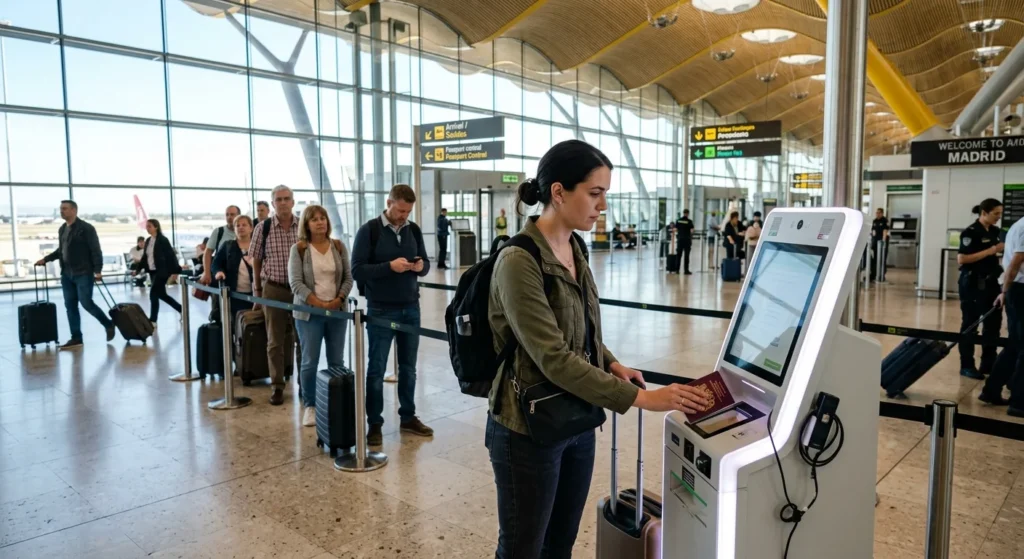
Only apply through the official EU portal, because lookalike sites charge higher fees. Separately, the UK already requires an Electronic Travel Authorisation for visitors.
Heat, Wildfires, Weather, and Health Coverage
Natural hazards disrupt more trips than crime does. Southern Europe has seen severe summer heat and wildfires in recent years, and autumn brings its own problems, such as flooding in Venice and early snow in the Alps. Check the forecast and regional alerts for the exact week you travel.
Health coverage deserves more attention than most people give it. Original Medicare generally does not pay for care outside the United States, and the State Department recommends travel insurance that covers medical evacuation. Carry prescriptions in their original packaging, and dial 112 for emergencies anywhere in the EU.
A Quick Way to Judge Your Own Itinerary
Headlines treat Europe as one place, but your trip is a specific route. Three questions sort most itineraries in about five minutes.
The first is distance from conflict: are you staying well west and south of Ukraine’s and Belarus’s borders? The second is crowd exposure: how many hours a day will you spend in packed transit and landmark queues? The third is disruption: could a strike, storm, or border queue break a tight connection?
If two of the three raise concerns, buy flexible tickets and insurance that covers interruptions. If none do, you are in the same position as most visitors this year.
A short checklist before you fly:
- Enroll in the State Department’s STEP program for alerts
- Read the advisory text for every country on your route, including layovers
- Confirm passport validity (Italy requires at least three months) and current EES and ETIAS rules
- Buy travel insurance with medical evacuation and trip interruption cover
- Save a passport photo to cloud storage and carry a backup card
- Save 112 and your embassy’s number in your phone
Who Should Think Harder Before Going
Travelers with complex medical needs should confirm where specialist care is available along their route. People planning stays in eastern border regions should read the full advisory text and keep bookings flexible. Anyone on a rigid budget with no refund options should price in strike and weather risk.
If you dislike crowds, shift to shoulder season and smaller cities. October through early November, for example, brings cooler weather and thinner queues at the major sights.

The honest answer to whether it is safe to travel to Europe now is only as current as the last advisory you read, so check again the week you leave.