
Top Things to Do in Denver: Local-Style Guide
The top things to do in Denver are seeing a show or sunrise at Red Rocks Amphitheatre, spending an afternoon at the Denver Art Museum, eating around Union Station and RiNo, and driving into the Rockies for a day trip. Most of the city fits into three days, and the mountains make an easy add-on.
Denver sits at 5,280 feet, and that changes how you should plan. Museums and patios are easy on day one, but hikes, long walks, and a second round of beers hit harder than they do at sea level. This guide orders the best attractions by effort, so you can ease in.
Red Rocks Amphitheatre
Red Rocks is the one-stop worth building a trip around. The open-air venue in Morrison, about 20 miles west of downtown, sits between two huge sandstone monoliths and seats roughly 9,500 people. It opened in 1941, and the Beatles played there in 1964 on a tour that never sold out.
You don’t need a concert ticket to enjoy it. The park is open for walking, and locals treat the amphitheater steps as a free stair-climber at sunrise. There is also a small Colorado Music Hall of Fame exhibit at the visitor center.
Check the venue’s official event calendar before driving up, because access is limited on show days. If you do book a concert, arrive early, take it slow on the stairs, and drink more water than seems necessary.
Museums Worth Your Time
1. Denver Art Museum
The Denver Art Museum is the best indoor stop in the city. Its Hamilton Building, designed by Daniel Libeskind and opened in 2006, is a cluster of sharp titanium-clad angles that photographs well from the street. Inside, the Native arts collection is among the largest in the country, and the Western American art galleries explain a lot about the region.
Plan two to three hours. Go on a weekday morning if you can, since school groups and weekend crowds fill the main galleries by midday.
2. Clyfford Still Museum and History Colorado Center
The Clyfford Still Museum sits a short walk from the art museum and holds the large majority of the painter’s lifetime work. It is small enough to finish in about an hour, which makes it a good pairing with the bigger museum next door. The History Colorado Center, also nearby, covers the gold rush, Indigenous history, and the story of Denver’s growth from a mining camp.
3. Denver Museum of Nature & Science
This museum works for adults as much as kids. It has a large dinosaur hall, a space exhibit, an IMAX theater, and the Gates Planetarium. It sits in City Park right beside the zoo, so families can do both in one day.
Union Station and Lower Downtown
Union Station is where most first-time visitors start eating and drinking. The 1881 train station reopened in 2014 as a hotel and food hall, with a big communal lobby, a cocktail bar, and several restaurants under one roof. It is also the end of the A Line train from Denver International Airport, so you can drop your bags and be at a table within an hour of landing.

The surrounding Lower Downtown neighborhood, known as LoDo, is walkable and full of brick warehouses turned into breweries and restaurants. Coors Field, home of the Colorado Rockies since 1995, is a few blocks away. A baseball game here is relaxed, and the upper deck has a clear mountain view on a good evening.
Larimer Square and the 16th Street Mall
Larimer Square is the oldest block in Denver, named for city founder General William Larimer Jr. Its Victorian buildings, string lights, and patios make it a pleasant place to walk after dinner. The shops are mostly boutiques, so it works better as a stroll than as a shopping stop.
The 16th Street Mall is the long pedestrian corridor through downtown, with a free shuttle running its length. It is practical for getting between stops, though the best food and art sit in the neighborhoods on either side of it.
RiNo Art District and Denver Central Market
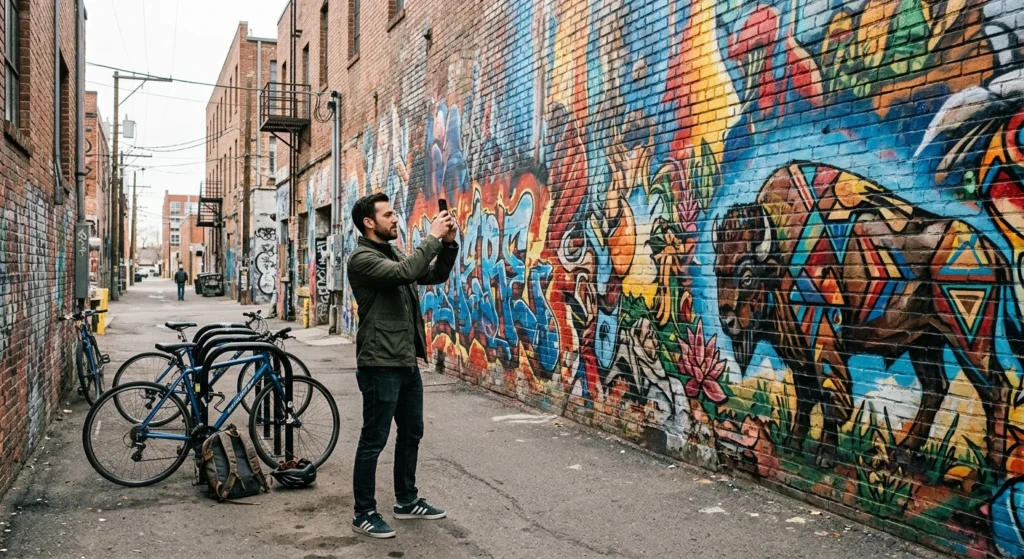
RiNo, short for River North, is the neighborhood for murals, breweries, and converted warehouses. The annual Crush Walls festival has covered the alleys with large-scale street art since 2010, so there is something new every year. Walking the side streets with no plan usually turns up more than following a map.
Denver Central Market is the easiest place to eat here, with a mix of vendors selling everything from pasta to pastries. It is a good option for groups who can’t agree on one cuisine. Come hungry and split plates.
Meow Wolf Convergence Station
Meow Wolf’s Denver installation opened in 2021 and is one of the stranger attractions in the city. It is a walk-through art environment with hidden rooms, crawl spaces, and a story you piece together as you explore. Adults enjoy it as much as kids, and it makes a good rainy-day option.
Book timed tickets ahead for weekends and holidays. Allow two to three hours, and wear comfortable shoes because you will be on your feet the whole time.
Denver Botanic Gardens
The Denver Botanic Gardens cover 24 acres near Cheesman Park and are one of the most peaceful ways to spend a morning. The Japanese garden, the alpine plantings, and the conservatory are the best parts. In summer, the gardens host an outdoor concert series, which sells out early.
Because the gardens are laid out for slow wandering, they suit the first day at altitude well. Go in the morning, when it is cooler and quieter.
Denver Zoo
The Denver Zoo opened in 1896 and is one of the more visited attractions in the state. It sits in City Park and has a strong reputation for its elephant, primate, and big cat exhibits. If you have kids, this is a safe full-day anchor.
The zoo’s winter lights event is popular in the holiday season, so check dates if you are visiting in November or December.
Sports and Game Days
Denver is a sports town, and the teams have been winning lately. The Denver Nuggets won the NBA championship in 2023, and the Colorado Avalanche won the Stanley Cup in 2022. Both play at Ball Arena, which is a short walk from Union Station.
The Broncos play at Empower Field at Mile High, and the Rockies play at Coors Field. Tickets for football and playoff basketball go fast, so book early. A regular-season baseball game is the easiest ticket to get and a fun first look at the city.
Colorado State Capitol, Civic Center, and the Molly Brown House
The Colorado State Capitol has a brass marker on its west steps showing you are exactly one mile above sea level. It is a quick photo stop, and tours of the building are typically offered free on weekdays, so check hours before you go. The surrounding Civic Center Park is a good spot for a short walk between museums.
The Molly Brown House Museum in Capitol Hill is a smaller stop that rewards a guided visit. Margaret “Molly” Brown survived the Titanic and later became a well-known Denver philanthropist. The tour covers her life in the house and the city’s Victorian-era history.
Best Day Trips From Denver
Rocky Mountain National Park
Rocky Mountain National Park is the biggest reason people add days to a Denver trip. Estes Park, the gateway town, is about 90 minutes from downtown. Trail Ridge Road climbs above 12,000 feet and has elk, tundra, and long views.
The National Park Service has required timed-entry reservations during peak months in recent years, and Trail Ridge Road usually closes for the season by mid-October and reopens around late May. Check the park’s official page before you go, because snow can close it with little warning.
Golden and Lookout Mountain
Golden is about 20 minutes west of downtown and works well as a half-day trip. Molson Coors says its Golden brewery is the largest single-site brewery in the world, and the tour there is easy to book. The town itself has a walkable main street and a creek-side path.
Lookout Mountain, just above Golden, has views over the plains and the grave of Buffalo Bill Cody, with a small museum beside it. The drive up is winding but short. Dinosaur Ridge in nearby Morrison lets you walk past real fossilized dinosaur tracks on an exposed hillside.
How to Plan Your Time and Handle the Altitude
Most visitors feel the altitude in the first 24 hours, with a mild headache or poor sleep. Drink water, go easy on alcohol the first night, and put gentle activities on day one. Save the hikes, bike rides, and anything over 8,000 feet for later in the trip.
A simple three-day plan works for most people:
- Day one: Union Station, LoDo, Larimer Square, and dinner in RiNo
- Day two: Denver Art Museum, Clyfford Still, then the Botanic Gardens or Meow Wolf
- Day three: Red Rocks at sunrise, then Golden or a longer drive to the mountains
With five days, add Rocky Mountain National Park and a sports game. With only a day, pick Red Rocks, the art museum, and dinner at Union Station.
Season changes the list too. Summer is best for Red Rocks concerts, the Botanic Gardens, and mountain roads, while winter favors museums, game nights, and ski trips from the city. Spring and fall are quieter and often cheaper, though mountain weather can shift fast.

Getting around is easier than people expect. The A Line connects the airport to Union Station, and light rail and buses cover most downtown spots. For Red Rocks, Golden, and the national park, a rental car is the simplest option.