
Things to Do in Bulgaria: A Complete Travel Guide
Bulgaria rewards travelers who go beyond the guidebook highlights. It packs Orthodox monasteries, Roman ruins, Black Sea beach towns, and some of the cheapest ski slopes in Europe into a country smaller than the state of Ohio. Most first-time visitors underestimate how much ground they can cover in a single week, and how little it costs compared to Western Europe.
This guide covers the things to do in Bulgaria that actually justify a plane ticket, organized by region so you can build a realistic itinerary instead of a scattered bucket list.
Start in Sofia, but Do Not Linger Too Long
Sofia is not a city that overwhelms you with landmarks, and that is fine. Give it a day and a half, not four.
Walk the Alexander Nevsky Cathedral first thing in the morning before tour buses arrive. The gold domes photograph best in early light, and the crypt underneath houses one of the finest collections of Orthodox icons in the Balkans. A few blocks away, the Sofia History Museum sits inside a restored 1913 bathhouse, and the ruins of Serdica, the old Roman city, are exposed right in the metro station and pedestrian underpasses. You can literally walk over 2,000-year-old streets on your way to lunch.
Skip the generic “old town” framing many articles use for Sofia. It does not have one compact historic quarter as Plovdiv does. Instead, treat it as a base for one strong walking day, then move on.
1. Where to Eat in Sofia Without Overpaying
Avoid restaurants directly facing Vitosha Boulevard, since prices jump 30 to 40 percent for the same food you get two streets over. Look for a mehana, a traditional Bulgarian tavern, serving shopska salad, kavarma stew, and grilled kebapche. A full meal with a local beer rarely exceeds 20 to 25 leva outside the main tourist strip.
Plovdiv Is the City Most Visitors Wish They Had Planned More Time For
Plovdiv is one of the oldest continuously inhabited cities in Europe, and its Old Town makes that history visible instead of buried. Cobblestone streets climb past 19th-century National Revival houses with painted facades, and a fully intact Roman amphitheater still hosts concerts in the summer.
Unlike Sofia, Plovdiv rewards slow wandering. Kapana, the former artisan quarter turned creative district, is packed with independent coffee shops, street art, and small galleries. Give this neighborhood at least half a day on its own.

If you only have time for one archaeological site in the country, make it the Roman Stadium of Philippopolis, partially excavated right beneath the main pedestrian street. It gives a sense of scale that smaller ruins elsewhere cannot match.
Hike the Seven Rila Lakes for Bulgaria’s Best Single-Day Trip
The Seven Rila Lakes rank among the most striking alpine scenery in the Balkans, and they are reachable as a day trip from Sofia. A chairlift cuts out most of the elevation gain, leaving a manageable 5 to 6 kilometer loop that visits all seven glacial lakes.
Go between late June and September. Snow can block the upper trail sections outside this window, and several lakes freeze over in winter. Start early, ideally before 9 a.m., since the parking area and chairlift line up quickly by midday in peak season.
This is not a technical hike, but proper footwear matters. Loose scree sections near the highest lakes have caused turned ankles for visitors in sneakers.
Veliko Tarnovo and the Medieval Capital
Veliko Tarnovo served as the capital of the Second Bulgarian Empire, and the Tsarevets Fortress still dominates the skyline from its hilltop position above the Yantra River. Walk the fortress walls in daylight, then come back after dark for the sound and light show that projects onto the ruins, usually running a few evenings a week depending on the season.
The town itself is built into a gorge, with houses stacked on the hillside in a way that makes even a short walk between neighborhoods feel dramatic. Samovodska Charshia, the old crafts street, is worth an hour for handmade pottery, wood carving, and copperware sold by the artisans who made them
The Black Sea Coast: Where to Go Depending on What You Want
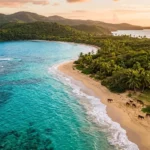
Bulgaria’s coastline gets far less international attention than Croatia’s, which keeps prices lower and crowds smaller, though the resort towns can still get busy in July and August.
1. Nessebar for History
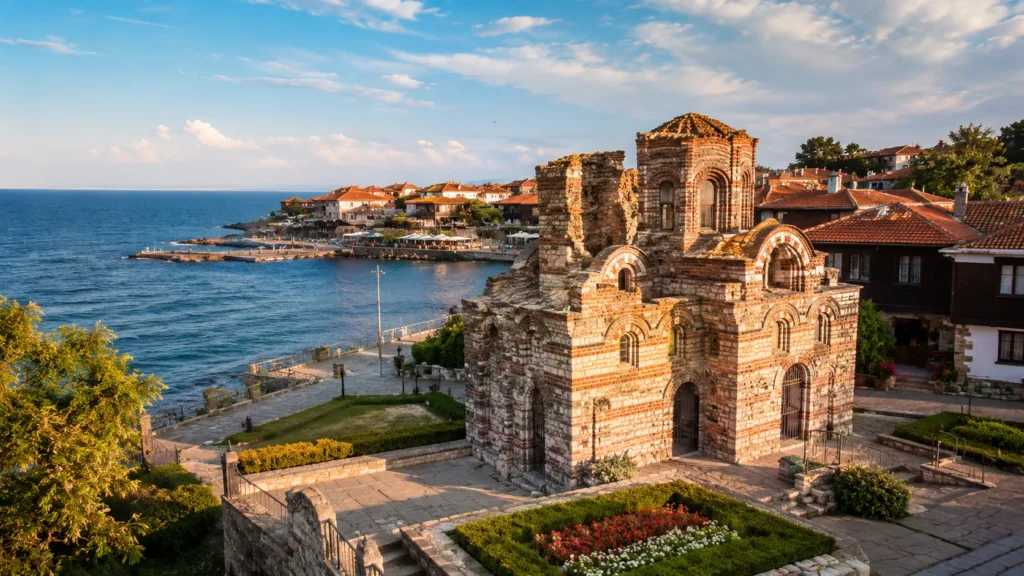
Nessebar sits on a narrow peninsula connected to the mainland by a thin isthmus. Its old town is a UNESCO World Heritage Site packed with Byzantine-era churches, many now partially ruined but still striking against the sea. Two to three hours covers the peninsula comfortably.
2. Sozopol for a Quieter Pace
Sozopol has a similar old-town charm to Nessebar but with a slower rhythm and fewer tour groups. It works well as a base for a few relaxed beach days rather than a single afternoon stop.
3. Varna for a Real City With a Beach Attached
Varna functions as an actual city, not just a resort, with a sea garden park stretching along the coast, an aquarium, and a functioning promenade life that continues after the sun goes down. It suits travelers who want beach time without feeling isolated in a resort bubble.
Ski Bansko Without the Alpine Prices
Bansko is the largest ski resort in Bulgaria and one of the cheapest in Europe for the quality of terrain on offer. Lift passes, equipment rental, and ski school lessons commonly run at a fraction of Austrian or French resort prices, which makes it a strong choice for beginners or families testing whether skiing is worth the investment.
The season typically runs from December through early April, though snow reliability depends on elevation. Stick to the upper runs later in the season if natural snow has thinned lower down.
After skiing, the old town at the base of the mountain has a genuinely lived-in feel, with mehanas serving hearty regional food rather than resort-town tourist menus.
Belogradchik Rocks and the Fortress Built Into Them
The Belogradchik Rocks are sandstone and conglomerate formations that rise to 200 meters, shaped over millions of years into forms locals have named after people, animals, and legends. A Roman and later Ottoman fortress was built directly into the rock formations, using the natural stone as part of its walls.
This site sits in Bulgaria’s northwest, further from the standard tourist circuit, which means fewer crowds but also requires a car or organized tour to reach comfortably. It rewards the extra effort with scenery unlike anything else in the country.
Try the Wine Regions Most Visitors Skip
Bulgaria has produced wine for thousands of years, and the Thracian Valley and Melnik region both offer serious tasting experiences without the price tag of Western European wine tourism. Melnik, the smallest town in Bulgaria, is known for its dark, heavy reds aged in wineries carved into the sandstone hills around it. A short detour here pairs naturally with a Rila Monastery visit, since the two sit within a reasonable drive of each other.
What Food to Try Alongside the Sightseeing
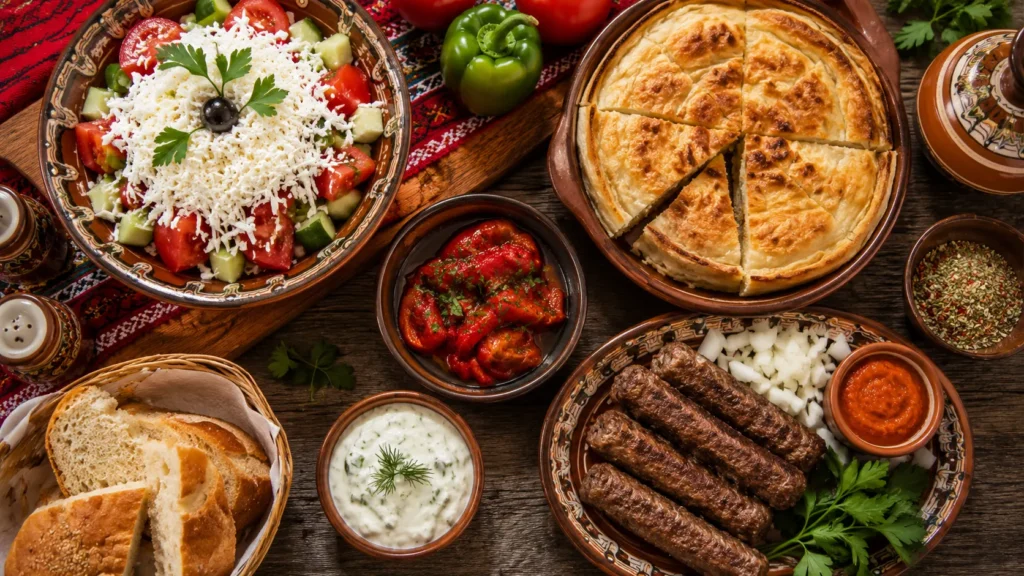
Food is not a side note in Bulgaria; it is part of the itinerary. Banitsa, a flaky pastry filled with cheese and egg, is the standard breakfast. Shopska salad, made with tomatoes, cucumbers, onions, and grated sirene cheese, appears on nearly every menu and varies noticeably in quality depending on how fresh the produce is. Tarator, a cold cucumber and yogurt soup, is worth seeking out in summer specifically, since it barely appears on winter menus.
Bulgarian yogurt itself deserves attention beyond the salad bowl. The specific bacterial strain used, Lactobacillus bulgaricus, was first identified in Bulgaria, and the yogurt here has a tang and thickness that differ from what most visitors know from supermarket shelves elsewhere.
How Many Days You Actually Need
A week covers Sofia, Plovdiv, and either the Rila Lakes or Rila Monastery comfortably, with a short coastal or mountain add-on if you are flexible on pace. Ten to fourteen days lets you combine the capital, Plovdiv, Veliko Tarnovo, and a proper coastal stretch without rushing transitions.
Trying to fit the entire country, coast and mountains, and every historic town, into under a week usually means spending more time in transit than at any single destination. Bulgaria’s sites reward slower travel more than a checklist approach does.
Getting Around Once You Arrive
Trains connect Sofia, Plovdiv, and Varna reasonably well, but service to smaller towns like Veliko Tarnovo or Melnik is slower and less frequent than most visitors expect. Renting a car opens up Belogradchik, the wine regions, and rural monasteries that public transport barely reaches. Roads are generally in decent condition on main routes, though mountain roads near Rila and Pirin can be narrow and require more careful driving, especially outside summer.
Bus routes fill in most of the gaps trains miss and tend to be cheap, though schedules are worth double-checking a day ahead since online information is not always current.