Things to Do in Vieques: A Complete Travel Guide
Vieques rewards travelers who slow down. This small island off Puerto Rico’s east coast has no chain hotels, no cruise ship crowds, and barely any traffic lights. What it does have is one of the brightest bioluminescent bays on the planet, a string of beaches that regularly get compared to the best in the Caribbean, and herds of wild horses that wander down the middle of the road like they own it, which, in a way, they do. If you’re wondering what to do in Vieques, the honest answer is that the island rewards a loose itinerary more than a packed one. Here’s how to spend your time well, in whatever order suits your trip.
Kayak Through Mosquito Bay, the World’s Brightest Bioluminescent Bay
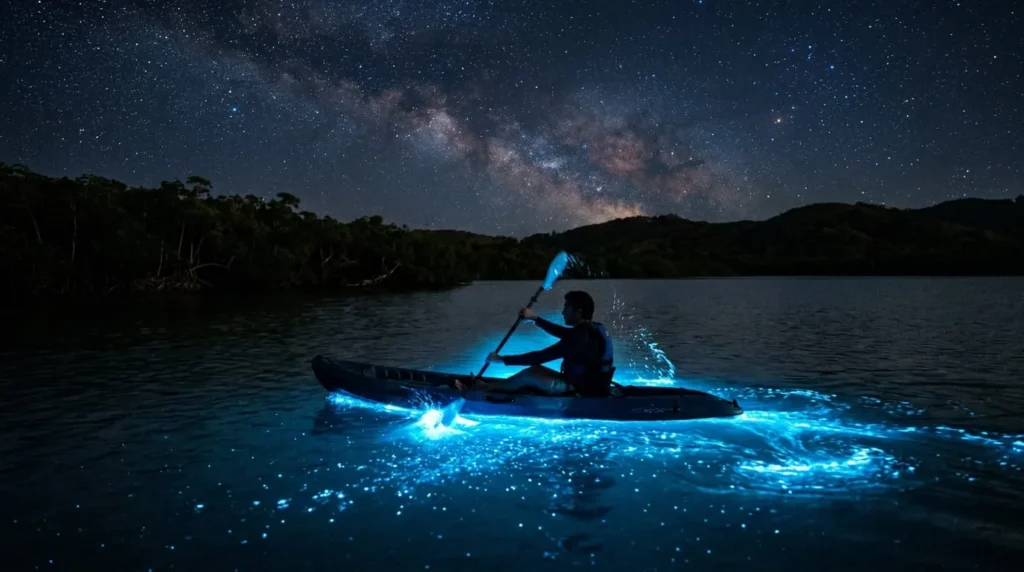
Mosquito Bay is the reason most people first hear of Vieques, and it earns the hype. The water here holds an unusually dense population of dinoflagellates, tiny organisms that glow blue-green when the water around them is disturbed. Paddle a hand through the bay on a dark night and your fingers trail light. Fish dart past in glowing streaks.
The experience depends heavily on timing, more than most guides admit. Book your tour on or near a new moon, when the sky is darkest and the glow shows up strongest. A full moon washes out the effect almost entirely, so check the lunar calendar before you book, not after. Heavy rain in the days before your visit can also dull the bioluminescence, since runoff dilutes the organisms’ concentration.
Most visitors go by guided kayak tour, since Mosquito Bay sits inside the Vieques National Wildlife Refuge and swimming there is restricted to licensed operators. Skip any sunscreen, bug spray, or lotion before your tour. These products leave a film on the water that harms the microorganisms and dulls the glow for everyone after you.
Spend a Few Days at Vieques’ Best Beaches
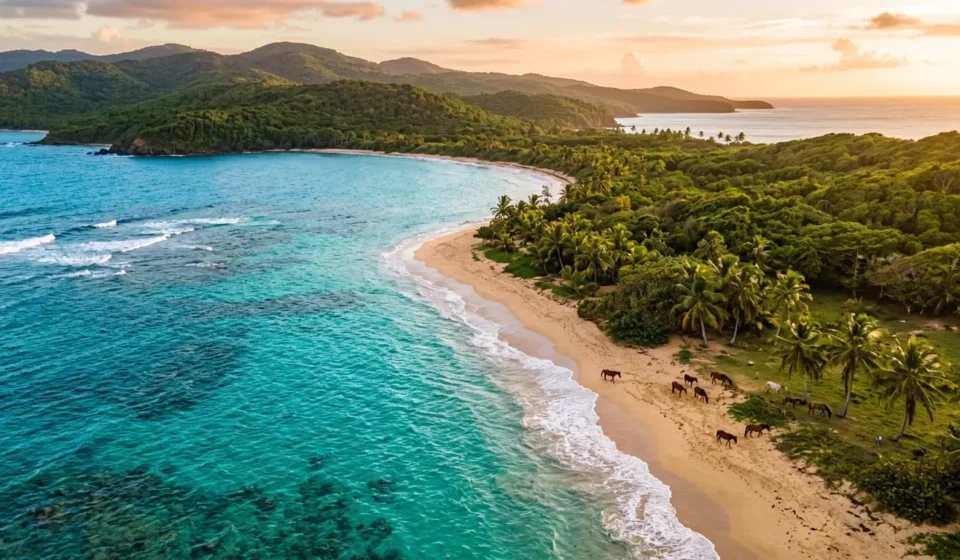
Vieques has more than 40 beaches, and unlike the main island, most of them stay quiet even in high season. A few stand out enough to plan a day around.
1: Sun Bay (Balneario Sombe)
This is the easiest beach to reach and the only one with facilities like restrooms, picnic tables, and lifeguards on duty. Calm, shallow water makes it a solid pick for families or anyone traveling with kids.
2: Playa Negra
A short drive inland from the coast, this black sand beach forms from volcanic minerals rather than coral. It’s smaller and less swimmable than the coastal beaches, but worth the stop for the color contrast alone.
3: Media Luna and Navio
Both sit within the wildlife refuge and require a bit more effort to reach, usually a rental jeep and a short walk from the parking area. Media Luna is calm and shallow, good for swimming with kids. Navio, just past it, has stronger waves and draws a smaller crowd, which suits travelers looking for a beach closer to themselves for a while.
4: Caracas (Red Beach)
One of the most photographed beaches on the island, with clear water and decent snorkeling right off the shore. Arrive early. It gets busier than the others by midday, especially when a cruise ship docks in San Juan and day-trippers make the crossing.
Explore the Vieques National Wildlife Refuge
The refuge covers roughly 18,000 acres, close to 60 percent of the island, and it exists because of the island’s military history. The U.S. Navy used most of Vieques for bombing exercises and munitions testing for over 60 years before withdrawing in 2003. That land became a wildlife refuge rather than open development, which is part of why Vieques still feels undeveloped today.
Inside the refuge, hiking trails wind through dry coastal forest and mangrove stands, and you’ll spot herons, pelicans, and the occasional sea turtle nesting site depending on the season. A few sections remain closed to the public because of unexploded ordnance left from decades of military use, so stick to marked trails and posted access points rather than wandering off on your own.
Look for the Island’s Wild Horses
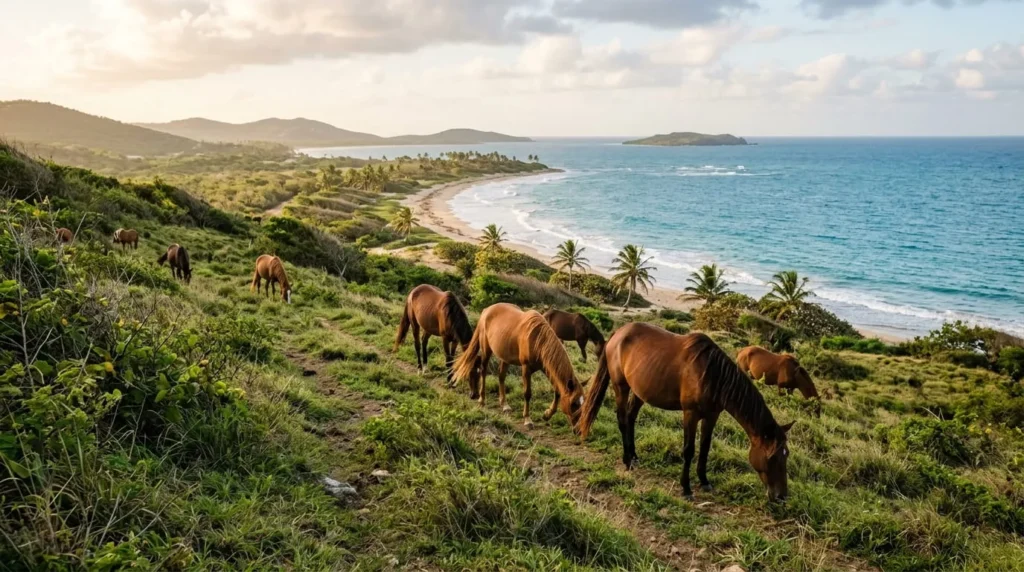
Vieques’ horses, known locally as paso finos, roam freely across the island rather than living on any single ranch. Most are owned by residents but graze wherever they like, which means you’ll see them on beaches, along roadsides, and occasionally blocking your path entirely. Give them space and don’t feed them. They’re used to people but not tame, and a startled horse near a beach parking lot is not a fight you want.
Visit Vieques’ Historic Sites
Vieques carries more layered history than its size suggests, from Spanish colonial rule to decades of U.S. Navy occupation.
Fort Conde de Mirasol, in Isabel Segunda, was the last Spanish fort built in the Americas and now houses a small museum covering the island’s Taino, Spanish, and Navy-era history. It’s compact but worth an hour, especially if you want context for the bunkers and beaches you’ll see later.
Punta Mulas Lighthouse, built in 1896, still overlooks the harbor near the ferry terminal and now functions as a small maritime museum. On the island’s west end, Bunkers Road runs past dozens of abandoned Navy ammunition bunkers, many now covered in murals painted by local artists. It’s an unusual, slightly eerie stop that photographs well and says more about the island’s recent past than any beach can.
If you’re short on time, the ruins of the Puerto Ferro Lighthouse make a good alternative. It’s a short hike to reach, and the crumbling structure has stood abandoned since an earthquake damaged it in 1925.
Snorkel, Dive, or Get Out on the Water
The waters around Vieques stay clearer than much of the main island’s coast, partly because there’s so little development along the shoreline. Caracas Beach and the area around Mosquito Pier offer solid shore snorkeling without a boat, with sea turtles and rays commonly spotted around the pier’s pilings.
For reef diving, book a boat trip through a local operator rather than trying to find a dive site on your own. Several reef systems sit a short boat ride offshore and aren’t accessible from the beach. Paddleboarding and mangrove kayaking are also popular, especially in the calmer channels near Esperanza, where the water stays sheltered even when the open coast gets choppy.
Eat, Drink, and Wind Down in Esperanza
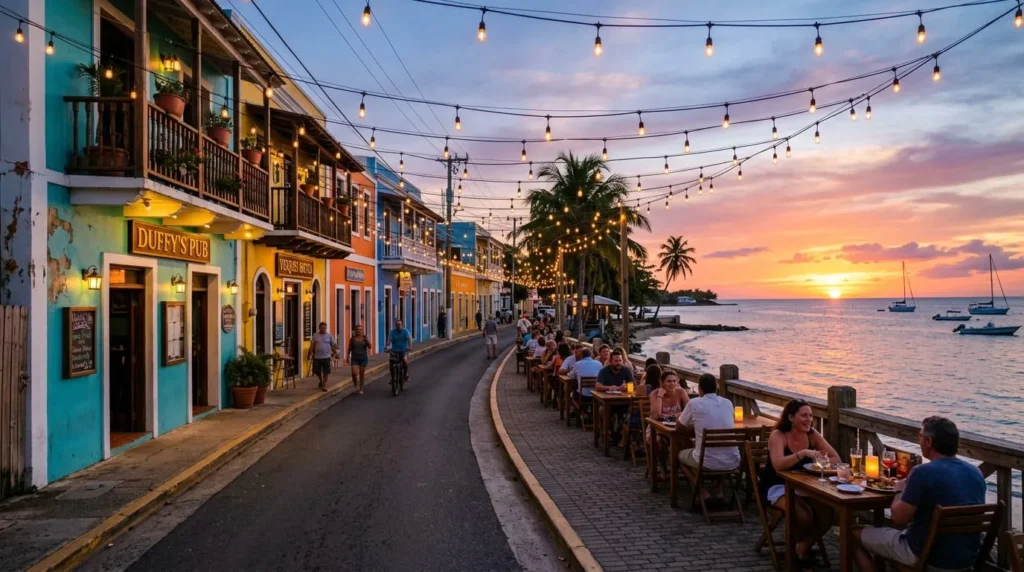
Esperanza’s malecon, a short beachfront strip facing the water, is where most of the island’s restaurants and bars cluster. It’s low-key by design. Expect open-air kitchens, fresh seafood, and a slower pace than you’d find on the main island. Grab a seat facing the water around sunset and you’ll likely have it timed right without trying.
Isabel Segunda, the island’s other main town, has a quieter, more local feel with fewer tourist-facing spots but a couple of solid bakeries worth a stop if you’re near the ferry terminal.
Practical Tips for Planning Your Trip
Getting to Vieques takes either a short flight or a ferry. Small planes run from airports near Fajardo and San Juan and take about 20 to 30 minutes. The passenger and car ferry departs from Ceiba, runs closer to an hour, and costs far less than flying, though car ferry space books up fast in high season.
Rent a jeep or another vehicle with high clearance if you plan to reach the refuge beaches or the wildlife refuge trails, since several access roads are unpaved and rutted. A standard sedan will limit where you can go.
Three to four days is enough to cover the island’s highlights without rushing, including a bio bay tour, a couple of beach days, and time for the historic sites. Anyone staying just one night should prioritize the bay tour first, since moon phase and weather can force a reschedule.
When to Visit Vieques
Vieques stays warm year-round, but the driest months run from January through April, which also means higher prices and busier beaches. May through November brings a real chance of rain and falls within Atlantic hurricane season, though most storms pass without direct impact. The tradeoff is quieter beaches, lower rates, and often calmer bay conditions for a bioluminescence tour, since fewer boats and swimmers are churning the water.