
Things to Do in St Thomas, Virgin Islands: A Local Guide
St Thomas gets treated as a cruise ship afterthought, a place to grab a photo at Magens Bay and buy some rum before the ship horn calls everyone back. That is a mistake. The island rewards people who stay longer than a few hours, and the things to do in St Thomas Virgin Islands range far beyond the beach that shows up on every postcard.
This guide skips the generic “top 10” filler and focuses on what actually makes a day here worthwhile, including where the crowds thin out, what locals actually do on weekends, and which activities are worth the money versus which ones are tourist markup.
Start With the Beaches That Actually Deserve the Hype
1. Magens Bay: Worth It, But Time It Right
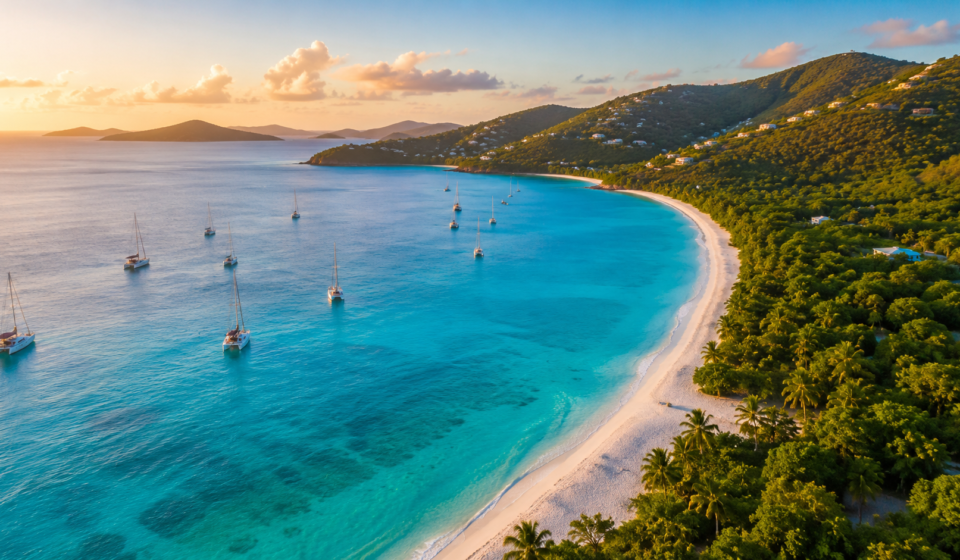
Magens Bay is famous for a reason. The water is calm because the bay is horseshoe-shaped and protected from open ocean swell, which makes it one of the few beaches on the island safe for weaker swimmers and small kids without a second thought. There is a small entrance fee, usually a few dollars per person, and the beach has changing rooms, kayak rentals, and food vendors.
The mistake most visitors make is arriving between 10 am and 2 pm, when every cruise ship excursion bus unloads at once. Get there before 9 am or after 3 pm and the same beach feels completely different, with room to actually spread out.
2. Sapphire Beach: Better for Snorkeling
Sapphire Beach sits on the east end of the island and has a reef close enough to shore that you do not need a boat to reach decent snorkeling. There is a small hotel adjacent to the beach with a bar and restaurant, so you can rent gear, snorkel for an hour, and then get lunch without moving your car. The visibility here beats Magens Bay for underwater viewing, though the sand itself is narrower.
3. Secret Harbour and Lindquist Beach for Fewer Crowds
If the goal is quiet water and no vendors, Secret Harbour and Lindquist Beach are the two spots locals mention when asked where they actually go. Lindquist in particular requires a short walk from the parking area, which filters out anyone unwilling to carry their own cooler. That short walk buys you a beach that rarely feels crowded even during peak cruise season.
Get on the Water Beyond Just Swimming
1. Sail to the British Virgin Islands for the Day
St Thomas sits close enough to the BVI that a day sail to Jost Van Dyke or Norman Island is one of the most memorable things to do in St Thomas Virgin Islands, and it does not require staying overnight or dealing with a separate hotel booking. Most operators run catamaran trips that include snorkeling stops, lunch, and a stop at a beach bar. Bring a passport since this crosses an international border, even though the boat ride itself feels informal.
2. Snorkel or Dive Coki Point and Buck Island
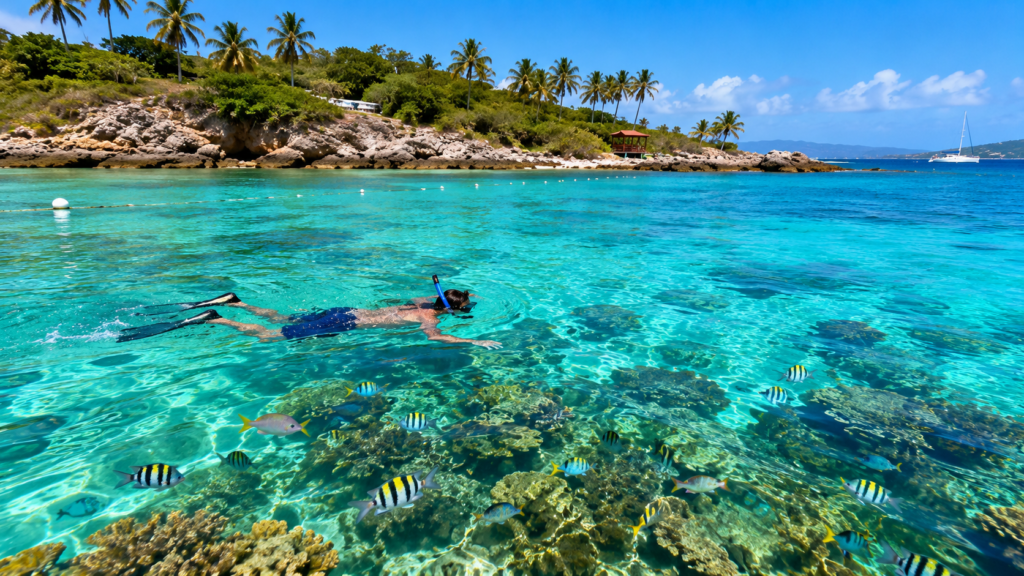
Coki Point sits right next to Coral World Ocean Park and has some of the most accessible reef snorkeling on the island, with visibility usually strong enough to spot sergeant majors, parrotfish, and the occasional sea turtle within the first few minutes. For certified divers, Buck Island off St Thomas offers wall dives and better structure than most shore snorkeling spots, though this is a different Buck Island than the more famous one near St Croix, so double-check with your operator. If you want a Caribbean destination with an even quieter pace, things to do in Vieques offer beaches, wildlife and bioluminescent water without the same cruise-ship feel.
3. Kayak Through the Mangroves at Holmberg’s Marina
Fewer visitors know about the mangrove kayak tours out of Holmberg’s Marina near Red Hook. These trips move at a slower pace than a beach day or a sail, weaving through mangrove channels where you can spot juvenile fish, herons, and sometimes small nurse sharks resting in the shallows. It is a strong option for anyone who wants water time without the noise of a crowded beach.
See the Island From Above and On Land
1. Ride the Skyride to Paradise Point
The Skyride cable car climbs about 700 feet above Charlotte Amalie and gives a panoramic view of the harbor, the cruise ships docked below, and on clear days the outline of neighboring islands. The ride itself takes only a few minutes, but the platform at the top has a bar and enough seating to justify staying for a drink while the light changes over the harbor.
2. Drive or Hike Up to Drake’s Seat
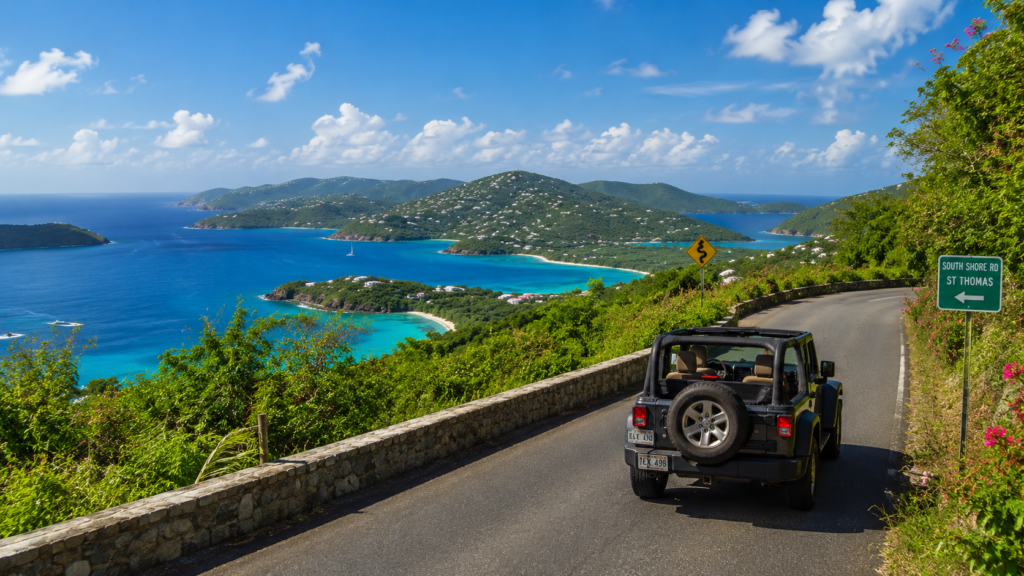
Drake’s Seat is a scenic overlook named for Sir Francis Drake, who supposedly used the spot to watch for enemy ships. You do not need to hike to reach it since a paved road leads straight there, but the view over Magens Bay and the surrounding hills is one of the best free things to do in St Thomas, Virgin Islands. Go in the late afternoon when the light is softer, and the tour buses have mostly cleared out.
3. Explore Charlotte Amalie’s Old Town on Foot
Charlotte Amalie is walkable in a way a lot of Caribbean port towns are not. The historic district has 17th- and 18th-century Danish colonial buildings, narrow alleyways with names like Palm Passage and Drake’s Passage, and Fort Christian, the oldest standing structure on the island. Set aside an hour just to wander without an itinerary, since the town rewards getting a little lost.
Shop Smart: What Duty Free Actually Means Here
St Thomas is a duty-free port, which means certain goods, particularly jewelry, watches, liquor, and perfume, carry lower import taxes than on the US mainland. That does not automatically mean every price is a deal. Jewelry stores along Main Street in Charlotte Amalie compete hard for cruise ship traffic, and prices can vary significantly between shops selling the same brand.
The most reliable savings show up on liquor, since US citizens can bring back up to five liters of alcohol duty-free from the US Virgin Islands, more than double the standard allowance from most other destinations. If rum is on your list, a bottle from a local distillery costs a fraction of what the same bottle runs stateside.
For anyone who prefers open-air shopping over storefronts, the Vendors Plaza near the waterfront sells local crafts, art, and clothing at prices that are actually negotiable, unlike the fixed-price jewelry stores.
Learn the Island’s History and Culture
1. Fort Christian and the Legislature Building
Fort Christian, built by Danish settlers in the 1670s, now operates as a museum covering the island’s Danish colonial period and its role in the Caribbean sugar and slave trade. It is a short, focused visit, usually under an hour, but it gives useful context for a lot of what you will see elsewhere on the island, including street names and architecture still marked by Danish influence. The nearby Legislature Building, still in active government use, is also open for a quick look at its exterior.
2. Visit the 99 Steps and Blackbeard’s Castle
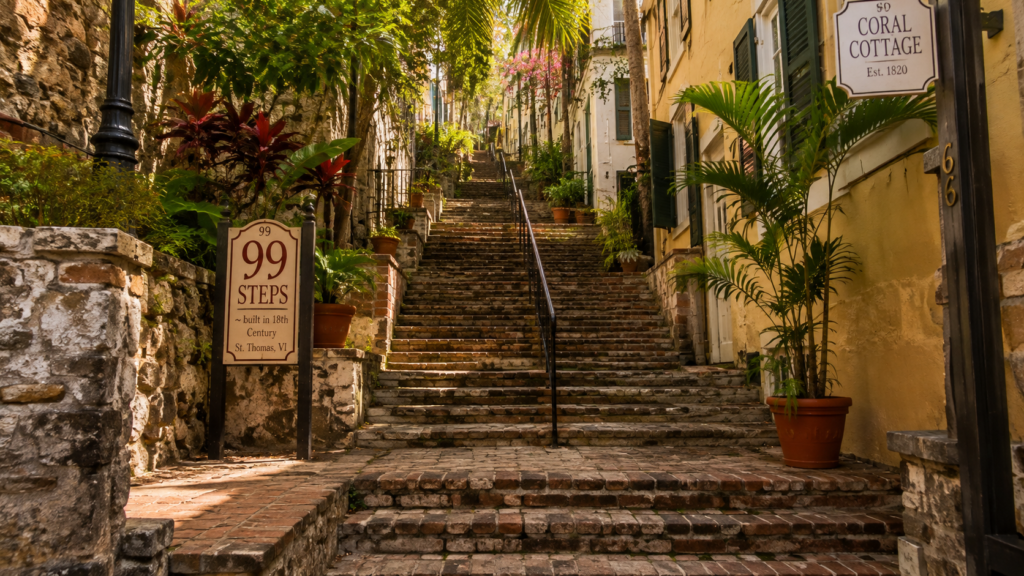
The 99 Steps are a set of stone stairs built from ship ballast bricks that climb through Charlotte Amalie’s old town, leading up toward Blackbeard’s Castle, a stone watchtower with a view over the harbor. Local legend ties the tower to the pirate Blackbeard, though the historical evidence is thin. Either way, the climb and the view at the top make it worth the short detour.
Where to Eat After a Day of Exploring
Food on St Thomas leans heavily on fresh seafood and Caribbean staples like fungi, callaloo, and conch. Red Hook, on the east end, has a stronger concentration of casual local restaurants than the cruise ship zone downtown, and prices tend to run lower once you’re outside walking distance of the docks.
If you want one meal that captures the island’s food culture, look for a spot serving conch fritters and a side of johnnycake, a fried cornmeal bread that shows up on most traditional menus. For something more low-key, food trucks near Red Hook serve grilled mahi and jerk chicken at a fraction of restaurant prices, and locals eat there just as often as visitors do.
Planning Your Time on the Island
1. How Many Days Do You Actually Need
A cruise ship stop of six to eight hours is enough to hit one beach and walk through Charlotte Amalie, but it forces hard tradeoffs. Two to three days lets you cover a beach day, a water activity like sailing or snorkeling, and the historical sites without rushing. Anyone hoping to add a BVI day trip should budget at least three full days to avoid feeling like the whole visit was spent in transit.
2. Best Time of Year to Visit
Peak season runs from mid-December through April, when weather is driest and cruise traffic peaks along with it. May through November is hurricane season, and while a direct hit is not guaranteed, tropical storms and heavy rain are more likely during these months. Late April to early June tends to offer a strong balance of good weather and thinner crowds, since it falls just after peak season ends.
3. Renting a Car Versus Taxis
St Thomas has official taxi rates set by the government for common routes, which removes a lot of the pricing guesswork that trips up visitors in other Caribbean destinations. That said, a rental car gives far more freedom to reach spots like Lindquist Beach or Drake’s Seat on your own schedule. Keep in mind driving here is on the left side of the road, a holdover from British influence, even though most cars have the steering wheel on the left as well, so pay close attention at intersections.
Final Tips for Making the Most of Your Visit
Pack reef-safe sunscreen, since several beach and snorkel operators either require it or will politely ask you to switch before getting in the water. Bring cash for the Vendors Plaza and smaller food trucks, since not every vendor takes cards. And if your schedule allows any flexibility at all, avoid planning your one beach day around a day when three or four cruise ships are in port, since Magens Bay and Coki Point both fill up fast on those mornings.
St Thomas rewards a bit of planning without demanding a rigid itinerary. Mix one full beach day with a water activity, a few hours in Charlotte Amalie’s old town, and one meal away from the tourist strip, and you will see a side of the island that a rushed cruise stop never reaches.