Most Scenic Places to Visit Around the World
Some destinations impress you with history or nightlife. Others stop you mid-step because the view itself does all the work. The most scenic places to visit around the world share a few things in common. They tend to combine dramatic elevation changes with water that reflects rather than just sits. Many are also shaped by forces travelers rarely see up close, like fjords, glaciers, or centuries of terraced farming.
This guide covers ten places worth visiting purely for the scenery, spanning mountains, coastlines, deserts, and valleys across five continents. Each entry explains what makes the view different from similar-sounding spots online, plus when to go and what to expect on arrival.
What Makes a Place Genuinely Scenic
Not every beautiful location earns a spot on a scenery-focused list. Genuinely scenic places usually combine three things: strong natural contrast, real accessibility, and conditions that hold up outside a single perfect hour. Contrast means color, elevation, or texture that differs sharply from the surroundings. Accessibility means you can actually reach a good vantage point without technical climbing gear. A canyon that only looks impressive for ten minutes a year at golden hour is a weak recommendation. The places below were chosen because they still look dramatic in ordinary daylight, not just through a filtered lens.
The Most Scenic Places to Visit Worldwide
The following ten destinations were chosen for how they look in person, not just in an edited photo. Each entry includes the season that gives the clearest view.
1: Hunza Valley, Pakistan
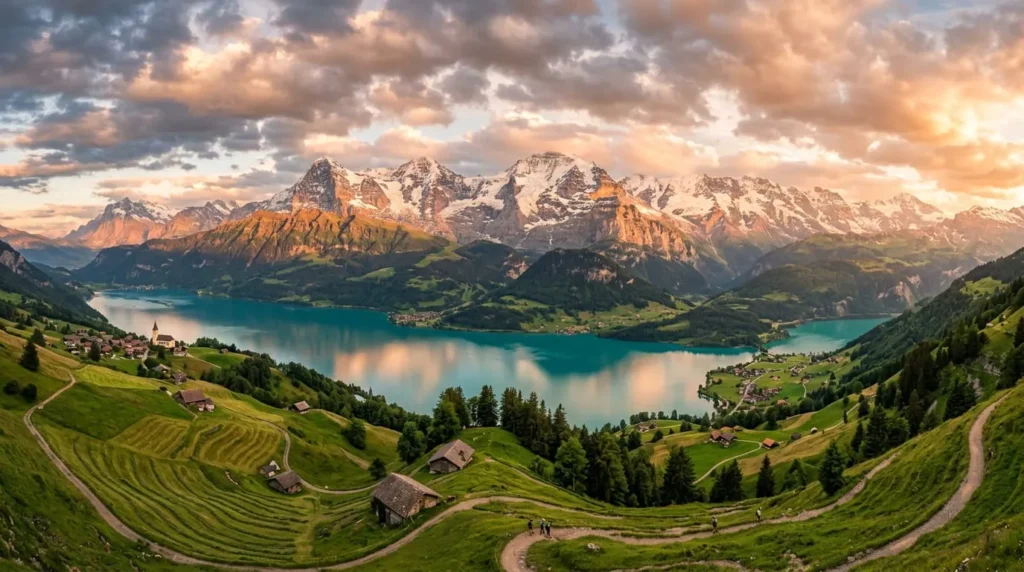
Hunza sits in the far north of Pakistan, wedged between the Karakoram and Himalayan ranges. It delivers a version of mountain scenery that few places match. Snow-capped peaks like Rakaposhi rise directly above terraced orchards and turquoise glacial water, often within the same frame. Autumn, from late September through October, turns the valley gold and red as poplar and apricot trees change color against grey rock. The Karakoram Highway makes it reachable by road, and the drive itself is part of the scenery. Visit in October if color is the priority.
2: Plitvice Lakes, Croatia
Plitvice is sixteen terraced lakes connected by waterfalls, each a different shade of blue or green depending on mineral content and light. Wooden boardwalks run directly over and beside the water, which is unusual for a park this dramatic. Late spring brings the fullest waterfalls after snowmelt, while October adds autumn color without summer crowds. The park limits daily visitors in peak season, so book tickets a few days ahead to avoid being turned away.
3: Torres del Paine, Chile
Patagonia’s granite towers rise almost vertically from flat steppe, creating a scale that photos rarely capture accurately. The W Trek covers the park’s best viewpoints over four to five days. It passes glacial lakes that shift from grey to intense turquoise depending on glacial silt levels. Wind is constant and strong enough to affect footing on exposed ridges, so this is not a casual day-hike destination. November through March offers the most stable weather, though conditions can still change within a single afternoon.
4: Milford Sound, New Zealand
Milford Sound is technically a fjord, cut by glaciers between sheer rock walls that rise over a thousand meters from the water. Waterfalls appear and disappear depending on recent rainfall, and the region gets rain on most days of the year. That rainfall is exactly what keeps the cliffs green and the falls active. A boat cruise gets closer to the true scale than any land viewpoint can. Early morning departures usually mean calmer water and fewer boats in frame.
5: Faroe Islands, Denmark
Eighteen islands sit in the North Atlantic between Iceland and Norway, covered in grass-topped cliffs that drop straight into the sea. Villages like Gasadalur and Saksun sit in valleys so tight that houses appear built into the hillside itself. Weather changes fast, often within the same hour, so layered clothing and flexible plans matter more than usual. June through August gives the longest daylight and driest conditions for hiking to the cliff edges.
6: Dolomites, Italy
The Dolomites look different from the rest of the Alps because the pale limestone turns pink and orange at sunrise and sunset. Locals call this glow enrosadira. Lake Braies and the Tre Cime di Lavaredo peaks are the two most photographed spots, reachable by marked trails, not technical climbs. September avoids summer crowds while keeping mountain huts and cable cars open. Snow can arrive as early as October, closing higher trails for the season.
7: Ha Long Bay, Vietnam
Nearly two thousand limestone karsts rise out of emerald water in this northern Vietnam bay. Many are topped with small forests despite having almost no soil. An overnight boat trip is the standard way to see it, since the best formations sit well offshore. Morning fog is common and actually adds to the scenery rather than ruining it. Visit between October and December for clearer skies and cooler, more comfortable temperatures. Ha Long Bay is only one reason to visit the country, and these Vietnam travel tips cover the practical side of planning a first trip
8: Namib Desert, Namibia
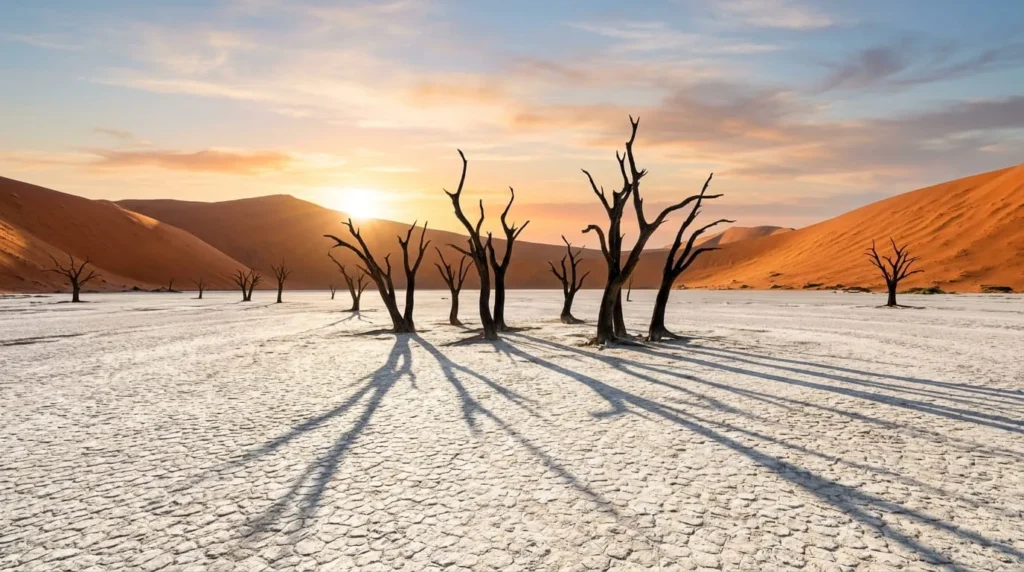
The Namib pairs deep red sand dunes, some over 300 meters tall, with the stark white clay pan of Deadvlei. Centuries-old dead camel thorn trees still stand there against that color contrast. Sunrise is the only time to visit Deadvlei if photography matters, since the dunes cast long shadows that fade within an hour. The dry season from May through October gives the clearest air and most consistent access to park roads.
9: Banff National Park, Canada
Banff combines turquoise glacial lakes with jagged Rocky Mountain peaks at a scale few parks manage. Moraine Lake and Lake Louise get the attention, but Peyto Lake and the Icefields Parkway offer similar color with far fewer visitors. The glacial silt behind the lake color is most vivid from late June through August, after full snowmelt. Winter turns the same lakes into a different kind of scenic, frozen and often used for ice skating against the mountain backdrop.
10: Cappadocia, Turkey
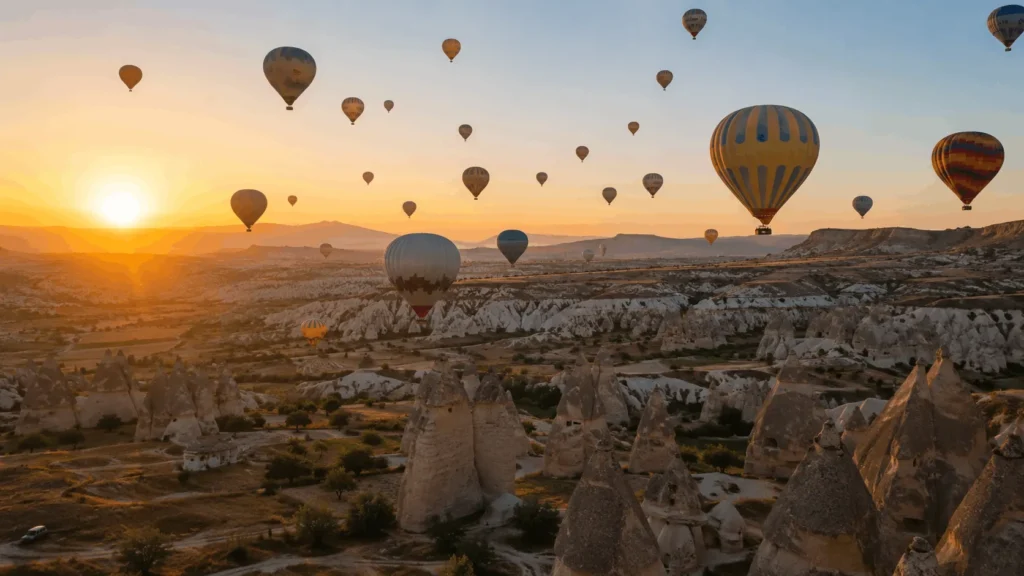
Cappadocia’s landscape is volcanic rock eroded into cone-shaped formations called fairy chimneys, some hollowed out into homes and churches centuries ago. The real draw for scenery is the sunrise hot air balloon flight, when hundreds of balloons lift over the valleys at once. Balloon flights depend on wind conditions and get cancelled more often than most visitors expect. Building an extra morning into the schedule helps account for that. April, May, September, and October offer the most reliable flying weather.
How to Choose Which Scenic Destination Fits Your Trip
The right pick depends on how much time and physical effort the trip allows. Mountain-focused travelers with extra days should prioritize Torres del Paine or the Dolomites. Both reward multi-day hiking rather than a single viewpoint stop. Shorter trips with limited hiking work better around Plitvice, Milford Sound, or Cappadocia, where the main view is reachable within a single day. Travelers chasing color and contrast over hiking distance should look at Hunza Valley in autumn or Namibia’s Deadvlei at sunrise. Anyone planning around a single bucket-list moment, rather than a full trip, gets the most from Cappadocia’s balloon flight or Banff’s Moraine Lake. Weather-sensitive destinations like the Faroe Islands and Patagonia work best with a flexible itinerary that allows an extra day.
Best Time to Plan a Scenic Trip
Timing matters more for scenery than for most other kinds of travel. Waterfalls need recent rain or snowmelt, autumn color lasts only a few weeks, and desert light depends on the exact sun angle. As a general rule, shoulder seasons give the best mix of active landscapes and manageable crowds across most of these destinations. Mountain destinations like the Dolomites and Banff peak in June through August for full accessibility. Desert and coastal spots like Namibia and Ha Long Bay are often better outside that window, once heat or humidity drops. Before booking flights, check each destination’s specific season rather than assuming one global rule applies everywhere.
Tips for Photographing Scenic Landscapes
Getting a scenic location to look on camera the way it looked in person takes more than just showing up. Shoot within an hour of sunrise or sunset whenever possible. Flat midday light removes most of the depth and contrast that made the place worth visiting. A polarizing filter cuts glare off water and wet rock, which matters at nearly every location on this list. Scout the location the evening before if the schedule allows. That way the best vantage point is already known when the light turns the next morning. Wide shots establish scale, but a few closer frames usually communicate a place better. A single tree against a dune or a boat against a limestone karst says more than a wide view alone. Weather that looks disappointing, fog, storm clouds, mist, often produces more distinctive images than a clear blue sky.