

Tulum Beach Guide: Best Spots, Costs, and Tips (2026)
Tulum beach is not one beach. It is a nine mile stretch of white sand along Mexico’s Caribbean coast, split into public access points, hotel-fronted sections, and beach clubs that charge a day pass. If you are flying in from the US and picturing a single postcard shot, you need a clearer map of what you are actually booking.
The sand here is real limestone powder, soft underfoot and blindingly white by midday. The water sits somewhere between turquoise and jade depending on the cloud cover, and it stays calm most of the year because a barrier reef runs offshore. That combination is why Tulum beach outranks most of the Riviera Maya on looks alone. It is also why prices along the beach road have climbed well past what a lot of first-time visitors expect.
This guide walks through where the beach actually is, which section fits your trip, when to go, what a day will cost in dollars, and the mistakes Americans make most often when they show up without a plan.
Where Tulum Beach Is and How to Get There From the US
Tulum sits on Mexico’s Yucatan Peninsula, about 80 miles south of Cancun. Most American travelers still fly into Cancun International Airport, then either rent a car or book a shuttle for the roughly two hour drive south along Highway 307.
Tulum International Airport opened in late 2023 and now takes direct flights from several US cities, including Houston, Miami, Newark, and Charlotte. If a direct route from your home airport exists, it cuts your travel time to the beach dramatically, since the airport sits about 20 minutes from the hotel zone rather than two hours.
1. Cancun Airport vs Tulum Airport for Beach Access
Choose Cancun if you are combining Tulum with other stops on the Riviera Maya, since flight options and prices are still more competitive there. Choose Tulum International if your trip is Tulum only and a direct flight exists from your city, because you will save half a day of driving on both ends of the trip.
Renting a car is worth it if you plan to explore beyond the beach road, visit cenotes, or drive to Bacalar. If your trip is beach and town only, taxis and the local colectivo vans cover it without the hassle of Mexican rental insurance. Cancun remains another practical base for a Riviera Maya trip, especially if you’re comparing the best Cancun resorts with staying directly in Tulum
The Different Sections of Tulum Beach
Tulum’s beach road, known locally as Zona Hotelera, runs along the coast in a single line, so the “beach” changes character block by block. Knowing the sections in advance saves you from booking a hotel on the wrong end. Where you stay is only part of the decision; your travel dates matter too, so check the best time to visit Tulum before booking.
1. Hotel Zone Beach (Central Stretch)
This is the section most photos are taken on. It runs roughly from the Tulum ruins south to the middle of the hotel strip, lined with boutique hotels and beach clubs. Sand quality and water clarity here are consistently excellent, and this is where most walkable beach clubs cluster.
2. Paradise Beach (Playa Paraiso)
Playa Paraiso sits closer to the ruins end of the strip and is one of the few sections with genuine free public access alongside a small parking area. Weekends bring more local visitors here than tourists, and it gets crowded by midday, but it remains one of the only spots where you can set up a towel without paying a beach club fee.
3. Ruinas Beach Below the Tulum Ruins
Right beneath the Tulum archaeological site, this small beach is free once you have paid ruins admission, or accessible on its own for a smaller entry fee. It is short and often busy with day-trippers, but the view of the cliffside ruins above turquoise water is unmatched anywhere else on this coast.
4. South Hotel Zone Beach
The southern end, closer to the Sian Ka’an biosphere reserve boundary, has fewer beach clubs and a quieter, more residential feel. Some of the more secluded boutique hotels sit here, and the beach itself is just as good, with noticeably fewer people.
Best Time to Visit Tulum Beach
December through April is the classic dry season, with the lowest rain chances and calmer seas. This window also carries the highest hotel rates and the biggest crowds, especially around the Christmas and spring break periods.

May through August brings warmer water and fewer crowds on weekdays, though afternoon rain showers become common. September and October are hurricane season for this coast, with a real risk of tropical storms disrupting travel, so most experienced visitors avoid booking a beach trip in those two months.
1. Sargassum Seaweed Season and How to Avoid It
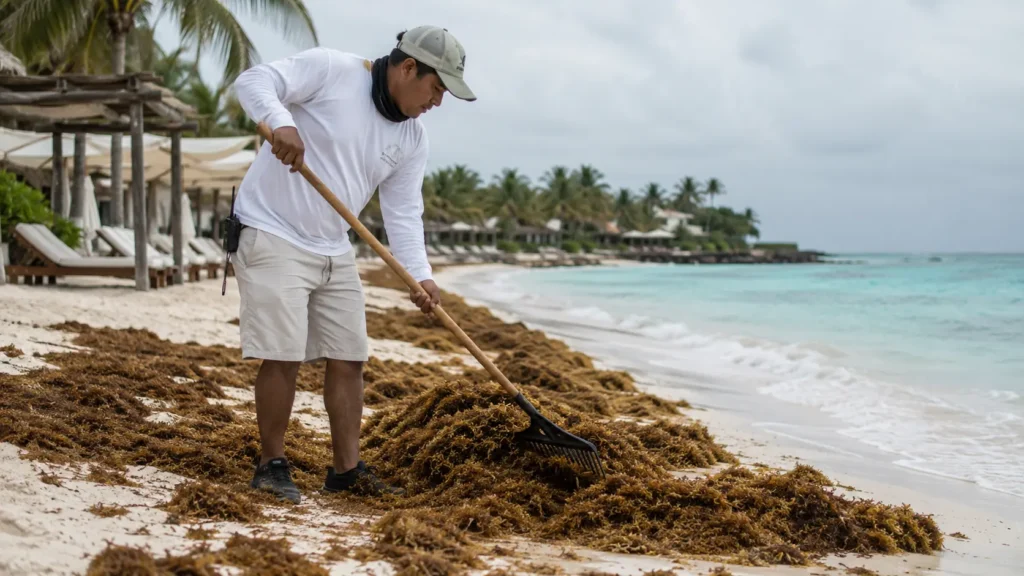
Sargassum is a brown seaweed that washes onto Caribbean beaches in large mats during certain months, and it has become the single biggest factor in whether a Tulum beach trip meets expectations. It tends to peak from May through August, though timing varies year to year with ocean currents.
When sargassum is heavy, it covers the sand in thick brown drifts and gives the water a murky tint near shore, a stark contrast to the postcard photos. Beach clubs with private cleanup crews rake their stretch daily, so paying for a club during sargassum months buys you cleaner sand, not just a lounger. If your trip dates fall in peak season, check recent visitor photos and local sargassum reports before locking in a hotel on a specific stretch of beach.
Beach Clubs vs Free Public Access
Most of Tulum’s beachfront is technically public land under Mexican law, but hotels and clubs control the access points and charge a consumo minimo, a minimum spend requirement that functions like a day pass. Expect $30 to $80 per person at a mid-range club, applied toward food and drinks, with upscale spots running higher on weekends.
A beach club buys you a clean, raked stretch of sand, a lounger, shade, bathrooms, and usually a restaurant menu. It also buys predictability during sargassum season, since clubs actively remove seaweed that free beaches often leave untouched.
Free public access exists at Paradise Beach and a few marked entry points along the road, but parking is limited and arrives without loungers, shade structures, or bathrooms. Bring your own umbrella, water, and cash if you go this route, and arrive early, since spots fill by mid-morning in high season.
What a Day at Tulum Beach Costs
Budget for these ranges in US dollars, based on 2025-2026 pricing along the hotel zone. A rental car runs $35 to $60 per day, plus mandatory Mexican insurance. Taxis from town to the beach zone run $10 to $20 one way, since taxis do not use meters and prices are negotiated.
A beach club day pass or minimum spend lands between $30 and $80 per person at most mid-range spots, while a few high-end clubs charge upward of $100. A basic beachfront lunch with drinks runs $15 to $30 per person even at casual spots, since nearly everything on the beach road is imported or trucked in.
Budget travelers can spend a full day at Paradise Beach for the cost of parking and a packed lunch, while a couple looking for the classic beach club experience should plan on $150 to $250 for the day once food, drinks, and transport are included.
Safety and Practical Tips for the Beach Road
Rip currents are uncommon along Tulum’s reef-protected shoreline, but they do occur, particularly near the southern end where the reef breaks. Watch for flag warnings at hotels and clubs, and skip swimming during red flag days regardless of how calm the surface looks.
Cell service along the beach road is inconsistent, and many hotels rely on WiFi rather than a strong signal, so download offline maps before you head out for the day. Cash is still preferred at smaller stands and taxis, though most beach clubs and hotels accept US credit cards.
Mexican federal law makes the entire beach public below the high tide line, meaning you can legally walk the full length of the coast even past private beach clubs, as long as you stay near the waterline.
What to Pack for Tulum Beach
Reef-safe sunscreen is not optional here, since several eco-conscious hotels and cenotes will turn away sunscreen with oxybenzone or octinoxate. Water shoes help on sections with rockier entry points, particularly near the ruins beach. Bring more cash than you think you need, since ATMs along the beach road charge high fees and sometimes run out.
A light cover-up and reef-safe bug spray round out the essentials, since mosquitoes pick up after sunset even directly on the sand.
Common Mistakes First-Time Visitors Make
Booking a hotel based on photos alone, without checking which stretch of beach it sits on, leads to disappointment when sargassum hits or the section turns out to be a 20 minute walk from any restaurant. Skipping a rental car while planning to also visit cenotes or Bacalar means paying far more in taxis than a car would have cost.
Visiting during peak sargassum months without checking recent conditions is the single most common regret among first-time visitors, since the photos that sold the trip rarely match a heavy seaweed week. Underestimating beach club minimums is another frequent surprise, since $30 to $80 per person adds up fast for a family of four.
Planning around these details before you book turns a good Tulum beach trip into the one you actually pictured when you started looking.